Blog
Hong Kong has emerged as one of Asia's most regulated and investor-friendly crypto markets. Whether you're just starting out or ready to build a serious portfolio, this guide walks you through how to buy Bitcoin, invest in, trade cryptocurrency in Hong Kong, and do it all safely under the city's clear regulatory framework for the digital currency.What Is Cryptocurrency and Why Are Hong Kong Investors Interested?Cryptocurrency is a digital asset secured by cryptography and recorded on a blockchain. Bitcoin (BTC) is the most widely held, often called "digital gold," while Ethereum (ETH) powers a broad ecosystem of applications. Beyond these two, investors can access altcoins and regulated crypto ETFs listed on the HKEX.Hong Kong combines world-class financial infrastructure, a transparent legal system, zero capital gains tax, and a proactive licensing regime overseen by the Securities and Futures Commission (SFC). These factors make it one of the most attractive environments globally for those learning how to invest in cryptocurrency with regulatory confidence.Crypto trading is fully legal in Hong Kong. Since June 2023, the SFC has required all platforms serving local retail investors — exchanges and brokers alike — to hold a Virtual Asset Trading Platform (VATP) license under the Anti-Money Laundering Ordinance (AMLO).How to Buy Bitcoin in Hong Kong — A Step-by-Step GuideStep 1 — Choose a Licensed or Reputable Crypto PlatformOnly use SFC-licensed platforms. Verify license status on the SFC's official website before depositing any funds.Step 2 — Create and Verify Your Account (KYC)Prepare a valid ID and recent proof of address. Hong Kong residents can complete the full process online via the platform's app.Step 3 — Deposit Funds in HKD or USDLicensed brokers like VictoryX accept direct fiat deposits in HKD or USD — no stablecoin conversion required.Step 4 — Place Your First Bitcoin Buy OrderSelect BTC, then choose a market order (instant) or a limit order (at your target price). This is the core element when learning how to buy Bitcoinin practice in Hong Kong.Step 5 — Store Your Bitcoin Safely After PurchaseActive traders can keep assets on a regulated broker for convenience. Long-term holders should consider a hardware (cold) wallet for maximum security.Where to Buy Crypto in Hong Kong — Platform Options ComparedOption 1 — SFC-Licensed Virtual Asset Trading Platforms (VATPs)Fully regulated exchanges licensed by the SFC. Support direct HKD/USD deposits and are permitted to serve retail investors.Option 2 — Global Centralized Exchanges (CEX) Available in HKLarge international platforms accessible to HK users but not SFC-licensed. Exercise caution and verify compliance status before depositing funds.Option 3 — Peer-to-Peer (P2P) Crypto PlatformsP2P trading is no longer available through licensed corporations in Hong Kong. Using unlicensed P2P channels carries significant regulatory and counterparty risk.Option 4 — Bitcoin ATMs in Hong KongAvailable for small cash-based purchases. Fees are typically high (5–10%) and best suited only for occasional, low-value transactions.Option 5 — Crypto ETFs Listed on the HKEXSpot Bitcoin and Ethereum ETFs are listed on the HKEX. Accessible via a standard licensed brokerage account — no crypto wallet needed.Platform Comparison Table: Fees, Features & RegulationPlatform TypeHKD/USD DepositSFC LicensedRetail AccessLicense Uplifted Broker (e.g., Victory)YesYesYesLicensed Exchange (VATP)YesYesYesGlobal CEX (Unlicensed)LimitedNoRestricted/RiskBitcoin ATMCash OnlyNoYesCrypto ETF (HKEX)YesYesYesHow to Trade Cryptocurrency — Core Concepts for BeginnersWhat Is Crypto Trading and How Does It Differ from Investing?Investing means buying and holding assets over time. Trading means buying and selling more frequently to capture price moves. Knowing which suits you is the first item on the to-do list when you are figuring out how to trade cryptocurrency effectively.Understanding Crypto Market Hours and VolatilityUnlike stock markets, crypto trades 24/7. Price swings of 5–10% in a single day are common, making volatility awareness essential for anyone learning to trade cryptocurrency actively.Spot Trading vs. Derivatives Trading — What's the Difference?Spot trading means buying the actual cryptocurrency at the current market price. Derivatives let you speculate on price movements without owning the asset, often using leverage — best left to experienced traders.How to Read Crypto Price Charts and Order BooksCandlestick charts display price action over time, showing open, close, high, and low per period. An order book shows pending buy and sell orders, giving a snapshot of short-term supply and demand.Key Crypto Trading Terms You Must KnowMarket Order: Executes immediately at the current priceLimit Order: Executes only at your specified priceStop-Loss: Auto-sell triggered at a set price to cap lossesHow to Trade Crypto Currency: Popular Trading StrategiesHODLing — Long-Term Buy and Hold StrategyBuy and hold Bitcoin or Ethereum over an extended period, ignoring short-term price swings. It's the simplest strategy for beginners.Dollar-Cost Averaging (DCA) for Crypto InvestmentInvest a fixed amount regularly — say, HKD 500 per week — in Bitcoin, regardless of price. This is one of the most beginner-friendly ways for you to approach if you are learning how to trade cryptocurrency while managing volatility.Day Trading and Swing Trading CryptocurrencyDay traders open and close positions within a single day, while swing traders hold for days to weeks. Both require strong discipline and a clear risk management plan before getting started.Risk Management: Position Sizing and Stop-Loss OrdersNever risk more than you can afford to lose. A general rule is to limit any single position to 1–2% of your total portfolio, always paired with a preset stop-loss.How to Invest in Cryptocurrency Safely in Hong KongTax Considerations for Crypto Investors in Hong KongHong Kong has no capital gains tax, so most retail investors' crypto profits are not taxable. Frequent trading conducted as a business may attract a profits tax of 15–16.5%. Consult a licensed tax advisor for your specific situation.Diversifying Across Bitcoin, Altcoins, and Crypto ETFsRather than concentrating in a single asset, spread exposure across Bitcoin, established altcoins, and regulated crypto ETFs listed on the HKEX, a practical way to balance risk when you invest in cryptocurrency for the long term.Avoiding Common Beginner Mistakes When Investing in CryptoUsing unlicensed platforms, skipping stop-losses, and over-concentrating in a single asset are the most common pitfalls. Always verify platform licenses before depositing any funds.How to Keep Your Crypto SafeHot wallets suit active traders; cold wallets are recommended for larger or long-term holdings.Enable 2FA immediately after account creation using an authenticator app — not SMS, as SIM-swapping attacks targeting HK crypto users are a known threat.Always verify a platform's license on sfc.hk before depositing — beware of guaranteed-return promises and broker impersonation scams.Change your password, disable all API keys, and contact the platform's support team immediately.Avoid using personal bank accounts for frequent P2P transfers with unknown individuals. Hong Kong banks have strict AML filters; funds from unlicensed sources can lead to immediate account suspension. Stick to licensed brokers like VictoryX for seamless bank-grade fund security.Hong Kong Crypto Regulation — What You Need to Know?Mandatory VATP licensing was introduced in June 2023 under the AMLO, requiring all platforms serving HK retail investors to meet strict AML, KYC, and custody standards.Visit sfc.hk and check the official "List of Licensed Virtual Asset Trading Platforms" — never rely on a platform's self-reported license status.Licensed platforms must hold client assets in segregated accounts, conduct proper KYC onboarding, and adhere to ongoing governance and disclosure requirements.From November 2025, licensed VATPs can integrate with global affiliate order books for expanded liquidity and products. Monitor SFC circulars regularly as Hong Kong's regulatory framework evolves rapidly.Why Choose VictoryX?Victory Securities — the company behind VictoryX — is Hong Kong's first and only licensed virtual asset broker holding all three SFC-issued virtual asset licenses: trading, advisory, and asset management. It has also been declared Hong Kong's No. 1 crypto broker by trading volume, with annual volume exceeding HKD 10 billion.Key advantages include:Direct fiat trading in HKD or USD — no stablecoin conversion needed. As Hong Kong implements its stablecoin issuer licensing regime, using direct HKD/USD pairs on licensed platforms remains the most compliant and cost-effective path.Spot crypto trading across Bitcoin, Ethereum, and other SFC-approved assetsVA structured products — the first SFC-approved broker for both cash-settled and physically-settled crypto structured productsCrypto ETF access for Bitcoin and Ethereum ETFs listed on the HKEXGlobal equities — HK stocks, US stocks, and more, all in one appWhether you're working out how to buy crypto for the first time or building a diversified portfolio, VictoryX's full-license framework provides security and breadth that unlicensed platforms cannot offer.FAQIs it safe to buy Bitcoin in Hong Kong?Yes — use an SFC-licensed platform, verify its status on sfc.hk, and your assets are covered by strict client protection rules.What is the minimum amount needed to buy crypto in HK?Minimums vary by platform. Many licensed brokers allow starting amounts of a few hundred HKD. Check VictoryX directly for current requirements.Which is the best platform to trade cryptocurrency in Hong Kong?For a regulated, full-service experience, a licensed broker like VictoryX — covering trading, advisory, and asset management — is a strong choice.Do I need to pay tax on crypto gains in Hong Kong?Generally, no, as there is no capital gains tax. However, professional traders may be subject to profits tax. Seek advice from a licensed tax professional.How do I trade cryptocurrency as a complete beginner?Open an account on a licensed platform, complete KYC, deposit HKD or USD, and start with a small Bitcoin purchase. Explore DCA strategies and learn how to trade cryptocurrency gradually before moving to more active approaches.
As digital assets become increasingly integral to global finance, stablecoins have emerged as one of the most practical and widely adopted innovations in the space. From cross-border payments to DeFi applications, understanding what stablecoins are — and how leading options like USDT and USDC differ — is essential for any investor navigating today's crypto landscape. This guide breaks down how stablecoins in Hong Kong fit into the city's evolving regulatory environment and what that means for you as an investor.What Are Stablecoins?If you are new to the world of digital assets, you may be wondering: what are stablecoins? Simply put, a stablecoin is a type of cryptocurrency designed to maintain a stable market value, typically by pegging its price to an underlying reserve asset such as the US dollar, gold, or another fiat currency. Unlike Bitcoin or Ethereum — whose prices can swing dramatically within hours — a stablecoin is engineered to remain consistently worth a set amount, usually $1.00.How Stablecoins Work: Pegging to Fiat or AssetsUnderstanding what stablecoins are starts with understanding their peg mechanism. Issuers hold reserves of real-world assets — cash, government bonds, or commodities — equal to or greater than the value of every stablecoin token in circulation. When a user redeems a token, the issuer releases the corresponding reserve and burns the token. This issuance-and-redemption cycle is what keeps the price anchored.Types of StablecoinsThere are three main categories worth knowing:Fiat-backed stablecoins (like USDT and USDC) are backed 1:1 by fiat reserves. Commodity-backed stablecoins are pegged to tangible assets such as gold — PAXG is a notable example. Algorithmic stablecoins attempt to maintain their peg through programmatic supply adjustments rather than tangible collateral; this category has attracted significant regulatory concern globally following high-profile collapses like TerraUSD in 2022, and many jurisdictions now impose strict restrictions or outright bans on them.Why Are Stablecoins Important?The importance of stablecoins lies in their unique position at the crossroads of traditional finance and the digital asset economy. They offer the programmability and speed of blockchain while avoiding the price volatility that makes most cryptocurrencies impractical for everyday transactions.Stablecoins as a Bridge Between Traditional Finance and CryptoFor exchanges, brokerages, and DeFi protocols, stablecoins serve as a universal settlement layer. They allow traders to exit volatile positions without converting back to fiat, move value globally without intermediary banks, and access yield-generating protocols — all within seconds and at a fraction of the cost of traditional wire transfers.Key Use Cases of StablecoinsPayments and Remittances: Cross-border transfers using stablecoins can settle in minutes rather than days, with fees a fraction of traditional SWIFT transfers — making them attractive for businesses and individuals sending money across borders.Trading and DeFi Transactions: On trading platforms, stablecoins provide a stable store of value between trades, eliminate conversion delays, and serve as base-pair liquidity across decentralized exchanges.Yield Generation Through Lending Protocols: DeFi protocols allow stablecoin holders to lend their tokens to earn interest, often at rates exceeding traditional savings accounts — though with associated smart-contract and counterparty risks.Stablecoins in Hong Kong: A Growing RoleThe prominence of stablecoinshas grown significantly in Hong Kong alongside the city's ambition to become a leading global digital asset hub. Retail and institutional investors alike use stablecoins as part of their digital asset strategies. Importantly, investors in Hong Kong do not need to use stablecoins to access crypto through a licensed brokerage — fiat currencies like HKD and USD can be used directly to purchase approved cryptocurrencies through licensed platforms.USDT vs. USDC: Key Differences and ComparisonsOverview of USDT (Tether)USDT — issued by Tether Limited — is the world's largest stablecoin by market capitalization, routinely exceeding $100 billion in circulation. Launched in 2014, it quickly became the dominant trading pair on most centralized exchanges worldwide. USDT's reserves include a mix of US Treasuries, cash, and cash equivalents. While Tether has historically faced questions about third-party audits, it has improved disclosure practices in recent years, publishing quarterly attestations from independent accountants.Overview of USDC (USD Coin)USDC is issued by Circle, in partnership with Coinbase, through the Centre consortium. Launched in 2018, USDC is widely regarded as the more compliance-forward option. Its reserves consist primarily of short-term US Treasury bills and cash held at regulated US financial institutions. Circle publishes monthly reserve attestations performed by a Big Four accounting firm, making USDC the stablecoin of choice for many institutional participants and regulated platforms.USDT vs USDC: A Detailed ComparisonReserve Transparency: When comparing USDT vs USDC, transparency is a key differentiator. USDC provides monthly Big Four-attested reports covering 100% cash and T-bill backing, while USDT provides quarterly attestations with a broader reserve mix.Adoption and Ecosystem: USDT dominates by trading volume and is listed on virtually every exchange globally. USDC leads in regulated and institutional environments, DeFi protocols, and US-regulated platforms where compliance is paramount.Use Cases in Hong Kong and Beyond: In the context of stablecoin in Hong Kong, both USDT and USDC are actively traded and used as settlement currencies on licensed platforms. USDT vs USDC preferences often come down to individual platform support and personal risk appetite regarding reserve transparency.Regulatory Standing: It is important to note that neither USDT nor USDC is a Hong Kong dollar-referenced stablecoin, and neither has sought a license under Hong Kong's Stablecoins Ordinance, which targets HKD-pegged or locally-issued fiat-referenced stablecoins. Their trading in Hong Kong is governed separately under existing virtual asset regulations.Benefits of StablecoinsStability in a Volatile Market: Stablecoins enable participants to hold value on-chain without exposure to crypto price swings — ideal for risk management between trades.Fast and Low-Cost Transactions: On-chain stablecoin transfers typically complete within seconds at a fraction of the fees for conventional international wire transfers.Accessibility and Financial Inclusion: Stablecoins can be accessed by anyone with an internet connection and a digital wallet, lowering barriers to global financial markets.Use in Decentralized Finance (DeFi): As core liquidity assets in DeFi protocols, stablecoins facilitate lending, borrowing, yield farming, and automated market-making without traditional financial intermediaries.Risks and Challenges of StablecoinsCredit and Reserve Risks: If an issuer's reserves are mismanaged or insufficient, holders may not receive par value upon redemption, which is why reserve audits and transparency are significant.Regulatory Inconsistency: Stablecoin regulation varies widely across jurisdictions, creating compliance complexity for global users and businesses.Cybersecurity and Misuse: Smart contract vulnerabilities, exchange hacks, and potential misuse for illicit transfers remain ongoing risks in the digital asset ecosystem.Monetary Policy Impact: At scale, widely adopted stablecoins could influence money supply dynamics, prompting central banks worldwide to pay close attention to their growth.The Role of Stablecoins in Hong KongHong Kong has established one of the most progressive regulatory frameworks for digital assets in Asia. On 1 August 2025, the Stablecoins Ordinance — administered by the Hong Kong Monetary Authority (HKMA) — came into effect. This framework specifically targets issuers of fiat-referenced stablecoins (FRS) operating in Hong Kong, as well as those issuing HKD-pegged stablecoins from overseas. The issuance of these licenses, which began in early 2026, is a pivotal step that will further promote the compliant settlement and circulation of Real-World Assets (RWA) within the ecosystem. As of early 2026, the HKMA has received 36 license applications and is expected to announce its first batch of licensed stablecoin issuers in the first quarter of 2026.It is important to understand what the HK stablecoin framework does and does not govern. The Ordinance is designed to ensure that fiat-referenced stablecoins are backed by high-quality, liquid assets, providing a regulated foundation for their use in the digital economy. While it sets the standard for licensed issuers in Hong Kong, global stablecoins like USDT or USDC that are not HKMA-licensed continue to be traded by Professional Investors (PIs) on licensed virtual asset platforms and through licensed brokerages under the Securities and Futures Ordinance and related SFC guidelines.For investors seeking crypto exposure in Hong Kong, licensed corporations — including brokerages — allow clients to trade certain approved virtual assets directly using fiat (HKD or USD). There is no requirement to hold or convert through a stablecoin to participate. Additionally, peer-to-peer (P2P) crypto trading is not provided by licensed entities; all transactions must go through a licensed platform or brokerage to ensure regulatory compliance.Cross-border use of stablecoinin Hong Kong is growing steadily, particularly in trade finance and treasury management, as businesses explore programmable settlement solutions.How Stablecoins Work: A Step-by-Step MechanismThe Issuance and Redemption ProcessWhen a user deposits $1,000 USD with a stablecoin issuer, the issuer mints 1,000 tokens in return and invests the reserve funds in safe, liquid assets. When the user redeems, tokens are burned, and the fiat is returned. This closed loop is what gives stablecoins their price stability. However, in Hong Kong, who can participate in this process depends heavily on the licensing status of the issuer.Maintaining the Peg: Reserve Requirements and MechanismsKeeping a stablecoin pegged to its reference currency requires more than simply holding reserves — it demands rigorous, ongoing management. The Hong Kong Monetary Authority (HKMA) regulates fiat-referenced stablecoins (FRS), which are pegged to fiat currencies like USD or HKD. Issuers must ensure that the market value of their reserve pool equals or exceeds the total value of tokens in circulation at all times. Under the Hong Kong Stablecoins Ordinance, locally licensed issuers are required to maintain 100% reserve backing, segregate assets from the issuer's own funds, and honor redemptions at par within one business day. These strict protections are why only stablecoins issued by entities holding a valid HKMA stablecoin issuance license may be offered or actively marketed to retail investors (the general public).Retail vs. Professional Investor AccessA common point of confusion for investors is the availability of major global stablecoins like USDT (Tether) and USDC (Circle). Because these are USD-referenced stablecoins issued by companies outside Hong Kong, they do not currently hold an HKMA license. Consequently, they are classified as being issued by non-licensed issuers. Under Hong Kong's regulatory framework, these non-licensed stablecoins can only be offered to Professional Investors (PI). They are not permitted to be offered to ordinary retail investors on licensed platforms. Retail investors in Hong Kong are limited to purchasing only those stablecoins issued by HKMA-licensed entities to ensure the highest level of consumer protection.Examples of How USDT and USDC Maintain StabilityBoth USDT and USDC invest their reserves primarily in short-term US government securities and cash equivalents. The interest earned accrues to the issuer — not the token holder — which is the core business model for both Tether and Circle. This is also reflected in Hong Kong's regulatory framework, which prohibits licensed stablecoin issuers from paying interest to token holders.The Future of StablecoinsThe stablecoin market is growing rapidly. Citigroup has estimated that global stablecoin issuance volumes could reach $1.9 trillion in a base case and up to $4.0 trillion in a bull scenario. Institutional adoption is accelerating, with major banks, payment networks, and technology companies exploring stablecoin-based settlement infrastructure. Regulatory clarity in markets like Hong Kong, the EU (MiCA), and the US (GENIUS Act) is expected to further legitimize the sector and drive broader adoption. In Hong Kong specifically, innovations in programmable payments and real-world asset (RWA) tokenization are set to redefine how capital moves across borders.Why Choose Victory Securities (VictoryX)?Victory Securities is one of Hong Kong's most established financial firms, with over 50 years of experience serving retail, institutional, and high-net-worth clients. Crucially, Victory is a licensed corporation — not just an exchange — meaning it can provide comprehensive financial services across securities brokerage, wealth management, asset management, and virtual assets under a single regulated umbrella.Through its VictoryX platform, Victory Securities has expanded its services to include virtual asset trading. Professional Investors (PI) can access approved cryptocurrencies — including assets paired with USDT and USDC — directly using fiat currency (HKD or USD). Victory Securities also offers investment products with advanced trading strategies for USDT and USDC, such as virtual asset structured products. As the Hong Kong Monetary Authority (HKMA) advances the licensing regime for stablecoin issuers, Victory Securities is poised to play a pivotal bridging role in the future development of Hong Kong's stablecoin ecosystem, leveraging its comprehensive virtual asset infrastructure, technical foundation, and regulatory expertise.Frequently Asked QuestionsWhat is the difference between USDT and USDC?The key distinction in the USDT vs USDC debate is transparency and regulatory posture. USDC publishes monthly Big Four-attested reserve reports and is backed exclusively by cash and short-term US Treasuries. USDT has a broader reserve mix and publishes quarterly attestations. Both are widely used, but USDC is generally preferred in regulated and institutional contexts.Are stablecoins legal in Hong Kong?Yes. Stablecoins can be legally traded through licensed virtual asset trading platforms and licensed brokerages in Hong Kong. As of 1 August 2025, Hong Kong's Stablecoins Ordinance also introduced a licensing regime for issuers of HKD-referenced or locally-issued fiat stablecoins, targeting payment use cases.How do stablecoins maintain their value?Fiat-backed stablecoins — like USDT and USDC — maintain their peg by holding reserves of equal or greater value in safe, liquid assets. Every token in circulation corresponds to a real-world reserve, and users can redeem tokens for the underlying fiat at par value.What are the risks of using stablecoins?The main risks include reserve adequacy, counterparty risk, smart contract vulnerabilities, regulatory changes, and potential misuse. Choosing a well-audited stablecoin and a licensed platform significantly mitigates these risks.Can I use stablecoins to earn interest?In DeFi, stablecoins can be lent through protocols to generate yield. However, under Hong Kong's Stablecoins Ordinance, licensed stablecoin issuers are prohibited from paying interest directly to token holders. Always assess the risks of DeFi protocols carefully.Why are algorithmic stablecoins banned in many countries?Algorithmic stablecoins rely on programmatic mechanisms rather than real-world reserve assets to maintain their peg. The collapse of TerraUSD in 2022 demonstrated the fragility of this model, wiping out tens of billions in value. Many regulators — including the HKMA and the EU under MiCA — restrict or prohibit these instruments to protect investors.Which stablecoin is better for DeFi applications?USDC is generally considered more DeFi-friendly in regulated environments due to its transparency and compliance posture. However, USDT offers broader liquidity across more platforms globally. In the USDT vs USDC debate in DeFi, the best option depends on the specific protocol, jurisdiction, and your risk tolerance.

Whether you're new to digital assets or a seasoned investor, one truth remains constant: your assets are only as secure as the wallet protecting them. With Hong Kong rapidly cementing its status as a global virtual asset hub, understanding how to choose and use a crypto wallet is no longer optional — it's essential.What is a Crypto Wallet?A crypto walletis a tool — software, hardware, or paper — that lets you store, send, and receive cryptocurrencies. Think of it as a secure keychain: it doesn't "hold" your coins, but it stores the cryptographic keys that prove your ownership on the blockchain.How Crypto Wallets Work: Private Keys and BlockchainEvery cryptocurrency wallet operates on two cryptographic keys: a public key (your shareable wallet address) and a private key (the secret code that authorizes transactions). Without your private key, your assets are permanently inaccessible — there is no recovery option.Why Are Crypto Wallets Important?The Role of Private Keys in Safeguarding Your AssetsThe phrase "not your keys, not your coins" carries real weight. A crypto wallet puts custody of your private keys directly in your hands — critical in Hong Kong, where the regulatory framework is increasingly designed to protect investors who engage with licensed service providers.Risks of Losing Private Keys and How to Prevent ThemLosing your private key means permanently losing your funds. Best practices include writing down your seed phrase offline, storing it securely in multiple locations, and never sharing it with anyone.Types of Crypto Wallets: Which One is Right for You?Crypto wallets fall into several categories:Hot WalletsHot wallets are internet-connected wallets designed for frequent trading and everyday use, offering fast, convenient access to your funds.Paper WalletsPaper wallets are printed documents containing your keys as QR codes. They are fully offline and immune to hacking, but fragile — susceptible to physical damage and impractical for regular transactions.Hardware WalletsHardware wallets are physical devices that store private keys offline and sign transactions internally, meaning your keys never touch the internet. They are widely regarded as the gold standard for securing a cryptocurrency wallet with significant holdings.Software WalletsMobile and desktop software wallets offer flexibility for everyday use. To stay secure: enable biometric authentication, download apps only from official sources, and avoid public Wi-Fi when transacting.Online Wallets (Web Wallets)Web wallets are accessible from any browser with no installation required — ideal for beginners exploring a crypto wallet in Hong Kong for the first time. However, third-party key management means they carry more risk. Always use licensed, reputable platforms and enable two-factor authentication.How to Choose the Best Crypto Wallet for Your NeedsFinding the best crypto wallet means matching the tool to your personal situation. Key factors and considerations include:Security Features: Look for two-factor authentication (2FA), AES-256 encryption, and multi-signature support. These features dramatically reduce the risk of unauthorized access.Ease of Use: Beginners benefit from clean, intuitive interfaces. Advanced users may prioritize DApp integration and multi-chain support.Supported Cryptocurrencies and Blockchain Networks: Ensure the wallet supports the tokens you intend to hold. Multi-chain wallets offer the most flexibility, especially as Hong Kong's approved virtual asset classes continue to expand.Cost and Affordability: Software wallets are generally free, while hardware wallets typically cost USD 50–200. The added cost is well worth it for investors holding significant amounts — think of it as insurance for your digital assets.Recommendations for Different User TypesBeginners should start with a reputable mobile or web wallet through a licensed brokerage — the best crypto wallet for newcomers is one backed by a regulated provider with strong customer support.Advanced Users holding multiple assets will benefit most from a hardware wallet paired with a robust software interface for day-to-day monitoring.How to Use a Crypto WalletSetting up Your Wallet by Creating and Backing up Your Private KeysWhen you first create a crypto wallet, you will be issued a seed phrase — typically 12 or 24 randomly generated words. Write it down immediately on paper and store it in at least two separate, physically secure locations. Never photograph it, save it to cloud storage, or share it with anyone. This seed phrase is the master key to your funds: losing it means losing access permanently.Sending and Receiving Cryptocurrency SafelyTo receive crypto, simply share your public wallet address with the sender. To send, enter the recipient's address carefully — blockchain transactions are irreversible, with no bank to call and no chargeback option. Always double-check addresses by verifying the first and last several characters before confirming any transfer, and start with a small test transaction when sending to a new address for the first time.Tips for Interacting with Decentralized Apps (DApps)DApps — decentralized applications built on blockchain networks — often require you to connect your cryptocurrency wallet to access their features. When doing so, only connect to platforms you have independently verified as legitimate. After using a DApp, revoke its access permissions from your wallet settings. Be especially cautious of unexpected prompts asking you to "approve" token transfers or sign unfamiliar transactions, as these are common tactics used in wallet-draining scams.Crypto Wallet Security Best PracticesPhishing emails, fake wallet apps, and social engineering attacks account for the vast majority of crypto theft. Attackers impersonate wallet providers or use fake browser extensions to steal credentials.Essential Security TipsEnable Two-Factor Authentication (2FA): Use an authenticator app rather than SMS where possible.Use Strong, Unique Passwords: A password manager helps generate and store complex credentials.Regularly Update Your Wallet Software: Security patches close known vulnerabilities — keep both your wallet app and device operating system current.Why Choose VictoryXWhen investing in virtual assets in Hong Kong, safety should not rely on a single tool alone. The most mature strategy is to diversify and store assets across different environments based on capital size and usage frequency.1. Regulated Platform Custody: Seeking Compliance and Fiat ConvenienceFor investors who wish to buy and sell directly via bank transfer (HKD/USD) and demand institutional-grade protection, licensed brokerages like VictoryX (Victory Securities) are a core component.Note: VictoryX is not a personal wallet app; rather, it provides account custody services. It connects to virtual asset trading platforms (VATPs) licensed by the Securities and Futures Commission (SFC) and is protected by the following strict regulations:98% Cold Wallet Mandate: According to SFC guidelines, licensed platforms must store 98% of client assets in offline cold wallets, leaving only 2% in hot wallets to handle withdrawals.Mandatory Compensation Arrangements: Platforms are required to purchase insurance or provide asset pledges to ensure clients are compensated in the event of unforeseen incidents like hacker attacks.Asset Segregation and Trust: Client assets are held in trust by an independent entity, completely segregated from the brokerage's own funds, thereby legally safeguarding ownership.Three-Tier Asset Allocation Model: Cold Wallets, Hot Wallets, and ExchangesInvestors should diversify their assets based on their needs to balance security and flexibility:Allocation TierStorage ToolCore PurposeSecurity FeaturesLong-Term StorageHardware Cold WalletLarge asset amounts, held long-term. Self-managed private keys. Completely offline, immune to cyberattacks; however, you must take full responsibility for safekeeping your mnemonic phrase.Fiat On/Off-RampCompliant Virtual Asset Trading Account (e.g., VictoryX)Easy liquidation or adding to positions. Protected by regulations.Licensed trading platforms comply with the SFC's 98/2 rule and insurance coverage, making it ideal for those who prefer not to manage private keys themselves.Daily OperationsMobile/Web Hot WalletUsed for DApps, NFTs, or frequent transfers. Maximum flexibility.Vulnerable to phishing attacks; recommended only for storing small amounts of pocket money.How to Choose the Path That Best Suits You? If you are a "Compliance-First" investor: Leverage the advantages of a licensed brokerage like VictoryX. You don't need to learn complex private key management techniques to enjoy custody services protected by Hong Kong law, and you can trade directly in HKD or USD, skipping the hassle and risk of converting to stablecoins. If you are a "Sovereignty-First" investor: Be sure to purchase a high-quality hardware cold wallet. When searching for "Hong Kong cold wallet recommendations," ensure you buy directly from official sites or authorized distributors to avoid purchasing secondhand, compromised devices. Individual investors should also establish their own "asset rules": large amounts offline (cold wallets), trading compliance (licensed platforms), and small amounts flexible (hot wallets). Only by doing so can you securely protect your digital wealth in Hong Kong's rapidly evolving virtual asset hub.FAQsCan I have multiple cryptocurrency wallets? Yes. Many investors use a hardware wallet for storage and a mobile crypto wallet for daily transactions. There is no legal or technical limit.How do I recover a lost private key? You cannot recover a lost private key directly — but your seed phrase can restore access to your cryptocurrency wallet on any compatible platform. This is why securely backing up your seed phrase is critical.Are crypto wallets legal in Hong Kong? Yes. Owning and using a crypto wallet in Hong Kong is entirely legal. Investors can buy and hold approved cryptocurrencies through licensed service providers. Note that peer-to-peer (P2P) trading is no longer available through licensed corporations — purchasing through a licensed brokerage like VictoryX is the compliant route.Which wallet type is best for long-term investors? A hardware (cold) wallet is widely considered the best crypto wallet for long-term holders, as it keeps private keys offline and minimizes exposure to online threats.How can I verify if my crypto wallet provider is secure? When you purchase cryptocurrencies through a "Type 1 Licensed Broker with upgraded virtual asset qualifications," the wallet type you use is a "Custodial Wallet." The operational model is based on an "Omnibus Account" structure. Under this model, you do not own the Private Key of the wallet. The broker does not directly hold the assets; instead, it delegates the technical custody to a licensed VATP (Virtual Asset Trading Platform). Your cryptocurrency is physically stored in the VATP’s cold or hot wallets, but the legal record of ownership is attributed to the account under the broker’s name. By purchasing through a broker, you hold a virtual sub-account within the broker’s system, benefiting from dual-layer oversight from both the "Broker + VATP," which provides an extremely high level of regulatory protection.Licensed Brokers typically hold a Type 1 License (Dealing in Securities). To operate virtual asset businesses, they must apply to the SFC (Securities and Futures Commission) to "upgrade" their licensing obligations (usually by adding specific conditions to their license). Brokers generally do not match trades themselves; instead, they use an "Omnibus Account" model to route customer orders to a licensed VATP for execution. The broker does not hold your cryptocurrency directly; assets are typically stored at a partner licensed VATP. This partner VATP must comply with the 98% Cold Wallet storage requirement. If a broker claims to offer virtual asset trading, it must be strictly regulated by the SFC. The most direct way to verify this is to check the Public Register of Licensed Persons on the regulator's official website."Non-Custodial" Hot Wallets (e.g., MetaMask, Trust Wallet): If you hold your own Seed Phrase, the wallet is considered a technical tool and falls outside the scope of direct regulation. The most common danger for these wallets is not the wallet software itself, but rather malicious smart contracts you may have authorized (Approvals).Cold Wallets (Hardware Wallets) are considered the most secure tools, but the verification process must be more rigorous. A genuine hardware wallet will undergo an "Attestation/Authenticity Check" when first connected to its official management software (e.g., Ledger Live). Generally, these should only be purchased from the official website, and the device must be brand new. A valid seed phrase must be randomly generated by the hardware device's screen. If the device arrives with a pre-written list of numbers on paper, or asks you to enter numbers on a computer webpage, it is highly likely a scam.

Sophisticated investors have long relied on structured products to navigate uncertain markets — and now, with the rise of digital assets, a new generation of crypto structured products is reshaping what's possible. Understanding what structured products are is increasingly essential for anyone looking to move beyond conventional investment strategies. From equity-linked notes in traditional finance to blockchain-based innovations, this guide breaks down examples, explains how structured product investments work in practice, and explores why structured products are gaining serious traction among investors in Hong Kong and beyond.Understanding Structured ProductsWhat are structured products? Simply put, they are pre-packaged investment strategies that combine traditional financial instruments — such as bonds or equities — with derivatives like options, futures, or swaps. The result is a hybrid product engineered to meet specific risk-return objectives that standard investments simply cannot offer.Unlike buying a stock outright or depositing funds into a savings account, structured products allow investors to tailor their exposure. You can pursue capital protection, enhanced yield, or leveraged growth — all within a single product structure.How Structured Products Work: Combining Derivatives and InvestmentsAt their core, structured products function by splitting investor capital into two components. A portion — often the majority — is placed into a low-risk, fixed-income instrument to preserve the principal. The remainder is directed into a derivative position designed to generate returns linked to an underlying asset's performance.This combination means an investor can participate in the upside of equities, commodities, or even digital assets, while limiting downside exposure. The engineering behind the product determines the risk-reward balance.Key Components of Structured ProductsUnderlying Assets: These can range from equities and government bonds to commodities and cryptocurrencies. The performance of the underlying asset drives the product's return.Derivative Instruments: Options, futures, and swaps are the building blocks. They define how and when gains are realized, and to what extent losses are capped.Risk-Return Profiles: Every structured product investment comes with a defined profile — conservative, balanced, or aggressive — giving investors clarity before they commit capital.Why Invest in Structured Products?Benefits of Structured Product InvestmentsCustomizable Risk-Reward Profiles: One of the most compelling reasons to pursue structured product investments is the flexibility they offer. Products can be designed to align with your specific risk appetite, investment horizon, and return expectations.Capital Protection in Volatile Markets: Many structured products offer partial or full principal protection, making them attractive during periods of market turbulence. This feature is particularly valuable for investors who cannot afford significant drawdowns.Access to Innovative Strategies: Through structured products, retail and institutional investors alike gain exposure to strategies — such as volatility plays or multi-asset baskets — that would otherwise require significant expertise and infrastructure to execute independently.Risks and Challenges of Structured ProductsComplexity and Lack of Transparency: The layered nature of structured products can make them difficult to evaluate without expert guidance. Fee structures and derivative mechanics are not always immediately apparent.Liquidity Risks and Counterparty Risks: Most structured products are held to maturity. Early exit may incur penalties or be difficult to execute in secondary markets.Market Volatility Impacts: Even capital-protected products may deliver lower-than-expected returns if the underlying asset underperforms its benchmark threshold.Structured Products Examples: Traditional and Crypto ApplicationsCommon Examples of Structured Products in Traditional FinanceUnderstanding examples of structured products in traditional finance helps clarify how these instruments have evolved into the digital asset space.Equity-Linked Notes (ELNs): These offer returns tied to the performance of a stock or index. If the equity exceeds a target price, investors receive enhanced yields; if not, they may receive shares instead of cash.Fixed-Income Structured Products: These combine bonds with interest rate derivatives, enabling investors to benefit from specific yield curve movements while maintaining a degree of capital security.Commodity-Linked Notes: Returns are tied to commodities like gold or oil. These are popular hedging tools for investors seeking inflation protection.Crypto Structured Products: Bridging Traditional Finance and BlockchainCrypto structured products represent the next evolution of these instruments — applying the same engineering logic to digital assets.Principal-Protected Crypto Investments: Preserve your initial capital while giving exposure to Bitcoin or Ethereum's upside.Decentralized Option Vaults (DOVs): Automate options strategies on-chain, offering yield through systematic covered calls or put selling.Leveraged Staking Strategies: Amplify staking returns using borrowed capital, ideal for investors comfortable with higher risk.Tranching Crypto Instruments: Divide risk into layers — senior tranches for conservative investors, junior tranches for those seeking higher yield with greater risk.Crypto Structured Products: A Deep DiveCrypto structured products are financial instruments that engineer exposure to digital assets — such as Bitcoin and Ethereum — using the same structural logic that has defined traditional finance for decades. They are structured products in a blockchain context: customized, rules-based investments with defined risk parameters, now applied to the most dynamic asset class in the world.Crypto structured products mirror traditional structured products, using a base position (e.g., yield-bearing crypto or stablecoin) for stability and a derivative overlay for return. They are unique in their execution: smart contracts replace intermediaries, enabling transparent, automated, and permissionless on-chain strategies that don't rely on a central counterparty.Derivatives are the engine behind every structured product investment—and crypto is no different. Options, perpetual futures, and yield swaps are layered onto base crypto positions to shape returns. This derivative layer allows crypto structured products to offer outcomes ranging from full capital protection to amplified upside exposure, matching the investor's risk appetite.Key Types of Crypto Structured ProductsPrincipal-Protected Vaults: Balancing Safety and ReturnsThese deploy most capital into low-risk yield strategies (like lending or fixed-rate instruments) and the rest into options on a target asset. This structured product investment largely shields the investor's initial capital while allowing for meaningful upside if the underlying asset performs well.Yield EnhancementThese products are suitable for earning extra returns in sideways or mildly fluctuating market conditions.Dual Currency Investment: The most common type. Investors set a "linked price." Example: You invest BTC; if BTC is above the linked price at expiry, you receive USDT (equivalent to taking profit at a high) + interest. If it is below the linked price, you receive a larger quantity of BTC (equivalent to buying the dip) + interest.Covered Call Vaults / DOVs (Decentralized Option Vaults): Suitable for long-term holders. How it works: You stake your asset (such as ETH), and the system automatically sells out-of-the-money call options to earn the premium.Capital Protected / Principal ProtectedThese products are suitable for conservative investors who are extremely risk-sensitive but still want to participate in the upside of cryptocurrencies.Shark Fin: How it works: Combines stablecoin deposits with options. If the asset price stays within a specific range during the observation period, you can earn a very high yield. If it breaks out of the range (knocks out), you still get back your principal along with a base yield (e.g., 2–3%).Bull/Bear Spread Notes: Lock in downside risk while participating in the upside potential within a specific price range.Leveraged & TrancheThese products use financial engineering to "slice" risk and return, allocating them to investors with different risk appetites.Tranche Products:Senior Tranche: Offers a fixed return with the highest level of safety, protected by the junior tranche.Junior/Mezzanine Tranche: Bears the first-dollar losses, but can achieve multiplied, outsized returns if the market surges.Leveraged Staking: How it works: You stake ETH to receive a Liquid Staking Token (LST, like stETH), then use it as collateral to borrow stablecoins to buy and stake more ETH, looping the process to amplify the staking yield.Volatility & IndexVolatility-Linked Products (Straddle/Strangle Strategy): Generate profits as long as the market experiences sharp volatility (or extreme calmness), regardless of the price direction.Crypto Index Notes: Tied to a basket of approved virtual assets (such as the top 10 tokens by market cap) all at once, diversifying the risk of holding a single asset.Benefits of Crypto Structured ProductsEnhanced Yield Opportunities in Volatile Markets: Crypto structured products turn market volatility into an advantage. Options-based strategies, for example, generate higher premiums during market uncertainty, enabling investors to earn yield from otherwise unfavorable conditions.Risk Mitigation for Conservative Investors: Principal-protected crypto structured products offer cautious investors a defined floor on losses in the digital asset space, mitigating psychological barriers while retaining upside potential.Portfolio Diversification with Digital Assets: Crypto structured productsgenuinely diversify a traditional portfolio, as digital assets are largely uncorrelated with conventional classes. Structured formats allow access to this benefit within a predefined risk framework.Risks and Concerns of Crypto Structured ProductsSmart Contract Vulnerabilities in Decentralized Finance (DeFi): Unlike traditional structured products, DeFi-based crypto structured products rely entirely on code. Smart contract bugs or external exploits can result in partial or total loss of funds. Due diligence on the underlying infrastructure is essential.Market Volatility and Liquidity Challenges: Volatility offers yield but increases liquidity risk. Sharp market drops can dramatically affect the assets behind crypto structured products, potentially reducing returns or forcing early exits. Thin liquidity in some crypto areas complicates pricing and redemption compared to traditional markets.Regulatory Uncertainty Around Crypto Investments: Global regulation of crypto structured productsis still developing. Hong Kong's SFC is licensing virtual asset providers, but the framework is evolving. Investors must ensure crypto structured product investments are made through fully licensed entities and keep up with changing guidelines.Comparing Structured Products: Crypto vs. Traditional InvestmentsBoth traditional and crypto structured products share a core design logic: combining a base instrument with a derivative overlay to engineer a specific risk-return outcome. The differences, however, are significant.Traditional structured products operate within well-established regulatory frameworks, benefit from deep liquidity, and are issued by regulated institutions with strong counterparty standing.Crypto structured products, by contrast, offer programmable, transparent, and often permissionless access — but come with smart contract risk, regulatory ambiguity, and higher volatility in the underlying assets.The advantage of crypto structured products in a modern portfolio lies in their asymmetric return potential and diversification benefits. When constructed responsibly, they can complement — rather than replace — traditional allocations.How to Get Started with Structured Products InvestmentSteps to Investing in Traditional Structured ProductsBegin by assessing your risk tolerance and financial goals. Identify whether capital protection or yield enhancement is your priority. Then select a licensed issuer or broker with a strong track record in structured product investment distribution.How to Access Crypto Structured ProductsIn Hong Kong, licensed crypto brokerages — distinct from exchanges — provide regulated access to crypto structured products. Investors can trade fiat currencies like HKD or USD directly for eligible cryptocurrencies without going through stablecoins. Peer-to-peer (P2P) trading is no longer available through licensed entities; purchases must be made through regulated platforms.Understand the smart contract mechanics behind any DeFi-based product, and prioritize platforms with audited protocols and transparent fee structures. Always use secure wallets, enable two-factor authentication, and avoid sharing private keys.The Role of Structured Products in Hong Kong's Financial LandscapeHong Kong has long been a vital hub for sophisticated financial products, with structured products deeply rooted in the local investment culture. Equity-Linked Notes (ELNs) and index-linked instruments are widely distributed through private banking and brokerage channels. Traditional Hong Kong investors are exceptionally familiar with structured vehicles like ELNs. By utilizing familiar wrappers—such as note or bond formats—virtual asset structured products allow traditional capital to safely gain exposure to Bitcoin (BTC) or Ethereum (ETH) without altering established investment habits.However, in Hong Kong, many complex structured products (especially privately offered virtual asset structured products) are generally restricted to Professional Investors (PIs), defined as individuals with an investment portfolio of HKD 8 million or above. Currently, virtual asset structured products are limited exclusively to Professional Investors (PIs).Investors interested in virtual asset structured products in Hong Kong should ensure they only cooperate with institutions holding licenses from the Securities and Futures Commission (SFC). Regulatory compliance directly impacts the safety and legitimacy of the invested products.Why Choose VictoryVictory Securities ('Victroy') is a licensed virtual asset brokerage in Hong Kong that fully complies with the regulatory requirements of the Securities and Futures Commission (SFC). It is authorized to provide comprehensive virtual asset services to both retail and professional investors. Unlike typical crypto exchanges, clients of Victory Securities enjoy professional advisory services, structured digital asset investment channels, and regulated counterparty relationships. This positioning is crucial: partnering with a licensed brokerage ensures that your virtual asset structured investment products operate within a compliant framework, with your assets properly safeguarded.Victory leverages its network advantages as a brokerage to secure better investment terms for its clients:Top-Tier Partners: Collaborates with world-leading exchanges and custodians to ensure transparent trading processes and secure asset custody.Price Optimization: Provides clients with the most competitive product pricing and yields by comparing multiple institutional providers—a feature that is especially vital for structured products involving option premiums.Victory service ecosystem encompasses cryptocurrency trading, portfolio management, and structured investment strategies customized for different risk appetites. Its virtual asset structured products cover the full spectrum of needs, ranging from conservative to aggressive, notably introducing traditional finance's "principal protection" concept to the crypto market:Principal-Protected (Fixed/Floating Yield): Suitable for risk-averse investors. For instance, its "Simple Earn" feature offers 100% principal protection alongside a fixed yield, with flexible terms starting from just 1 day.Non-Principal-Protected (Fixed Coupon): Designed for investors chasing higher returns, helping them capture profit opportunities amidst market volatility.First-of-its-Kind Dual Currency Earn: An industry-leading launch of dual-currency wealth management products that helps investors earn interest while converting assets at designated price levels.For investors looking to venture into digital asset structured investment products, Victory offers a rare combination of institutional-grade infrastructure and the agility of a modern virtual asset brokerage. Whether you are completely new to structured products or a seasoned investor seeking virtual asset exposure, they can provide professional guidance for your investment journey within Hong Kong’s regulated environment.FAQsWhat are structured products, and how do they work? Structured products are investment instruments that combine traditional assets — like bonds — with derivatives to create a customized risk-return profile. A portion of capital is typically protected, while the remainder generates returns linked to an underlying asset.Are structured products suitable for beginners? Some structured products — particularly capital-protected variants — can be appropriate for beginners. However, the complexity involved means professional guidance is strongly recommended before committing to any structured product investment.What are the differences between traditional and crypto structured products? Traditional structured products operate in regulated, liquid markets with established counterparties. Crypto structured products apply the same design logic to digital assets, offering higher return potential but with added risks, including smart contract vulnerabilities and regulatory uncertainty.How can I minimize risks when investing in structured products? Engage only with licensed, regulated entities. Understand the underlying asset and derivative structure before investing. Diversify across product types, and avoid allocating more than you can afford to hold to maturity.What platforms offer crypto structured products? In Hong Kong, licensed crypto brokerages like Victory offer compliant access to crypto structured products. Globally, platforms such as Ribbon Finance have pioneered decentralized option vaults, though regulatory status varies by jurisdiction.Are structured products legal in Hong Kong? Yes. Both traditional and crypto structured products can be legally offered and purchased in Hong Kong, provided they are distributed through SFC-licensed entities. Investors should always verify the licensing status of any platform before engaging.

If you're looking to participate in an IPO in Hong Kong, understanding how shares are distributed — and what can change that distribution — is essential. One of the most important yet least understood concepts in this space is the clawback mechanism. This guide breaks it all down so you can invest with clarity and confidence. What Is the IPO Clawback Mechanism?The clawback mechanism is a regulatory provision that allows underwriters to reallocate shares between retail and institutional investor tranches after an IPO offering is launched and subscription data becomes available. Its purpose is to ensure that share distribution reflects actual market demand fairly and efficiently. Following the HKEX reforms of August 2025, issuers now have more flexibility to choose between two allocation models—Mechanism A and Mechanism B—to better align with market conditions and price discovery.How the Clawback Mechanism Works in IPOsIn a typical IPO in Hong Kong, the initial allocation splits shares into two pools: roughly 10% for retail investors and 90% for institutional investors. Under the current framework, issuers select a specific clawback structure (Mechanism A or B) before launch, which dictates how shares are allocated during oversubscription.IPO Oversubscription: How It Triggers ClawbacksStandard Allocation in Hong Kong IPOs (10% Retail, 90% Institutional)Before any clawback kicks in, the baseline IPO allocation in Hong Kong starts at 10% retail and 90% institutional. This split is standard across most listings on the Hong Kong Stock Exchange (HKEX). Oversubscription Thresholds and Clawback AdjustmentsIPO oversubscription occurs when the total number of shares applied for exceeds the number available. The degree of IPO oversubscription determines the reallocation, but the "caps" depend on the chosen mechanism. Mechanism A maintains the traditional aggressive retail expansion, while Mechanism B is designed for a more balanced institutional-heavy distribution.15x Oversubscription or Less: No Clawback TriggeredIf the retail tranche is oversubscribed by 15 times or fewer, the standard 10/90 split remains unchanged. No IPO clawback is activated.15x to 50x Oversubscription: Retail Tranche Increased to 30%Under Mechanism A, once IPO oversubscription exceeds the 15x threshold, the retail allocation rises to 30% of total shares. Under Mechanism B, this increase may be capped at a lower percentage (e.g., 20%) to preserve institutional participation.50x to 100x Oversubscription: Retail Tranche Increased to 40%Under Mechanism A, this level results in retail investors receiving 40% of the total offering. Mechanism B offers a reduced tier here, often capping at 30%, to ensure the "Price Discovery" process remains driven by professional investors.Over 100x Oversubscription: Maximum Retail Allocation of 50%Under the traditional Mechanism A, the retail allocation reaches its maximum of 50%. However, under the new Mechanism B, the maximum retail allocation is capped at 40% even if oversubscription exceeds 100x. This ensures that even in "hot" IPOs, institutional investors—who provide long-term price stability—retain a minimum 60% share.Flexible Clawback Rules for High-Profile IPOsFor high-profile listings, regulators and underwriters may apply more flexible clawback rules. These cases are assessed individually, factoring in the company's profile, investor mix, and overall market conditions.Under-Subscription Scenarios and Discretionary ClawbacksHow Discretionary Clawbacks WorkNot all clawbacks are triggered by excess demand. In under-subscription scenarios, underwriters may exercise discretionary clawbacks to keep the IPO offering on track. This tool works in two key ways:Reallocation of Up to 20% from Institutional to Retail Tranches: Underwriters can shift up to 20% of shares from the institutional to the retail tranche if institutional demand is low. This rebalancing ensures the IPO allocation is fully absorbed, reducing the risk of a failed listing.Pricing at the Lower End of the IPO Price Range: When institutional demand is weak, underwriters typically reallocate shares and price the IPO offering near the bottom of the indicative range. These actions attract retail investors, boost confidence, and provide underwriters with flexibility to salvage momentum during difficult market conditions.Common Scenarios for Under-Subscription ClawbacksWeak Institutional Demand + Mild Retail Oversubscription: In this scenario, the underwriter may shift shares toward retail to compensate for thin institutional participation, stabilizing overall IPO allocation and ensuring the offering proceeds.Weak Institutional Demand + Strong Retail Oversubscription: When retail demand is strong but institutions hold back, discretionary tools allow for a larger retail share, helping sustain momentum and avoid a failed listing.Reverse Clawbacks: When Retail Is Under-SubscribedIn rare cases, if the retail tranche is under-subscribed but institutional demand remains strong, a reverse clawback occurs — shares are transferred from retail back to institutional investors to fill the gap.Key Factors Influencing IPO Allocation and ClawbacksRetail Investor Sentiment: High retail subscription rates directly impact IPO oversubscription levels and trigger clawback thresholds.Institutional Interest: Strong institutional demand generally stabilizes pricing and reduces the likelihood of clawback adjustments.Company Valuation and Growth Potential: More attractive listings tend to see higher demand across both tranches, increasing the chance of IPO oversubscription.Regulatory Rules: HKEX guidelines govern all IPO allocation adjustments and set the framework within which clawbacks can operate.Why IPO Clawbacks Matter to InvestorsImpacts on Retail InvestorsIncreased Allocation Opportunities in Oversubscribed IPOs: When an IPO clawback is triggered, retail investors gain access to a larger share of the offering — a meaningful benefit in high-demand listings.Allocation Challenges in High-Demand Offerings: Ironically, extreme IPO oversubscription means individual retail investors may still receive very few shares despite larger tranches.Impacts on Institutional InvestorsReduced Allocations in Strong Retail Demand Scenarios: When retail demand drives an IPO clawback, institutional investors see their share of the IPO allocation reduced — sometimes significantly. In extreme oversubscription cases, institutions may find their tranche cut from 90% down to just 50%, requiring them to reassess position sizing and portfolio strategy accordingly.Effects on Market Sentiment and Stock Stability: A retail-driven shift due to clawbacks has mixed effects on stability. Reduced institutional holding may increase short-term volatility, as institutions typically hold longer and trade with discipline. However, strong retail participation can signal public confidence, supporting the stock's long-term market reception.Indicators of Market Sentiment and IPO SuccessHeavy IPO oversubscription is often read as a strong signal of investor confidence, and a clawback being triggered is a positive indicator that the listing is attracting broad market interest.Practical Tips for Investors in Hong Kong IPOsAssess oversubscription likelihood by monitoring pre-IPO news, analyst commentary, and the company's sector momentum.Know yourclawbackthresholds by understanding at what subscription level the IPO clawback kicks in helps you estimate your likely IPO allocation.Apply early and across multiple accounts where permitted to improve your odds in heavily oversubscribed offerings.Be aware of the risks — high IPO oversubscription does not guarantee strong post-listing performance. Always evaluate the fundamentals before applying.Why Choose Victory X?VictoryX is the trading platform under Victory Securities Company Limited. Deeply rooted in Hong Kong's financial markets for over fifty years and listed on the Stock Exchange of Hong Kong (Stock Code: 8540), Victory Securities is a licensed, regulated, full-licensed financial institution. It offers a comprehensive suite of investment services covering brokerage, wealth management, asset management, capital markets, and virtual assets. Investors can manage Hong Kong stock IPOs, US stocks, global futures, and virtual assets all within the same app. This is highly efficient for investors who need to deploy capital quickly and capture cross-market opportunities.VictoryX features a New Stock Grey Market (Pre-IPO) trading function. On the trading day prior to a new stock's official listing, subscribers can buy and sell in advance through the grey market. This not only allows investors to lock in profits early or cut losses and exit, but also enables investors who missed out on the public allotment to enter the market ahead of time, allowing them to better prepare for the stock's performance on its official debut.Exclusive International Placement for Professional Investors: For Professional Investors (PIs), VictoryX provides an exclusive IPO international placement channel. Compared to the random lottery of public offerings, international placement grants professional clients direct access to the institutional allotment pool, securing larger-scale share allocations.Strong Financing Capabilities: Substantially boost your purchasing power through Victory Securities' margin and IPO financing arrangements. Even in heavily oversubscribed IPOs where individual allocations are minimal, this significantly improves your chances of being allotted a meaningful number of shares.Whether you are a novice participating in Hong Kong IPO subscriptions for the first time, or a seasoned investor looking to optimize strategies around IPO oversubscription thresholds and clawback mechanisms, VictoryX provides you with the tools, liquidity, and expertise needed to navigate Hong Kong's regulated market environment with confidence.FAQsWhat is the standard retail-to-institutional allocation in Hong Kong IPOs? The default split is 10% retail and 90% institutional before any clawback is applied.How does the clawback mechanism impact IPO allocation? It reallocates shares between tranches based on subscription demand, increasing retail IPO allocation when oversubscription thresholds are crossed.What happens when an IPO is oversubscribed? IPO oversubscription triggers clawback rules that shift more shares toward the retail tranche, up to a maximum of 50%.What is the maximum retail allocation allowed under clawback rules? It depends on the chosen mechanism. Under Mechanism A, it remains 50% for over 100x oversubscription. Under Mechanism B, it is capped at 40%.Can under-subscription lead to a failed IPO? Severe under-subscription, particularly on the institutional side, can jeopardize a listing, though discretionary clawbacks and pricing adjustments are used to help stabilize the IPO offering.Why are discretionary clawbacks used in under-subscription scenarios? They allow underwriters to reallocate shares flexibly, keeping the offering viable even when one tranche underperforms.How do clawbacks affect IPO pricing and stock performance? A triggered IPO clawback signals strong retail demand, which can support post-listing price stability — though it's not a guarantee of performance.Can an issuer change their mechanism mid-IPO?No. The choice between Mechanism A and Mechanism B must be designated in the prospectus and formal filing documents before the public offering begins.

Before a company's shares officially land on a stock exchange, savvy investors are already buying and selling them. This happens in what's known as the IPO grey market — an unofficial but widely used space where traders speculate on newly issued shares before a formal listing. Whether you're new to investing or exploring advanced strategies, understanding grey market trading can give you a meaningful edge in fast-moving IPO cycles.What is a Grey Market?The meaning of grey market in financial contexts refers to an unofficial, unregulated secondary market where securities — typically IPO shares — are bought and sold before they are officially listed on a stock exchange. It sits between the legal "white market" and the illegal "black market." While grey market trading is not directly sanctioned by stock exchanges, it is generally tolerated and widely practiced by institutional and retail investors alike. It is important to note, however, that only grey market services provided by licensed brokers are considered legal in Hong Kong, as such activities constitute a regulated service. The SFC has previously taken enforcement action against unlicensed grey market operations, and investors should always verify that their brokerage holds the appropriate license before participating.Key Features of Grey MarketsGrey market trading operates with a few defining characteristics:Transactions happen before the IPO listing date, meaning shares haven't yet been officially allocated.Prices are driven entirely by market sentiment and speculation rather than official valuations.There is no centralized exchange overseeing these trades — deals are typically facilitated through brokerages.Settlement is contingent on the actual IPO completing successfully.It is also worth noting that not all IPOs feature a grey market. In Hong Kong, grey market activity is typically concentrated in large-scale, popular Main Board listings. GEM board stocks are generally unsupported or carry significantly higher risk in grey market contexts.Grey Market Example in IPOsA classic example of grey market activity occurs when a highly anticipated company announces an IPO. Before the shares’ debut on the exchange, traders begin quoting prices based on expected demand. For instance, if a company prices its IPO at HKD 10 per share, but investor excitement is high, the IPO grey market might see bids at HKD 13 or HKD 14. This example of grey market pricing serves as a real-time barometer of public sentiment heading into the listing date. That said, grey market prices are a reference only — they carry no guarantee, and stock prices can remain highly volatile on the official listing day.How Does IPO Grey Market Trading Work?Brokerage firms play a central role in facilitating grey market trading. They act as intermediaries between buyers and sellers, quoting indicative prices and matching orders before official trading begins. Not all brokerages offer this service — only those with the infrastructure and regulatory framework to handle the unique settlement risks involved. A reputable brokerage ensures that grey market positions are properly tracked and settled once the IPO completes.How to Trade in the Grey MarketTrading in the IPO grey market typically follows these steps:Open an account with a brokerage that supports grey market access.Identify the upcoming IPO you wish to trade and review the current grey market quotation.Place a buy or sell order at the quoted price.Ensure sufficient funds or margin are available, as brokerages will often freeze a portion for settlement purposes.Once the IPO is listed officially, positions are settled according to the final listing price and your contracted grey market price.Important Tools and Platforms for Grey Market TradingAccess to real-time grey market quotes, order tracking dashboards, and margin management tools is essential for effective grey market trading. Mobile trading applications that support push notifications, live pricing feeds, and seamless order execution give traders a significant advantage in this fast-moving environment. Platforms like VictoryX offer real-time grey market quotes and a fast, stable trading interface — though fees, frozen fund requirements, and available IPOs will vary by provider, so comparing terms before trading is always advisable.Grey Market Trading HoursUnlike standard exchange trading, grey market trading hours in Hong Kong are concentrated primarily on the afternoon of the last trading day before an IPO's listing — typically between 16:15 and 18:30 on a full trading day, or 14:15 to 16:30 on a half-day market session. While some brokerages may provide earlier indicative quotes in the days preceding the listing, active grey market trading is generally limited to the pre-listing afternoon window. Grey market trading supports T+0 — meaning positions can be opened and closed within the same session — though cut-off times vary by brokerage and should always be confirmed in advance.Strategic Considerations: Market Liquidity and System FragmentationIt is important to recognize that grey market trading in Hong Kong is not conducted on a single centralized platform. Instead, liquidity is often fragmented across several major brokerage-led matching systems. Because supply and demand dynamics may vary between these independent pools, investors may observe slight price discrepancies or "spreads" for the same IPO across different platforms. Choosing a brokerage with a robust and high-volume matching engine, such as the one powering VictoryX, is essential for ensuring tighter spreads and better price discovery.Risks and Limitations of Grey Market TradingFinancial Risks in Grey Market TradingGrey market trading carries meaningful financial risk. Because no official exchange underpins these transactions, prices are speculative. If the IPO underperforms or lists below the grey market price, buyers may immediately face losses. Liquidity can also be limited — not all positions can be exited easily before settlement, and the spread between bid and ask prices may be wide.Frozen Funds in Grey Market TransactionsWhen participating in IPO grey market trading, brokerages typically freeze a portion of client funds to cover potential settlement obligations. The frozen amount is usually calculated by multiplying the number of shares bought or sold by the grey market price, plus an additional buffer for price fluctuations.As an example of grey market fund freezing, if you purchase 1,000 shares at a grey market price of HKD 12, your brokerage may freeze HKD 12,000 (plus any applicable margin buffer) until the IPO officially lists and settles. If the stock lists at HKD 11, your net loss of HKD 1,000 is deducted from the frozen funds. Understanding this mechanism is critical for cash flow management. The exact method of calculating frozen funds varies by brokerage, so reviewing your broker's specific terms before trading is essential.Can Grey Market Stocks Be Used for Financing?Grey market positions are generally not eligible for margin financing or pledging as collateral. Because ownership of the shares is not yet formally established — they exist only as contractual obligations — brokerages typically do not extend additional credit against these holdings. Financing only becomes available once shares are properly listed and settled.IPO Grey Market Settlement RulesT+0 Trading Rules in Grey MarketsMost IPO grey market transactions operate under T+0 rules, meaning trades are executed intraday and positions can sometimes be opened and closed within the same session. This differs from standard equity markets, where settlement follows T+2 timelines. However, final settlement against the official IPO price occurs after the listing date.Settlement Timelines for Grey Market TransactionsOnce an IPO is officially listed, grey market positions are settled using the difference between the contracted grey market price and the official listing price — typically the opening or listing-day price. Settlement generally occurs on the second trading day after the listing date (L+2), in line with Hong Kong's broader IPO settlement framework under the FINI platform. As grey market trades are OTC transactions handled internally by brokerages, the precise settlement timeline is determined by each broker's rules, though L+2 is the most widely applied standard.Impact of Delayed or Canceled IPO ListingsIf an IPO is delayed or canceled — which does happen — grey market contracts are typically voided and frozen funds are returned to clients. However, this process can take several days, leaving capital temporarily illiquid. This represents one of the more distinctive risks of grey market trading compared to standard equity trading.Grey Market Quotation and PricingHow Grey Market Prices Are CalculatedGrey market prices are determined entirely by supply and demand dynamics among market participants. Brokerages aggregate bids and offers from buyers and sellers to arrive at a mid-market quotation that reflects current sentiment. There is no formula or official anchor — the price is whatever the market will bear.Factors Impacting Grey Market PricingSeveral factors influence IPO grey market pricing: the overall market environment, the sector in which the company operates, the quality of the company's financials and management, institutional investor interest as indicated during the bookbuilding process, and broader market liquidity conditions. High-profile IPOs with strong pre-IPO roadshow feedback tend to command significant grey market premiums.Connection Between IPO Price and Grey Market PriceThe relationship between the official IPO price and the grey market price is instructive. A grey market price significantly above the IPO price suggests strong anticipated demand and a likely "pop" on listing day. Conversely, a grey market price at or below the IPO price can signal weak demand and potential first-day underperformance. Experienced investors use this spread as a key input when deciding whether to participate in an IPO subscription. It bears repeating that grey market prices are indicative only — they do not guarantee listing-day performance, and first-day volatility can be substantial.Grey Market Charges and FeesCommon Fees in Grey Market TradingFees in grey market trading typically include a brokerage commission (charged as a percentage of the transaction value), a platform or handling fee, and in some jurisdictions, a stamp duty or regulatory levy. Interest charges may also apply if the trade involves any form of short-term credit facility.Comparison of Grey Market Costs Across BrokersFee structures differ significantly across brokerages. Some charge flat commissions, while others apply tiered rates based on transaction size. Traders should compare total transaction costs — not just headline commission rates — and factor in any hidden fees related to settlement, fund freezing, or early position termination.Example Scenarios in Grey MarketsSuccessful Grey Market IPO Trading ExampleConsider a technology company listing on the Hong Kong Stock Exchange with an IPO price of HKD 8. In the days leading up to the listing, the IPO grey market shows bids at HKD 11. An investor buys 2,000 shares through a grey market-enabled brokerage. The stock lists and immediately trades at HKD 12. The investor's grey market position settles at a profit of HKD 2 per share — a gain of HKD 4,000 before fees. This example of grey market success reflects the upside potential when investor sentiment proves accurate.Challenges Faced in Grey Market TransactionsNot every grey market trading experience goes smoothly. Prices can collapse between the grey market quote date and listing day if negative news emerges — a poor financial disclosure, a regulatory query, or a sudden market downturn. In such cases, investors holding long grey market positions can face rapid mark-to-market losses with limited ability to exit.Lessons Learned from Real-Life Grey Market CasesThe most consistent lesson from real-world IPO grey market activity is the importance of position sizing and risk management. Overleveraging in grey market trades has caught many investors off guard when IPOs underperform. Experienced grey market traders typically limit exposure, set clear loss thresholds, and avoid concentrating too much capital in a single pre-listing position.The Grey Market as a Risk Management ToolBeyond serving as a sentiment barometer, the grey market functions as a critical risk management window for allotted investors. If the grey market price slips below the official IPO price—a scenario commonly known as "breaking the IPO price"—it signals weak market conviction. In such cases, investors who received allotments may utilize the grey market to execute stop-loss strategies, locking in a localized exit price before the official listing day volatility begins. Conversely, a strong "pop" in the grey market allows investors to realize gains early, bypassing the potential opening-auction fluctuations of the main board.Why Choose VictoryX?Victory Securities, the parent of the Victory X platform, has been serving investors in Hong Kong for over five decades. With a full-service brokerage license and a multi-asset trading infrastructure, Victory offers clients access to Hong Kong equities, US and global stocks, futures, bonds, funds, and virtual assets — all from a single, integrated platform.Victory X, Victory's flagship trading application, is designed for both seasoned traders and those just beginning to explore markets like the IPO grey market. The app delivers real-time market data, fast and stable order execution, and a personalized interface that helps investors act quickly in time-sensitive situations — exactly the kind of responsiveness that grey market trading demands.Beyond equities, Victory Securities is a licensed corporation offering comprehensive virtual asset brokerage services. Clients can trade select cryptocurrencies directly with fiat currencies such as HKD or USD, without first converting to stablecoins. This positions Victory as a true one-stop financial services provider — capable of supporting everything from IPO subscriptions and grey market transactions to digital asset diversification.Victory also provides IPO financing services, allowing clients to subscribe for a greater number of IPO shares than their cash holdings alone would permit. Combined with margin financing on approved securities, these tools can amplify returns while Victory's team manages risk prudently. For investors who want professional support navigating the IPO grey market and beyond, VictoryX delivers the ecosystem, the licensing, and the track record to do it well.FAQWhat is the grey market in IPO trading?The meaning of grey market in IPO trading refers to the unofficial market where shares of an upcoming IPO are bought and sold before the company officially lists on a stock exchange. Prices in this market reflect investor sentiment and speculation ahead of the listing date. In Hong Kong, only licensed brokerages are permitted to offer grey market services legally.How can I trade IPO shares in the grey market?To participate in grey market trading, you need an account with a brokerage that supports access to pre-listing IPO markets. Once set up, you can place buy or sell orders at the quoted grey market price, with settlement occurring after the IPO formally lists. Grey market trading is typically available during the afternoon window on the final trading day before listing in Hong Kong — confirm the exact hours with your broker.What are the risks associated with grey market trading?The key risks of IPO grey market participation include price volatility, frozen funds during the settlement period, the possibility of IPO cancellation or delay, and limited liquidity. Positions cannot typically be exited easily before the listing date, and losses can mount quickly if the stock underperforms. Additionally, not all IPOs support grey market trading — activity is primarily concentrated in large Main Board listings, while GEM board stocks are generally excluded or carry higher risk.Are grey market shares guaranteed to be financed?No. Grey market positions are generally not eligible for margin financing, as the underlying shares have not yet been formally allocated or listed. Financing typically becomes available only after the IPO settles and shares are officially transferred to your account.How are grey market settlements handled?Settlement in grey market trading is based on the difference between your contracted grey market price and the official IPO listing price. If you bought at a lower price than the listing price, you profit; if the listing price is lower, you incur a loss. Settlement in Hong Kong typically follows an L+2 cycle — completing on the second trading day after the official listing date — though exact timelines depend on your brokerage's internal rules.
Cryptocurrency has introduced new financial systems that operate outside traditional banking. Two major models now dominate the digital asset ecosystem: centralized finance (CeFi) and decentralized finance (DeFi). For investors exploring digital assets, understanding what CeFi is, what DeFi is, and how CeFi vs DeFi compares is essential for making informed decisions. While both systems support trading, lending, and earning yield with digital assets, they differ significantly in their structures, security models, and user controls. This guide explains the key differences between CeFi crypto platforms and DeFi crypto protocols, helping investors determine how each may fit into their strategy.What Is CeFi?Definition of Centralized Finance (CeFi)Centralized finance, commonly known as CeFi, refers to cryptocurrency services operated by centralized companies that manage transactions, custody assets, and provide financial products. When people ask what CeFi is, the simplest explanation is that it works similarly to traditional finance but uses cryptocurrency instead of fiat money.In CeFi crypto platforms, users deposit assets into accounts controlled by the platform. The company handles order matching, liquidity, compliance, and security, allowing investors to access services without needing deep technical knowledge.Key Components of CeFiSeveral features define how CeFi platforms operate:Custodial asset management, where the platform holds users' crypto fundsAccount-based systems with identity verification and login credentialsCustomer support and centralized oversightRegulatory compliance, including Know Your Customer (KYC) proceduresIntegrated services such as trading, lending, staking, and savings productsBecause a central entity manages operations, CeFi often provides a smoother experience for new investors.Examples of CeFi PlatformsSome widely known CeFi crypto platforms include major cryptocurrency exchanges and custodial service providers that allow users to trade digital assets, earn interest, or store funds securely.What Is DeFi?Definition of Decentralized Finance (DeFi)To understand what DeFi is, think of it as finance powered by blockchain technology, without intermediaries. DeFi crypto platforms rely on smart contracts that automatically execute financial transactions.Unlike CeFi, where a company manages accounts, DeFi allows users to interact directly with blockchain protocols using their digital wallets. This structure removes centralized control and gives investors complete ownership of their assets.Key Components of DeFiKey characteristics that define DeFi crypto platforms include:Smart contracts that automate transactionsNon-custodial asset control, meaning users keep their private keysOpen-source protocols that anyone can accessDecentralized liquidity poolsPermissionless participation, allowing users worldwide to interact with financial servicesThese elements form the foundation of the growing DeFi ecosystem.Examples of DeFi PlatformsCommon examples of DeFi crypto services include decentralized exchanges, lending protocols, yield farming platforms, and liquidity pools operating on blockchain networks.CeFi vs DeFi: Key DifferencesWhen comparing CeFi vs DeFi, the main differences relate to control, trust, and system architecture.FactorCeFiDeFiControl Platform controls assetsUsers control their own walletsTrustRequires trust in a centralized companyTrust is minimized through smart contractsRegulationOften regulated and compliantGenerally operates without centralized oversightAccessibilityRequires account registration and KYCPermissionless access via crypto walletsTransparencyLimited transparency depending on the platformPublic blockchain transactionsSecurityCentralized security infrastructureSecurity depends on smart contract codeEase of UseBeginner-friendly interfacesRequires technical knowledgeTransaction CostsPlatform fees may applyNetwork gas fees applyYield OpportunitiesLower but more stableOften higher but more volatileRiskCustodial and operational riskSmart contract and protocol riskUnderstanding CeFi vs DeFi helps investors evaluate which system aligns with their risk tolerance and investment goals.CeFi vs DeFi for Asset AllocationCeFi for Stable and Reliable InvestmentsMany investors prefer CeFi platforms when seeking stability and user-friendly services. Because centralized platforms provide structured support and regulated environments, they may offer a more predictable experience.For beginners entering the CeFi crypto space, features such as customer support and simplified trading tools can make investment management easier.DeFi for Higher Rewards and FlexibilityIn contrast, DeFi crypto platforms often provide greater flexibility and higher yield opportunities. Investors can participate in lending, liquidity pools, or yield farming without relying on intermediaries.However, higher rewards often come with increased technical and security risks.Diversification Between CeFi and DeFiMany experienced investors balance both ecosystems. By allocating assets between CeFi and DeFi, users can combine the stability of centralized platforms with the innovation and flexibility of decentralized protocols.Security: CeFi vs DeFiCeFi SecuritySecurity in CeFi relies on the platform's infrastructure. Companies typically implement cybersecurity defenses, insurance mechanisms, and internal controls to protect funds.However, centralized custody means users must trust the platform's security practices.DeFi SecurityIn DeFi crypto, security depends heavily on smart contract code. Vulnerabilities in smart contracts can lead to exploits if not properly audited.Since users maintain control of their wallets, private key management becomes a critical responsibility.How to Mitigate Risks in Both SystemsInvestors can reduce risk by:Using reputable platformsDiversifying across multiple servicesConducting due diligence on smart contractsKeeping long-term holdings in secure walletsThese precautions apply to both CeFi and DeFi environments.Regulation and ComplianceCeFi's Focus on RegulationBecause CeFi companies operate as centralized entities, they are often subject to financial regulations. Many platforms implement compliance procedures to meet international standards.This structure may provide an additional layer of accountability for investors.DeFi's Lack of Centralized OversightIn contrast, DeFi crypto operates through decentralized protocols with limited regulatory oversight. While this promotes financial openness, it can also increase uncertainty regarding legal protections.Hybrid Models: Combining Regulation with DecentralizationThe industry is increasingly exploring hybrid systems that combine CeFi compliance with DeFi innovation. These models aim to deliver both regulatory security and decentralized flexibility.Advantages and Disadvantages of CeFi and DeFiCeFi AdvantagesUser-friendly interfacesCustomer support servicesRegulatory complianceEasier onboarding for new investorsCeFi DisadvantagesCustodial control of assetsPotential restrictions from regulatory policiesLess transparency compared to blockchain systemsDeFi AdvantagesFull control of assetsTransparent blockchain transactionsInnovative financial opportunitiesDeFi DisadvantagesSmart contract risksHigher technical complexityLack of centralized customer supportCeFi and DeFi Use Cases for Crypto InvestorsWhen to Use CeFiInvestors often rely on CeFi platforms for trading, fiat-to-crypto conversions, and structured investment products.When to Use DeFiDeFi crypto platforms are commonly used for decentralized trading, lending, staking, and liquidity provision.Hybrid Approaches for Asset AllocationA hybrid investment strategy combining CeFi and DeFi can help balance security, liquidity, and potential returns.Future Trends in CeFi and DeFiThe Rise of Regulated DeFiAs the industry matures, regulators are beginning to examine DeFi crypto protocols more closely. Regulated frameworks may emerge that maintain decentralization while improving investor protections.CeFi-Adopted DeFi FeaturesMany CeFi platforms are integrating decentralized technologies, including blockchain settlement and staking services.The Coexistence of CeFi and DeFiRather than competing systems, CeFi vs DeFi may continue evolving together. Each model serves different investor needs within the broader digital finance ecosystem.Why VictorySec?As digital asset adoption grows, security and compliance remain essential considerations for investors. VictorySec provides insights and solutions designed to help individuals and institutions navigate the evolving cryptocurrency landscape with confidence.By understanding what CeFi is, what DeFi is, and the risks and opportunities within CeFi vs DeFi, investors can make more informed decisions as they explore the rapidly expanding digital finance ecosystem.Frequently Asked Questions (FAQs)What is CeFi?CeFi, or centralized finance, refers to cryptocurrency platforms operated by centralized companies that manage transactions, custody assets, and provide financial services.What is DeFi?DeFi, or decentralized finance, is a blockchain-based financial system that allows users to access financial services without intermediaries through smart contracts.What are the key differences between CeFi and DeFi?The main differences in CeFi vs DeFi include asset control, trust models, regulatory oversight, and system architecture.Is DeFi riskier than CeFi?DeFi crypto may involve higher technical and smart contract risks, while CeFi crypto introduces custodial and operational risks.How do I allocate assets between CeFi and DeFi?Many investors diversify between CeFi and DeFi platforms to balance stability, accessibility, and potential returns.

For a growing number of crypto investors, staking has become a preferred way to generate passive income while actively supporting the networks behind their holdings. Unlike trading, it does not demand constant attention, and unlike simply holding, it puts your assets to work. But before jumping in, it helps to know exactly how staking crypto works, what the realistic rewards look like, and where the risks lie. What Is Staking in Crypto? Staking refers to locking up a cryptocurrency to support a blockchain network's operations. Instead of leaving coins sitting in a wallet, holders commit them to the network's validation process. In return, the network pays out staking rewards, a yield denominated in the same token being staked. Crypto coin staking serves two purposes: it keeps the blockchain secure and functional, and it gives holders a way to grow their positions without active trading. How Staking Differs from Mining Mining, which is used by Bitcoin, relies on computational power and significant energy consumption. Staking, by contrast, operates on Proof-of-Stake (PoS) blockchains, where validation rights are tied to how much cryptocurrency a participant has locked up, rather than hardware speed. This makes staking crypto far more energy-efficient and accessible. How Staking Crypto Works In a PoS network, validators are chosen to propose and confirm new blocks based partly on how much they have staked. The larger the stake, the higher the probability of being selected, though most protocols also introduce a randomization element to keep the process fair and decentralized. Not everyone runs their own validator node, however. Most investors participate as delegators, assigning their holdings to an existing validator and earning a proportional share of the staking rewards generated by that validator. This means you can participate in staking without any technical setup or significant capital outlay. Once a validator is selected and confirms a batch of transactions, the network distributes rewards to both the validator and its delegators. Depending on the blockchain, these payouts can occur daily, weekly, or at the close of each epoch, a defined time window used to organize the validation cycle. Some networks auto-compound rewards directly into your staked balance; others require you to manually claim and reinvest them. Types of Crypto Staking Exchange-Based Staking The most accessible option for most investors. A brokerage or licensed platform handles all validator infrastructure on your behalf: you deposit your tokens, and the platform manages the rest. This removes the technical complexity, though it does mean trusting a third party with your assets. It's worth noting that in Hong Kong, the Securities and Futures Commission (SFC) issued its April 2025 guidelines, which permit licensed Virtual Asset Trading Platforms (VATPs) to offer staking services, provided they maintain full custody of client assets and meet strict disclosure requirements. At present, however, these services are primarily available to institutional and professional investors rather than retail participants, so be sure to confirm eligibility with your platform before proceeding. Liquid Staking Liquid staking protocols issue derivative tokens that represent your staked position. You continue earning staking rewards while those derivative tokens remain usable elsewhere, such as in DeFi lending or trading. It solves the liquidity problem that comes with traditional lock-ups. Locked vs. Flexible Staking Locked staking commits your assets for a fixed period in exchange for a higher yield. Flexible staking lets you withdraw at any time, but typically pays a lower rate. The right choice depends on how confident you are in both the asset and your timeline. Solo vs. Pooled Staking Solo validators operate independently, keeping 100% of their staking rewards but bearing full responsibility for uptime and performance. On Ethereum, this requires a minimum of 32 ETH. Pooled staking aggregates holdings from multiple participants, making crypto coin staking accessible to those with smaller balances. What Are Staking Rewards? Staking rewards are expressed as APY (annual percentage yield) or APR (annual percentage rate). APY accounts for compounding, while APR reflects the base rate without reinvestment. Yields vary significantly by asset and method. As a general reference, established networks like Ethereum have historically offered staking APY in the low-to-mid single digits, while others like Solana have tended to sit higher. That said, rates shift constantly based on network conditions and participation levels. For the most up-to-date figures, it's best to check directly with major exchanges or licensed platforms that offer staking services. Highly advertised rates on newer tokens often reflect higher underlying risk, so treat them with appropriate caution. What you actually earn depends on a mix of variables, such as how much of that coin is already staked on the network (more participants means diluted per-stake rewards), validator uptime, platform fees, and overall network activity. Reinvesting earned staking rewards back into your position over time can also meaningfully improve returns, especially over multi-year horizons. Staking vs. Other Ways to Earn Passive Income Crypto coin staking is one way to generate yield on digital assets, but it's far from the only option. Before committing, compare it against other approaches based on your risk appetite, available capital, and familiarity with each method: Virtual asset structured products: These are financial instruments that package crypto exposure into a defined return structure, often providing fixed yields or downside protection. Unlike staking, returns are set by the issuer rather than generated on-chain, so there is no slashing risk or unbonding periods. For investors who want crypto-linked yield without the technical complexity of staking, structured products distributed through licensed brokerages like Victory Securities can be a regulated, professionally managed alternative. Traditional financial investments: Traditional options such as bank fixed deposits, bonds, and dividend-paying stocks offer more predictable income streams with lower volatility exposure, a useful counterbalance for investors who want yield without full crypto market risk. Each passive income method carries its own risk and return profile. The right fit depends on where you sit on the risk spectrum, how much capital you're working with, and how comfortable you are navigating the mechanics of each. Risks of Staking Crypto Like any investment strategy, staking crypto comes with trade-offs worth knowing before you commit. The most structurally unique penalty is slashing, which can permanently destroy a portion of staked assets if a validator misbehaves or goes offline for too long. Delegators are not immune; if your chosen validator gets slashed, your holdings can take a hit too. Liquidity is another consideration that catches investors off guard. During a locked staking period, your assets are inaccessible regardless of market conditions. Even after you decide to exit, most networks enforce an unbonding period before funds are returned. Ethereum takes one to two days, while some networks require up to 28 days. Staking rewards stop accruing the moment you initiate that withdrawal. Then there's price volatility, arguably the biggest risk of all. Yields are paid in the token you've staked, so a sharp drop in value during your lock-up can easily outweigh any rewards earned. This is why platform choice matters. Working with a regulated, licensed brokerage like Victory Securities, which holds virtual asset trading and advisory licenses from Hong Kong's Securities and Futures Commission, offers protections that unlicensed services simply cannot. Tax and Regulatory Considerations for Staking In most jurisdictions, staking rewards are treated as income at the time of receipt, and any subsequent disposal may attract capital gains treatment. Record-keeping, including the fair market value of each reward at the point it was received, is advisable for tax purposes. Hong Kong’s broader virtual asset regulatory framework is also actively developing. As part of the SFC's ASPIRe roadmap, legislative proposals to formally regulate virtual asset dealers and custodians are being advanced in 2026, which is a significant step toward a more comprehensive, investor-protective digital asset market. For anyone participating in staking through a Hong Kong-based platform, staying current with regulatory updates is as important as tracking your yields. Who Should Consider Staking Crypto? Staking is not a one-size-fits-all strategy, but it tends to be a strong fit for certain types of investors: Long-term holders: Those who plan to hold PoS assets anyway and want to generate yield on otherwise idle positions. Passive income seekers: People looking for a relatively straightforward way to grow their crypto holdings without active trading. Patient investors: Those comfortable with lock-up periods who will not need immediate access to their capital during the staking window. Ecosystem participants: Investors in established networks like Ethereum or Solana, where staking infrastructure is mature. Ultimately, it's less suitable for traders who need constant liquidity or anyone who cannot absorb potential price swings during a lock-up period. The Future of Staking Crypto Proof-of-Stake now secures some of the world's largest blockchains, and the momentum behind staking shows no sign of slowing. Institutional involvement has grown steadily, with ETFs in multiple markets now permitted to incorporate staking and pass yields through to shareholders. Liquid staking continues to mature, addressing the liquidity concerns that once kept many investors on the sidelines. Restaking protocols, which allow the same staked assets to simultaneously secure additional networks, are also gaining traction as tools for maximizing capital efficiency. As the ecosystem expands, so does the importance of where you choose to participate. Regulated infrastructure, asset custody, and access to a broad range of crypto products are no longer nice-to-haves — they're what separates a sound long-term setup from an exposed one. This is where a platform like Victory Securities becomes relevant. As Hong Kong's No. 1 crypto brokerage by trading volume, and the first licensed entity in the city to hold virtual asset trading, advisory, and asset management licenses from the SFC simultaneously, Victory Securities has built out a virtual asset ecosystem that goes well beyond staking alone: Spot trading across a wide range of cryptocurrencies, available 7x24 Hong Kong and US virtual asset ETFs, including Bitcoin and Ethereum spot and futures ETFs Virtual asset advisory and fund management services, including private equity funds Token in/out services for seamless crypto deposits and withdrawals VictoryX, our proprietary app that supports crypto, Hong Kong stocks, and US stocks — all within a single account The infrastructure is there. The regulation is catching up. For investors who have done their homework, staking crypto in the years to come is less a leap of faith and more a calculated addition to a well-structured portfolio. FAQs What is staking crypto, and how does it work? Staking involves locking cryptocurrency in a PoS blockchain to help validate transactions. Participants earn staking rewards, typically paid in the same token they staked. Can you lose money by staking? Yes. Slashing penalties, validator underperformance, and price declines during a lock-up can all produce losses. Choosing regulated platforms and established networks helps manage these risks without eliminating them. Can you stake crypto and trade at the same time? With flexible or liquid staking, yes — derivative tokens can often be traded or used as collateral while your position keeps earning. With locked staking, those assets are off the table until the unbonding period concludes. Is staking better than holding crypto? It can be a strong complement to holding, but not a straight upgrade. Staking adds yield on top of your position, though lock-up periods reduce flexibility, and staking rewards will not cushion a significant price drop. Whether it's worth it comes down to your timeline and risk appetite. How much can you earn from staking rewards? It varies by asset, method, and network conditions. Established networks have historically offered yields ranging from the low to higher single digits, with newer tokens sometimes advertising more, though higher rates typically carry greater risk. For the most updated figures, check directly with major exchanges or licensed platforms. Do you need a minimum amount to stake? Solo Ethereum validators need 32 ETH, but exchange-based crypto coin staking and pooled options typically require no meaningful minimum. What happens if you unstake early? Most networks enforce an unbonding period regardless of when you exit. Staking rewards stop accruing during this window, and assets remain inaccessible until it concludes.

In Hong Kong, RWA tokenization is typically accessed through regulated intermediaries. Victory Securities operates as an SFC-licensed brokerage providing regulated access to tokenized assets for professional and institutional investors.Real-world assets (RWAs) are tangible or financial asset that exists outside the blockchain, including commodities such as gold, intellectual property (IP) and financial instruments like bonds, equities, and carbon credits. While foundational to traditional finance, their accessibility has been limited by high minimum investments and complex processes.The RWA market experienced a dramatic surge in 2025, growing from US$5.5 billion early in the year to US$18-23 billion by Q3—a transformation that signals how blockchain technology is revolutionizing traditional asset management.The Concept of TokenizationWhat is RWA tokenization? It's the process of converting ownership rights of real-world assets into digital tokens on a blockchain. These tokens represent verifiable ownership and can be traded like cryptocurrencies, but they're backed by tangible value.RWA tokenization creates a digital representation of physical or financial assets. Each token serves as cryptographic proof of ownership—whether a fraction of Hong Kong government bonds or precious metals. The underlying asset remains unchanged; tokenization simply creates an efficient digital layer for managing ownership rights.Hong Kong Regulatory LandscapeSFC-licensed intermediaries play a key role in anchoring RWA issuance within Hong Kong’s regulatory perimeter, enhancing market credibility, governance standards and investor confidenceBenefits of RWA TokenizationEnhanced LiquidityTokenization transforms illiquid assets into tradable instruments. Carbon credits and intellectual property have historically suffered from severe illiquidity, traded through fragmented markets with inconsistent pricing and limited buyer pools. Tokenization addresses this by converting these assets into standardized, tradable digital tokens, creating accessible secondary markets where positions can be bought, sold, or partially exited efficiently, unlocking value that was previously trapped in complex ownership structures.Increased Accessibility and Fractional OwnershipTokenization democratizes access through fractional ownership. Instead of needing millions for commercial property, investors purchase tokens representing smaller portions, dramatically lowering entry barriers for retail participants.Transparent and Auditable Asset ManagementBlockchain provides an immutable ledger of all transactions. Every token transfer is permanently recorded, creating clear audit trails that enhance trust and simplify regulatory compliance.Streamlined Financial ProcessesSmart contracts automate execution, settlement, and compliance, significantly reducing operational costs and enabling near-instantaneous settlement—compressing multi-day processes into minutes.The Five Pillars of Regulated RWA Tokenization – The Victory FrameworkAt Victory Securities, regulated RWA tokenization is delivered through a structured, SFC-licensed brokerage model in Hong Kong. Through our professional comprehensive services, we integrate legal structuring, compliant distribution, and institutional-grade safeguards into a unified framework built for professional and institutional investors.Licensed Issuance & Legal StructuringVictory Securities works with issuers to structure real-world assets within a compliant Hong Kong framework. This includes legal documentation, offering terms, investor eligibility assessment, and alignment with applicable SFC requirements. As an SFC-licensed intermediary, we ensure that tokenized offerings are properly structured before entering the market.Compliant Tokenization InfrastructureThrough Victory, real-world assets are digitally represented using secure blockchain infrastructure, with smart contracts governing ownership, transfer controls, and corporate actions.Token issuance is implemented with regulatory considerations embedded from the outset, including transfer restrictions, investor qualification checks, and compliance logic.Regulated Distribution & BrokerageUnlike decentralized or offshore platforms, Victory operates as a licensed RWA brokerage in Hong Kong.We conduct full KYC, AML, and suitability assessments in accordance with SFC standards. Tokenized assets are distributed exclusively to eligible professional and institutional investors, ensuring compliant capital formation and investor protection.Institutional-Grade Custody & SafeguardsVictory integrates secure custody arrangements for both digital tokens and underlying assets. This may involve regulated custodians, segregated client accounts, and institutional security controls designed to safeguard investor interests under Hong Kong’s regulatory framework.Professional Investor Onboarding & Lifecycle ManagementAccess to tokenized RWAs through Victory is designed for professional and institutional investors. We manage onboarding, compliance monitoring, reporting obligations, and ongoing investor communications, providing a regulated gateway to tokenized real-world assets throughout the full asset lifecycle.Real-World Use Cases of Tokenized AssetsCommodities and Precious MetalsTokenized gold, silver, and other commodities offer easier access to traditional stores of value, combining the security of physical assets with the convenience of digital transactions while eliminating storage concerns.Tokenized Bonds and EquitiesGovernment bonds, particularly U.S. Treasuries, represent a fast-growing category with US$7.3 billion tokenized as of Q3 2025. Major institutions like BlackRock and Franklin Templeton demonstrate mainstream adoption.Environmental Assets & Carbon MarketsVoluntary carbon markets have long been criticized for opacity and inefficient infrastructure. Tokenizing carbon credits resolves this by representing each credit as a verifiable on-chain token with immutable provenance records, eliminating double-counting and greenwashing risks.Artwork and CollectiblesTokenized artwork and physical collectibles enable fractional ownership of high-value cultural assets, lowering capital thresholds while improving provenance tracking. Ownership transfers are permanently recorded on-chain, reducing forgery risks and simplifying authentication — longstanding pain points in traditional art markets.Digital IP RightsTokenization is opening new monetization models for digital intellectual property. Music royalties, film rights, and patents can be represented as tokens, allowing creators to monetize future revenue streams upfront while giving investors direct exposure to IP cash flows. Smart contracts automate royalty distributions transparently, transforming IP from an illiquid specialist asset class into one accessible to a broader investor base..Challenges and Risks of RWA TokenizationRegulatory Compliance and Legal FrameworksRegulatory requirements vary across jurisdictions. In major financial centers, regulators like the Securities and Futures Commission oversee virtual asset platforms through comprehensive licensing requiring strict investor protection and AML/CFT compliance.Custody of Physical AssetsSecure custody arrangements are critical for physical assets. Robust legal agreements and trusted custodians ensure token holders can enforce ownership rights.Smart Contract Vulnerabilities and Cybersecurity RisksSmart contracts remain susceptible to coding errors. Rigorous auditing and continuous monitoring protect tokenized assets from exploitation.Market Liquidity ChallengesSecondary markets for many tokenized assets remain relatively thin. Developing deep, liquid markets requires time, scale, and broad institutional participation.The Future of Real-World Asset TokenizationHow Regulated Tokenized RWAs Integrate with Digital MarketsIntegrating tokenized RWAs into DeFi protocols opens new possibilities for yield generation and collateralized lending, effectively bridging traditional finance and decentralized systems.Predictions for the Global Tokenization MarketAnalysts project the RWA market could reach US$2-4 trillion by 2030, potentially extending to US$30 trillion by 2034, driven by institutional adoption and clearer regulatory frameworks.The Role of Institutions in Scaling TokenizationMajor financial institutions are advancing beyond pilots into production-level initiatives, developing compliant infrastructure to integrate tokenized assets into existing systems.Why Regulated Intermediaries Are Essential in RWA TokenizationThe tokenization of RWAs does not happen in isolation. Behind every tokenized bond, intellectual property, or commodity lies a complex web of legal structuring, regulatory compliance, investor verification, and secondary-market infrastructure. This is precisely why regulated intermediaries are indispensable to the RWA ecosystem and why the distinction between a generic crypto platform and a licensed RWA brokerage matters significantly.In Hong Kong, regulated intermediaries must hold the appropriate SFC licenses to legally facilitate tokenized asset transactions. Without this oversight, investors have limited recourse, and issuers face significant legal exposure. A compliant brokerage bridges this gap by ensuring every stage of the RWA lifecycle — from asset issuance and tokenization through to trading and custody — meets regulatory standards while remaining commercially viable.Victory Securities operates as a licensed RWA brokerage and an institutional RWA solutions provider, holding SFC licenses for regulated activities under Types 1, 2, 4, 6, and 9. Rather than functioning as a single-service provider, Victory Securities orchestrates an ecosystem across five key pillars:Asset Issuance: Structuring compliant tokenized asset offerings in collaboration with legal advisors and issuers, ensuring offerings meet SFC requirements from inception.Tokenization: Working with specialist technology partners and affiliates to convert RWA ownership rights into blockchain tokens, with smart contracts encoding transfer rules, rights, and compliance requirements.Trading: Facilitating secondary market transactions for tokenized RWAs, including direct fiat-to-crypto trading (HKD/USD to approved cryptocurrencies), giving both institutional and professional investors efficient market access.Custody: Coordinating with trusted custodial partners to ensure secure storage of both physical assets and digital tokens, with robust legal agreements protecting token holder rights.Investors: Providing regulated access to tokenized RWAs for institutional investors, professional investors, and crypto-native clients through its VictoryX platform, including virtual asset discretionary account management services (DAMS), spot virtual assets, futures, options, and both cash-settled and physically-settled virtual asset-referenced structured products.One of the most significant challenges of RWA tokenization in Hong Kong is capital formation, as it requires attracting sufficient investor participation to make tokenized projects viable. Victory Securities addresses this through its established financial network, which spans institutional and professional investor relationships. Crypto-native and crypto-interested clients, in particular, are well-positioned to participate efficiently given their familiarity with digital asset infrastructure, helping accelerate fundraising for RWA issuers entering the market.This ecosystem approach, where Victory Securities serves as project manager and primary distribution channel while leveraging partner expertise in tokenization and custody, reflects the reality that successful institutional RWA solutions require coordinated effort across multiple regulated and specialist entities, rather than a single point of control.Why Choose Victory SecuritiesReady to explore the tokenized asset market? As a licensed RWA brokerage with an end-to-end ecosystem spanning issuance to custody, Victory Securities offers:A Trusted, Regulated Gateway: SFC-licensed across five activity types, giving institutional and professional investors the compliance assurance and legal recourse that generic crypto platforms cannot provide.Established Investor Network: Deep relationships across institutional, professional, and crypto-native investor communities, ensuring your RWA investments are supported by a robust secondary market ecosystem.Full-Spectrum Market Access: From spot virtual assets and structured products to DAMS, access a comprehensive range of tokenized asset opportunities through one regulated platform.Security You Can Rely On: Coordinated custody arrangements through trusted partners, backed by robust legal agreements and industry-leading security protocols.Speak with our team about regulated access to tokenized assets in Hong Kong and request a consultation today.FAQWhat are real-world assets (RWAs)?RWAs are tangible or financial assets that exist outside of blockchain, including bonds, commodities, and equities. When tokenized, they're represented as digital tokens while maintaining real-world value.Why is tokenization important for RWAs?Tokenization enhances liquidity, enables fractional ownership, reduces transaction costs through automation, and improves transparency via blockchain's immutable record-keeping.What are some examples of tokenized real-world assets?Examples include U.S. Treasuries, carbon credits, government bonds, gold, and intellectual property. The tokenized RWA asset market reached over US$30 billion in 2025.What are the risks of RWA tokenization?Key risks include regulatory uncertainty, smart contract vulnerabilities, custody challenges for physical assets, limited secondary market liquidity, and legal enforceability complexities.How does Victory Securities support RWA tokenization?Victory Securities operates as a licensed brokerage under comprehensive regulatory oversight, providing compliant access to virtual assets and secure participation in the tokenized asset market.What is the future of RWA tokenization?The market is estimated to reach US$2-4 trillion by 2030, potentially growing to US$30 trillion by 2034, driven by institutional adoption and regulatory clarity as tokenization becomes standard in global capital markets.

Cryptocurrency markets are notoriously volatile, with prices swinging dramatically within hours. For investors seeking a more measured approach to building their digital asset portfolio, dollar-cost averaging (DCA) offers one of the best strategic alternatives to timing the market. This systematic investment strategy has gained traction among both newcomers and experienced traders looking to navigate crypto's unpredictable waters with greater confidence.eWhat is Dollar-Cost Averaging (DCA) in Crypto?Dollar-cost averaging (DCA) is an investment strategy that is commonly used in crypto trading, involving purchasing a fixed dollar amount of cryptocurrency at regular intervals, regardless of the asset's price. Rather than attempting to time the market by making large, one-time purchases, a DCA strategy approach is best for investors looking to commit to buying smaller amounts consistently—weekly, bi-weekly, or monthly.This dollar cost averaging method operates on a simple principle: when prices are high, your fixed investment buys fewer units of the cryptocurrency; when prices are low, the same investment purchases more units. Over time, this approach results in an average purchase price that smooths out the extreme volatility characteristic of crypto markets.For example, an investor might decide to invest HKD 2,000 in Bitcoin every month. In January, when Bitcoin trades at HKD 300,000, they acquire approximately 0.0067 BTC. In February, if the price drops to HKD 250,000, the same HKD 2,000 purchases 0.008 BTC. This systematic approach removes the pressure of determining the "perfect" entry point.Benefits of Using DCA for Crypto InvestingReducing the impact of market volatilityCryptocurrency markets are notoriously volatile, with double-digit percentage swings occurring within hours. The DCA crypto strategy mitigates this volatility by spreading purchases across multiple price points. Instead of risking significant capital at a potentially unfavorable price, investors distribute their exposure across various market conditions, naturally averaging out the extreme highs and lows.Removing emotional decision-making from investmentsFear and greed drive poor investment decisions. When markets surge, FOMO (fear of missing out) encourages impulsive buying at peaks. During crashes, panic selling locks in losses. A predetermined DCA schedule eliminates these emotional triggers by automating the investment process, ensuring consistent execution regardless of market sentiment or headline-driven panic.Building a disciplined investment habitDollar-cost averaging transforms cryptocurrency investing from sporadic speculation into a systematic wealth-building approach. By committing to regular contributions, investors develop financial discipline similar to saving for retirement. This structured approach encourages long-term thinking and helps investors view cryptocurrency as a strategic asset allocation rather than a get-rich-quick scheme.Lowering regret during market fluctuationsMarket timing regret affects even experienced investors. Those who invest lump sums often agonize over whether they bought at the top. DCA practitioners accept that some purchases will occur at higher prices and others at lower prices, reducing the psychological burden of timing decisions and the regret associated with imperfect market entry.DCA vs Lump-Sum Investing: Which is Better for Crypto?Comparing DCA and lump-sum strategiesFactorDCA StrategyLump-Sum InvestingEntry RiskSpreads risk across multiple entry pointsConcentrates all capital at one price pointEmotional ImpactLower stress, automated decisionsHigher anxiety about timingMarket TimingEliminates the need to predict optimal entryRequires accurate market timingPotential ReturnsModerate, smoothed returnsHigher potential if timed correctly, higher risk if notCapital RequirementsLower initial amount neededRequires large upfront capitalVolatility ExposureReduced impact from short-term swingsFull exposure to volatility from day oneDiscipline RequiredMaintains a consistent scheduleOne-time decisionWhen to use DCA vs lump-sum investing in crypto marketsThe best crypto DCA strategy suits investors who receive regular income and prefer predictable, manageable investments. It particularly benefits those new to cryptocurrency who want to build positions gradually while learning market dynamics. DCA also has advantages for investors who lack confidence in their market-timing abilities or have limited capital to deploy initially.Lump-sum investing may prove advantageous when investors possess strong conviction about an undervalued asset, have substantial capital available during clear market bottoms, or operate in strongly trending bull markets where historical data suggests immediate full exposure outperforms gradual entry.Real-life examples of DCA vs lump-sum outcomesConsider two investors in early 2023, each with HKD 120,000 to invest in Bitcoin. Investor A deployed the full amount immediately when Bitcoin traded at HKD 200,000, acquiring 0.6 BTC. Investor B implemented a DCA strategy, investing HKD 10,000 monthly throughout 2023. Despite Bitcoin's volatility throughout the year, Investor B's average cost basis remained lower than several of the year's peaks, while Investor A's returns depended entirely on the initial entry price. In strongly trending markets, a lump sum may outperform, but during volatile sideways periods, DCA often provides better average positioning.How to Implement a DCA Strategy in CryptocurrencySteps to start DCA for crypto investmentsBeginning a dollar cost averaging program for cryptocurrency investment requires a clear understanding of your objectives. This strategy is typically executed through two distinct scenarios: Short-term Tactical Buying to Narrow the Average Entry Price: In this scenario, investors who have already entered a position at a higher price point use DCA to lower their "break-even" mark. Rather than a permanent plan, you determine a specific capital reserve to be deployed over a set period—such as 4 to 8 weeks—to aggressively accumulate during a market dip.Long-term Monthly Investment Plans: This is a wealth-building approach designed for consistent accumulation over the years. You first determine a fixed monthly budget based on your discretionary income, ensuring it aligns with your long-term financial goals. Next, you select a frequency—typically monthly to align with salary cycles—and establish automation through a licensed brokerage.Choosing the right cryptocurrency for DCAWhile DCA works with any cryptocurrency, beginners should focus on established assets with substantial market capitalization, liquidity, and proven track records. Bitcoin and Ethereum represent the most common DCA targets due to their market dominance and relative stability compared to smaller altcoins. Diversification across two to three major cryptocurrencies can help balance exposure, although over-diversification can dilute the benefits of consistent accumulation in high-quality assets.Setting a budget and schedule for recurring buysSustainable DCA requires an honest assessment of disposable income. Never invest amounts that create financial stress or compromise essential expenses. Many successful practitioners allocate 5-15% of their monthly income to crypto, adjusting based on changing economic circumstances. The schedule matters less than consistency—whether weekly, biweekly, or monthly —maintaining regular contributions yields the strategy's benefits.Common Mistakes When Using DCA in Crypto (and How to Avoid Them)Inconsistent contributionsSkipping contributions during market downturns—precisely when DCA offers maximum advantage—undermines the entire strategy. Investors often pause purchases when prices fall, fearing further declines and missing the opportunity to acquire assets at discounted prices. Successful DCA demands unwavering commitment to the predetermined schedule.Over-diversification of crypto assetsSpreading limited capital across ten different cryptocurrencies dilutes accumulation effects and complicates portfolio management. Focus on a few quality assets rather than chasing every trending coin. Concentrated DCA in established cryptocurrencies typically outperforms scattered investments in speculative tokens.Failing to review and adjust DCA strategies regularlyWhile DCA eliminates daily decision-making, periodic quarterly reviews ensure alignment with evolving financial goals, market conditions, and personal circumstances. Salary increases might justify higher contribution amounts, while major life changes may necessitate temporary pauses or reductions.Emotional reactions to market movementsIf you prioritize long-term investment returns and operate within your personal risk tolerance, there is no need to panic over short-term market fluctuations. It is essential to ensure that your investment remains within a risk range that you can comfortably afford to bear. These fluctuations represent opportunities, not threats, for DCA practitioners.The Role of Licensed Crypto Brokerage Firms in DCAWhy use a licensed brokerage instead of a crypto exchange?While licensed brokerages may not offer specific pricing advantages in terms of the spread compared to exchanges, Hong Kong's regulatory framework provides a significant distinction regarding investor protection. Licensed brokerages operate under stricter regulatory oversight, providing enhanced security, professional standards, and recourse mechanisms that are not available through many unregulated platforms.Advantages of using Victory Securities for DCA crypto investmentsVictory Securities, as a licensed securities brokerage in Hong Kong, provides comprehensive services tailored to systematic investment strategies, including cryptocurrency. The firm's regulatory compliance ensures adherence to investor protection standards, while its professional infrastructure supports reliable recurring purchase execution.Direct fiat-to-crypto trading (no need for stablecoins)Unlike many platforms that require stablecoin intermediaries, licensed brokerages, such as Victory Securities, facilitate direct transactions from HKD and USD to cryptocurrency. This streamlined approach eliminates unnecessary conversion steps, reduces transaction costs, and simplifies the DCA process. Investors can fund their accounts with local currency and execute purchases directly, avoiding the complexity and potential risks associated with stablecoin exposure.Regulatory compliance and investor protectionOperating under Hong Kong's licensing regime, licensed brokers adhere to stringent capital requirements, custody standards, and operational protocols designed to protect client assets. This regulatory framework provides assurance that client funds are segregated, properly secured, and managed according to professional standards—critical considerations for long-term DCA strategies that accumulate significant value.Access to professional investment adviceLicensed brokerages offer access to qualified professionals who can provide guidance on portfolio construction, risk management, and strategic adjustments. While DCA reduces day-to-day decision complexity, professional advice helps investors navigate changing market conditions, regulatory developments, and personal financial planning integration.DCA in the Context of Hong Kong's Crypto RegulationsHong Kong has established itself as a progressive yet regulated crypto hub, with frameworks that balance innovation and investor protection. The licensing regime for Virtual Asset Service Providers (VASPs) ensures that firms offering crypto services meet rigorous standards for custody, risk management, and operational integrity.Importantly, recent regulatory developments have clarified that peer-to-peer (P2P) trading is no longer available through licensed corporations; instead, activity is channeled through regulated brokerages and exchanges. This evolution enhances investor protection by ensuring transactions occur within supervised frameworks.Additionally, Hong Kong's stablecoin regulatory framework focuses primarily on payment functionality—what regulators term "Pay-Fi" applications—rather than trading or investment uses. This distinction means traditional stablecoins like USDT or USDC face different considerations than Hong Kong's emerging stablecoin ecosystem, though both remain available through licensed platforms.For DCA investors, these regulations provide clarity and security. Licensed brokerages like Victory Securities ensure compliance with evolving requirements while maintaining access to legitimate crypto investment opportunities within a protected framework.Is DCA the Best Strategy for You?Assessing your financial goals and risk toleranceDCA suits investors seeking gradual cryptocurrency exposure without significant timing risk. Individuals with moderate risk tolerance, a regular income, and long-term horizons typically benefit the most. However, aggressive investors with high risk tolerance and strong market conviction might find lump-sum strategies or tactical timing approaches more aligned with their objectives.When DCA might not be the ideal approachIn strongly trending bull markets, historical data suggests lump-sum investing often outperforms DCA by capturing the entire upward movement immediately. Additionally, investors with substantial capital during clear market bottoms—following major capitulation events—might achieve better returns with larger immediate positions. DCA strategy's gradual approach may also frustrate crypto investors seeking rapid gains or active trading excitement.Combining DCA with other crypto investment strategiesSophisticated investors often blend strategies: implementing DCA for core positions in Bitcoin and Ethereum while reserving capital for opportunistic lump-sum purchases during exceptional market dislocations. This hybrid approach provides consistent accumulation benefits while maintaining flexibility for tactical deployment when conviction aligns with opportunity.Start Your Crypto DCA Journey with Victory SecuritiesImplementing a successful DCA strategy requires reliable infrastructure, regulatory compliance, and seamless execution. Victory Securities combines licensed brokerage services with direct fiat-to-crypto trading, eliminating unnecessary complexity while ensuring adherence to Hong Kong's rigorous standards.Whether you're beginning your cryptocurrency investment journey or transitioning from sporadic trading to systematic accumulation, Victory Securities provides the professional platform and support necessary for long-term success. Contact our team to discuss how DCA strategies can fit your investment objectives and begin building your crypto portfolio with discipline and confidence.FAQWhat is Dollar-Cost Averaging (DCA) in crypto?Dollar-cost averaging in cryptocurrency involves investing a fixed amount of money in cryptocurrency at regular intervals, regardless of the price. This strategy spreads purchases across multiple price points, reducing the impact of volatility and eliminating the need for perfect market timing.Is DCA a good strategy for crypto investing?DCA is particularly effective for crypto investing due to the market's high volatility. It reduces emotional decision-making, builds disciplined investment habits, and lowers the risk of investing large sums at market peaks. While it may underperform lump-sum investing in strong bull markets, it provides more consistent risk-adjusted returns across various market conditions.Can I use DCA for all cryptocurrencies?While DCA technically works for any cryptocurrency, it proves most effective with established, liquid assets like Bitcoin and Ethereum. Applying DCA to highly volatile, low-liquidity altcoins may result in poor average pricing and limited ability to accumulate meaningful positions. Focus on quality over quantity when selecting DCA targets.How is Victory Securities different from a crypto exchange?Victory Securities operates as a licensed crypto brokerage under Hong Kong's regulatory framework, providing enhanced investor protection, professional standards, and direct fiat-to-crypto trading without stablecoin intermediaries. Unlike exchanges focused primarily on trading infrastructure, Victory Securities offers comprehensive brokerage services including professional advice, regulatory compliance, and client-focused support tailored to systematic investment strategies.How do Hong Kong's crypto regulations affect DCA strategies?Hong Kong's licensing regime ensures that investors using DCA strategies through firms like Victory Securities benefit from enhanced security, proper custody arrangements, and regulatory oversight. Recent regulatory clarifications restricting P2P trading through licensed entities and defining stablecoin frameworks provide clearer operational parameters. These regulations create a safer environment for long-term accumulation strategies by ensuring service providers meet rigorous standards for investor protection and operational integrity.

Relaunched in March 2024, the new Capital Investment Entrant Scheme (CIES) offers high-net-worth individuals a streamlined pathway to residency through passive investment in Hong Kong. With enhanced provisions and new rules effective in 2025, this Hong Kong investment visa program particularly appeals to sophisticated investors, including those with cryptocurrency holdings, as Hong Kong now accepts digital assets such as Bitcoin and Ethereum as proof of net worth during the application assessment phase. Critically, while cryptocurrency can demonstrate your financial capacity, these digital assets must be converted into approved traditional investments to meet the investment requirement set by the government. What is the Capital Investment Entrant Scheme (CIES)?The Capital Investment Entrant Scheme facilitates residency for individuals who commit significant capital to Hong Kong's economy through passive investment. The program requires HK$30 million across approved asset classes. Upon approval, you and eligible dependents receive an initial stay of up to 24 months, renewable in three-year increments. The scheme imposes no requirements to operate businesses, create employment, or maintain minimum stay periods between renewals, providing flexibility for international investors maintaining global business activities while building connections to Hong Kong.Eligibility Criteria for the CIESThis Hong Kong investment visa program mandates that applicants be at least 18 years old and hold permanent resident status from a foreign country. Mainland Chinese citizens qualify if they possess permanent residency in another jurisdiction. Citizens of Afghanistan, Cuba, and the Democratic People's Republic of Korea are excluded. Applicants must demonstrate financial self-sufficiency independent of investment returns, employment, or public assistance, and present a clean immigration history satisfying standard security requirements. ership funds registered under the Limited Partnership Fund Ordinance in Hong Kong, though investment in open-ended fund companies and limited partnership funds face an aggregate HK$10 million cap. Real estate investments may include non-residential properties, for which there is no minimum transaction price requirement, and residential properties, which must consist of a single property with a transaction price of at least HK$30 million, where the date of completion is on or after 17 September 2025. For residential properties with a date of completion before 17 September 2025, the investment must be made in one single property with a transaction price of at least HK$50 million, and in all cases only up to HK$15 million of real estate in total (of which no more than HK$10 million may be residential) can be counted toward the minimum investment threshold under the Scheme.Step-by-Step Application Process for the CIESThe application process for the Hong Kong Capital Investment Entrant Scheme is a structured, multi-stage procedure that requires the applicant to successfully complete financial verification by the New CIES Office at each critical juncture, covering from net assets and investment to portfolio maintenance, before submitting the corresponding immigration application to the Immigration Department (ImmD).The key steps are outlined as follows: Net Asset Assessment:Applicant hires a Certified Public Accountant (Practicing) to demonstrate fulfillment of the Net Asset Requirement (NAR).Applicant submits the NAR application and supporting documents to the New CIES Office within 14 calendar days of the fulfillment document's issuance.Entry Application (Initial Approval):Upon NAR verification, the New CIES Office notifies ImmD.Applicant submits an Entry Application to the Immigration Department (ImmD).If approved, ImmD grants a visa/entry permit of up to 180 days for the applicant to enter and make the committed investment.Investment Verification & Formal Approval:Applicant makes the committed investment.Applicant hires a CPA again to demonstrate fulfillment of the investment requirements and submits the application to the New CIES Office.Upon successful verification, the New CIES Office notifies ImmD.Applicant submits the certifying proof to ImmD, which grants formal approval and an initial permission to stay of normally up to 24 months.Extension/Unconditional Stay:For extensions of stay or Unconditional Stay (after 7 years), the entrant must first obtain verification and a certifying proof from the New CIES Office regarding the portfolio maintenance requirements compliance.The entrant then submits the final application for extension or unconditional stay to ImmD.Key Advantages of the CIESFlexibility Without Business or Residency ObligationsThe Capital Investment Entrant Scheme distinguishes itself through a passive investment structure requiring no business establishment or local employment creation. This flexibility allows you to maintain international business activities and lifestyle while building Hong Kong connections at your own pace. Your only obligation involves maintaining an investment portfolio at committed levels, with no restrictions on asset allocation changes within permissible categories, enabling adjustments responding to market conditions or evolving investment objectives.Permanent Residency for Family MembersThe investment visa program extends residency benefits to your spouse and unmarried dependent children under 18 years of age, who qualify for dependent visas, receiving identical stay duration. Family members have access to Hong Kong's quality of life advantages throughout the residency period. Dependents receive identical extension periods and become eligible for permanent residency application after completing seven years of continuous ordinary residence, ensuring cohesive family planning and succession strategies.Tax Benefits: No Capital Gains TaxHong Kong imposes no capital gains tax regardless of asset class or tranSignificantly, Hong Kong now accepts cryptocurrency holdings such as Bitcoin and Ethereum as valid proof of wealth during net asset assessment, provided these assets are properly assessed by certified public accountants and held in regulated exchanges or secure cold storage. This represents a progressive regulatory approach that recognizes the legitimacy of digital asset wealth. However, it remains essential to understand that under the CIES scheme rules, digital assets do not qualify as permissible investments for the actual HK$27 million investment deployment. Applicants with cryptocurrency portfolios must liquidate or convert these holdings into approved asset classes before completing the investment requirements. This two-stage approach allows crypto holders to leverage their digital wealth for eligibility verification while ensuring actual investments flow into Hong Kong's regulated financial markets and real estate sector.Minimum Investment ThresholdThe scheme rules mandate a total investment of HK$30 million, structured across two components. The primary allocation requires HK$27 million in permissible financial assets, real estate, or combinations thereof, with complete discretion over asset allocation within approved categories. This flexibility enables portfolio construction aligned with your risk tolerance and investment objectives. The secondary component requires HK$3 million placed into the CIES Investment Portfolio managed by Hong Kong Investment Corporation Limited, targeting companies and projects with Hong Kong connections, particularly those advancing innovation and technology sectors. This allocation is subject to lock-up periods, with withdrawal permitted only after specified terms and subject to market liquidity conditions. The structure ensures capital contributes to both personal wealth objectives and Hong Kong's economic development while providing meaningful portfolio growth opportunities.Approved Asset ClassesPermissible investment assets encompass comprehensive options across traditional financial instruments and select real estate. Equity investments refer to the shares of Hong Kong Stock Exchange-listed companies, which are traded in Hong Kong Dollars or Renminbi. Fixed-income allocations may include Hong Kong government bonds, debt securities from listed companies, subordinated debt in Renminbi and certificates of deposit of up to HK$3 million with a minimum 12-month maturity. Collective investment schemes include Securities and Futures Commission-authorized funds, real estate investment trusts, investment-linked assurance schemes, open-ended fund companies, and limited partnsaction volume, applying to all permissible CIES investments from equity trading gains to property appreciation. This zero-rate treatment creates meaningful wealth accumulation benefits over the seven-year path to permanent residency, as investment returns compound without erosion from realized gain taxes. The city maintains low salary tax rates with generous allowances, no value-added tax, and no estate duty, supporting efficient wealth management for investors establishing a long-term presence.Why Choose Hong Kong for Investment Migration?Hong Kong's position as an international financial center offers advantages that extend beyond residency mechanics. The established common law system protected by the Basic Law provides legal certainty and robust property rights that sophisticated investors require. Strategic location within the Greater Bay Area positions residents to access opportunities across one of the world's most dynamic economic regions, combining Hong Kong's international business environment with mainland China's growth through established cross-border frameworks. The city hosts one of the world's largest concentrations of international banks, ranks as a leading asset management center with over HK$35 trillion in assets under management, and operates one of the world's most liquid stock exchanges. For families, Hong Kong provides an exceptional quality of life through international schools, low crime rates, excellent healthcare, and modern infrastructure. The jurisdiction's progressive approach to cryptocurrency and digital assets represents a forward-looking regulation rare among major financial centers.Why Choose Victory Securities as Your Investment Partner?As a pivotal financial institution in Hong Kong, Victory Securities offers high-net-worth investors across the globe a secure and trusted platform to manage their multi-jurisdictional wealth. We stand out by seamlessly integrating traditional financial services with institutional-grade virtual asset capabilities. We provide sophisticated wealth management strategies, cross-border account flexibility, and access to a wide spectrum of global financial products. To support comprehensive asset growth and legacy planning, we explicitly offer dedicated services for Family Office structuring and Trust arrangements. Leveraging our regulatory compliance and expertise, we empower international investors to capitalize on Hong Kong’s status as a secure, world-class financial hub for comprehensive asset growth and legacy planning.How Victory Securities Simplifies Your Investment Visa ApplicationVictory Securities operates as a fully licensed stock brokerage service provider in Hong Kong, uniquely positioned to serve investors navigating both digital asset holdings and Hong Kong residency requirements by investment.For applicants with cryptocurrency portfolios, we provide crucial support as one of Hong Kong's licensed corporations with the necessary regulatory approvals to offer digital asset dealing, advisory, and asset management services. This position allows us to facilitate the seamless transition of digital assets, such as Bitcoin and Ethereum, into fiat currency via our regulated platform. This conversion process is key to enabling the applicant to meet the Investment Requirements by deploying funds into the Permissible Investment Assets. We offer a unique Coin-Quantity Guarantee, committing to maintaining the coin amount of your digital assets throughout the service process.As a comprehensive financial institution, we provide general services expected of a fully licensed brokerage in Hong Kong, including the opening of designated brokerage accounts for holding a wide range of Permissible Financial Assets, such as Hong Kong and global securities, exchange-traded funds, and debt securities. This includes guidance on the HK$3 million mandatory placement into the CIES Investment Portfolio. By integrating both specialized and general services, we ensure that your CIES application and subsequent investment management are streamlined for efficiency and designed to adhere strictly to the scheme rules.Contact us to start your streamlined path to Hong Kong residency.Frequently Asked Questions (FAQ)What types of assets can I choose to meet the minimum investment threshold?You must allocate HK$27 million across permissible financial assets and real estate, plus HK$3 million to the CIES Investment Portfolio. Options include Hong Kong Stock Exchange-listed equities, debt securities, certificates of deposit up to HK$3 million, Securities and Futures Commission-authorized collective investment schemes, non-residential properties, and residential properties with minimum transaction prices of HK$30 million. Private funds face an HK$10 million aggregate cap. Cryptocurrency does not qualify as a permissible investment asset under the scheme rules.However, Victory Securities can facilitate the conversion of non-permissible asset classes into fiat currency, stocks, or ETFs to meet the HK$27 million requirement. In addition, we provide access to Virtual Asset Spot ETFs. Since these ETFs are listed as 'equities' on the Hong Kong Stock Exchange, they also qualify directly as a permissible financial asset under the CIES rules. To streamline investment, we offer Spot Subscription on VA Spot ETFs, meaning applicants can utilize tokens to subscribe this permissible financial asset.How do I prove that my net assets meet the requirements?You engage a Hong Kong certified public accountant to prepare a Net Assets Statement confirming net assets of a minimum HK$30 million throughout the six months preceding your application. For cryptocurrency portfolios, Bitcoin and Ethereum are accepted as valid proof, provided they are properly valued and held in regulated exchanges or secure cold storage. You submit this certified statement with supporting documentation to InvestHK for assessment. After verification, cryptocurrency holdings used for net asset proof must be converted into approved permissible investment assets to satisfy the HK$27 million investment requirement.What happens if my asset value drops—will I need to add funds?The Capital Investment Entrant Scheme does not require topping up if market fluctuations reduce portfolio value below HK$30 million after initial investment verification. Your obligation is to maintain the committed investment, rather than its specific market value. However, you must not voluntarily reduce committed investment through withdrawals unless simultaneously reinvesting the entire proceeds into other permissible assets, which primarily include the following categories:EquitiesDebt SecuritiesCertificates of DepositsSubordinated DebtEligible Collective Investment SchemesOwnership Interest in Limited Partnership FundsNon-Residential Real EstateResidential Real EstateVictory Securities provides specialized services to manage these assets and maintain CIES compliance:Exchange Custody Services: We offer secure, licensed third-party custody for your funds, incorporating security insurance and industry-leading KYC/AML procedures to enhance our asset management. This prevents potential token loss and safeguards your assets.Asset Class Conversion: We facilitate asset conversion and switching, including our proprietary "Coin In, Coin Out" services, which simplify the flow of funds between virtual assets and traditional stock investments on our regulated platform.One-stop Consulting Solutions: We offer a comprehensive range of corporate financial advisory services, including helping clients rapidly establish listing platforms, develop or acquire virtual asset businesses, and manage communication with regulatory bodies.Can I switch my investment to another asset class?You maintain complete flexibility to switch between permissible investment assets, provided you reinvest the entire net proceeds from disposals into other approved assets within timeframes, maintaining continuous portfolio compliance. There is no rule listed in the CIES scheme that prevents switching between equities, bonds, collective investment schemes, and real estate, enabling responses to market conditions or portfolio rebalancing.Do my spouse and children need to apply separately?Your spouse and unmarried dependent children under 18 are covered under your principal application as dependents, eliminating the need for separate investments. Upon being formally approved by the Immigration Department, dependents receive permission to stay for the same duration, benefit from identical extension periods, and accumulate continuous ordinary residence time in parallel, making them eligible for permanent residency in Hong Kong after seven years alongside you.Victory Securities integrates investment migration services directly with our wealth management team, ensuring your entire family's residency and legacy planning goals are supported from initial application through to permanent residency.How does Victory Securities help speed up the application process?Victory Securities streamlines your application journey for the Hong Kong investment visa program, such as CIES, through specialized expertise in digital asset documentation and traditional investment deployment. We structure net asset documentation correctly from the outset, particularly for applications that incorporate cryptocurrency holdings and require specific valuation methodologies. Our designated account infrastructure enables efficient investment execution following Approval-in-Principle, with compliance systems pre-verifying that all selected assets qualify as permissible investments. While actual approval timelines remain under government control, our comprehensive preparation helps minimize delays caused by documentation deficiencies or compliance issues that may require resubmission.Furthermore, our support extends beyond the initial application documentation to facilitate approval for CIES asset requirements. We leverage our platform's wide range of financial services, including dedicated asset management services and a licensed crypto exchange (SFC Type 1), to provide continuous, long-term wealth management and flexibility. This includes professional management of your CIES portfolio for growth, secure, insured third-party exchange custody services for your funds, and the use of asset-class conversion, such as 'Coin In, Coin Out', to actively manage your wealth and facilitate multi-jurisdictional financial planning.

Hong Kong has emerged as a leading jurisdiction for virtual asset innovation and regulation in Asia. As the city positions itself as a premier hub for digital finance, understanding virtual assets has become increasingly important for investors, businesses, and individuals looking to participate in this evolving ecosystem. This comprehensive guide explains what virtual assets are, how they work and what you need to know as a Hong Kong resident or investor.What Are Virtual Assets?Definition of Virtual AssetsA virtual asset is a cryptographically secured digital representation of value that can be transferred, stored, and traded electronically. According to Hong Kong's regulatory framework, virtual assets are defined as digital representations of value that can function as a medium of exchange, a unit of account, or a store of economic value. These assets exist only in digital form and rely on distributed ledger technology or blockchain to verify ownership and facilitate transactions.The term "virtual asset" is used interchangeably with "crypto asset" and "virtual assets" in many contexts, though "digital asset" is used as the official term throughout the regulations in Hong Kong. Unlike traditional currencies issued by central banks, virtual assets are typically decentralized and operate independently of government control. They derive their value from market demand, technological utility, and the trust participants place in the underlying network.Why Were Virtual Assets Created?Virtual assets serve as a response to several limitations in traditional financial systems. The creation of Bitcoin in 2009 marked the beginning of this revolution, introducing a peer-to-peer electronic cash system that operates without intermediaries like banks. The fundamental motivations behind virtual assets include enabling direct transactions between parties without relying on trusted third parties, reducing transaction costs, especially for cross-border payments, providing financial access to unbanked populations and creating programmable money that can execute complex transactions automatically.The technology addresses inefficiencies in traditional finance, such as slow settlement times, high fees for international transfers, limited accessibility in developing regions, and centralized points of failure that can be vulnerable to censorship or manipulation.Why are virtual assets gaining traction in Hong Kong?Hong Kong has strategically positioned itself as a global digital asset hub through comprehensive regulatory frameworks and supportive government policies. The city's approach balances innovation with investor protection, creating an environment where legitimate virtual asset businesses can operate with regulatory clarity. The Securities and Futures Commission (SFC) oversees virtual asset trading platforms through a mandatory licensing regime implemented in June 2023, ensuring that platforms meet stringent requirements for governance, risk management, and client asset protection.The Hong Kong Monetary Authority (HKMA) has finalized regulations for stablecoin issuers, with a new regime, the Stablecoins Ordinance, passed in May 2025. This demonstrates the government's commitment to comprehensive oversight. Additionally, Hong Kong's status as an international financial center, its robust legal system based on common law, deep pool of financial expertise, and strategic location as a gateway to Asian markets make it particularly attractive for virtual asset activities. The government's recent policy statements emphasize initiatives to integrate digital assets with the real economy through tokenization of real-world assets and expanded payment use cases for stablecoins.Benefits of Virtual AssetsDecentralizationDecentralization represents one of the most significant advantages of virtual assets. Unlike traditional financial systems, where central authorities control transactions and maintain records, virtual assets operate on distributed networks where no single entity has complete control. This structure means that transactions can occur directly between parties without requiring approval from banks or payment processors. The network remains operational even if some nodes fail, censorship resistance protects against arbitrary transaction blocking, and transparency allows all participants to verify transactions independently.In Hong Kong's context, decentralization provides alternatives to traditional banking channels while still operating within a regulated framework that protects investors.TransparencyBlockchain technology underlying virtual assets creates an immutable public ledger where all transactions are recorded permanently. This transparency offers several advantages, including complete transaction histories that anyone can audit, reduced fraud risk since all movements are traceable, enhanced accountability for virtual asset service providers, and improved regulatory oversight capabilities through on-chain monitoring.Hong Kong's regulatory framework leverages this transparency through requirements for proof of reserves audits and transaction monitoring, ensuring platforms maintain adequate assets to meet client obligations.Global accessibilityVirtual assets transcend geographical boundaries, enabling seamless value transfer across borders without the friction typically associated with traditional banking systems. This global accessibility is evident through twenty-four-hour trading and transaction capabilities, lower barriers to entry compared to traditional investments, reduced costs for international transfers and financial inclusion for populations without access to traditional banking services.For Hong Kong residents, this means easy access to global markets and investment opportunities while benefiting from local regulatory protections.How Many Types of Virtual Assets Are There?Payment Currencies like BitcoinBitcoin represents the original virtual asset designed primarily as a peer-to-peer electronic cash system. Payment currencies aim to function as alternatives to traditional money, offering a medium of exchange that operates independently of central banks. Bitcoin's fixed supply of 21 million coins creates digital scarcity similar to that of precious metals, while its decentralized network processes transactions without intermediaries.In Hong Kong, Bitcoin is classified as a digital asset, virtual asset, or crypto asset rather than legal tender, but licensed platforms can facilitate its trading and custody under regulatory oversight. The city's framework ensures that investors can access Bitcoin while benefiting from investor protection measures.Platform Tokens like EthereumPlatform tokens power blockchain networks that support smart contracts and decentralized applications. Ethereum, the most prominent example, functions as both a crypto asset and a computational platform. These tokens serve multiple purposes, including paying transaction fees on the network, serving as collateral in decentralized finance applications, enabling participation in network governance, and facilitating the creation of new tokens and applications.Hong Kong's regulatory approach recognizes the unique characteristics of platform tokens and their role in enabling broader blockchain innovation beyond simple value transfer.StablecoinsStablecoins represent a category of virtual assets designed to maintain stable value by pegging to traditional currencies, commodities, or baskets of assets. These assets offer the benefits of blockchain technology while minimizing the volatility typically associated with virtual assets.Hong Kong has implemented specific regulations for stablecoin issuers, requiring full backing with liquid, low-risk reserve assets, regular audits to verify reserves, redemption rights at par value, and segregation of reserves from corporate funds. These requirements aim to ensure stablecoins can fulfill their promise of stability while protecting users from issuer insolvency.Privacy Coins like MoneroPrivacy coins incorporate enhanced anonymization features that obscure transaction details, including sender, recipient, and amount. While they offer increased financial privacy, privacy coins raise concerns for regulators regarding anti-money laundering and counter-terrorist financing. Hong Kong's regulatory framework explicitly prohibits licensed virtual asset trading platforms from listing assets with built-in anonymization features, aligning with international standards from the Financial Action Task Force.How Do Crypto Assets Work?Basics of blockchain technologyBlockchain technology serves as the foundational infrastructure for most virtual assets. A blockchain functions as a distributed digital ledger that records transactions across multiple computers in a network. Each block contains a set of transactions, a timestamp, and a cryptographic link to the previous block, creating an immutable chain of records.When someone initiates a virtual asset transaction, the network validates it through consensus mechanisms before adding it permanently to the blockchain. This process ensures that transactions are legitimate, prevents double-spending, maintains network security and creates transparent, auditable records.Concept of "mining"Mining represents the process through which new transactions are validated and added to certain blockchains like Bitcoin. Miners use computational power to solve complex mathematical puzzles in a process called proof-of-work. The first miner to solve the puzzle adds a new block to the blockchain and receives newly created virtual assets as a reward.This mechanism secures the network by making attacks economically unfeasible, distributes new assets into circulation without central control, and incentivizes participants to maintain network infrastructure. Alternative consensus mechanisms like proof-of-stake have emerged, reducing energy consumption while maintaining security through different incentive structures.How virtual assets are secured through cryptographyCryptography provides the security foundation for virtual assets through public-key encryption. Each user possesses a private key, which functions like a password and must be kept secret, and a public key, which serves as an address for receiving assets and can be shared freely. Transactions are signed with the private key, proving ownership without revealing the key itself, while the network uses the public key to verify the signature's authenticity.This cryptographic system ensures that only the rightful owner can authorize transfers while allowing anyone to verify transaction legitimacy without compromising security.Hong Kong's regulatory approach to crypto assetsHong Kong has implemented a comprehensive regulatory framework based on the principle of same activity, same risks, same regulation. The SFC oversees virtual asset trading platforms through a mandatory licensing regime requiring robust know-your-customer and anti-money laundering protocols, proof of reserves audits to ensure solvency, segregation of client assets from platform funds, and appropriate investor protection measures, including suitability assessments.The framework distinguishes between virtual assets offered to professional investors and those available to retail investors, with heightened requirements for retail access, including restrictions on assets with sufficient liquidity and market depth. Licensed platforms must conduct due diligence on all listed assets and maintain comprehensive risk management systems.Use Cases of Virtual AssetsPayments and TransfersVirtual assets offer efficient alternatives for payments and value transfers, particularly across borders. Traditional international transfers often involve multiple intermediaries, taking days to settle and incurring significant fees. Virtual asset transactions can settle within minutes or hours, regardless of geographical distance, typically costing a fraction of traditional transfer fees.This efficiency makes virtual assets particularly attractive for remittances, where migrant workers send money to family members abroad. The reduced costs mean more value reaches recipients compared to traditional remittance channels.Investment and Store of ValueMany participants view virtual assets as investment vehicles offering portfolio diversification. Bitcoin, often called digital gold, has attracted investors seeking assets uncorrelated with traditional financial markets. The fixed supply creates potential for value appreciation as adoption increases, similar to scarce commodities.However, virtual assets exhibit significant volatility compared to traditional investments. Price fluctuations of ten percent or more in a single day are not uncommon. Hong Kong's regulatory framework requires platforms to provide clear risk disclosures and conduct appropriateness assessments to ensure investors understand these characteristics before investing.Application in Hong KongHong Kong's virtual asset ecosystem supports various practical applications, including regulated trading through licensed platforms, custodial services meeting stringent security standards, stablecoin usage for efficient cross-border transactions and tokenization of real-world assets such as bonds and securities. The government is actively exploring additional use cases, including broader payment applications for stablecoins and integration of virtual assets with traditional financial services.How to Buy Digital Assets in Hong KongCrypto ExchangesLicensed digital asset exchanges are the most common and direct way to buy digital assets in Hong Kong. These centralized trading platforms match buyers and sellers through automated order books and provide instant execution of trades. Under Hong Kong’s regulatory framework, crypto exchanges must be holders of the Virtual Asset Trading Platform (VATP) license. When selecting a crypto exchange, verify its licensing status, review security measures including cold storage and insurance, understand fee structures for trading and withdrawals, and assess the range of available assets.Crypto BrokeragesCrypto brokerages offer an alternative channel for buying and selling digital assets in Hong Kong, particularly suited to investors who value integrated, full-service financial management. Instead of operating a public exchange, brokerages execute client orders for digital assets by routing them to regulated, third-party virtual asset trading platforms (VATPs) or licensed crypto exchanges. This structure provides clients with competitive market prices, professional advisory support, and simplified management through a single investment platform. Under Hong Kong’s regulatory framework, crypto brokerages (operating under a Type 1 license) must also be licensed to conduct dealings in virtual assets under the SFO and AMLO. How to Store Virtual Assets SafelyHot WalletsHot wallets remain connected to the internet, providing convenient access for frequent transactions. These software-based wallets can be accessed through mobile apps, desktop applications, or web browsers. Their advantages include ease of use for regular transactions, quick access to funds, and integration with trading platforms and decentralized applications.For transactions on SFC-licensed platforms in Hong Kong, the risk profile is significantly managed. The licensed exchange provides custody directly on its platform. Furthermore, brokerages facilitating client trades often utilize omnibus accounts under the licensed exchange, which offers a similar layer of protection. This robust arrangement is required because the SFC licensing regime mandates that VATPs must provide insurance coverage and robust custody solutions for client assets, mitigating the general risk associated with hot wallets.However, internet connectivity creates vulnerability to hacking and malware. Use hot wallets only for amounts you need regular access to, equivalent to carrying cash in a physical wallet for daily expenses.Cold WalletsCold wallets store private keys offline, providing maximum security for long-term holdings. Hardware wallets are physical devices that store keys offline, while paper wallets involve printing keys on paper for offline storage. Cold storage dramatically reduces hacking risk since keys never connect to the internet, protects against malware and phishing attacks, and ensures control remains with the holder rather than third-party custodians.The tradeoff is reduced convenience for frequent transactions and the requirement for careful physical security of the device or paper. For significant holdings intended for long-term storage, cold wallets represent the gold standard for security.Storage Tips for Hong Kong UsersHong Kong investors should implement comprehensive security practices when storing digital assets: Never share private keys or seed phrases with anyone, regardless of claimed authority.Enable two-factor authentication on all accounts, using authenticator apps rather than SMS when possible.Diversify storage by keeping small amounts in hot wallets for trading while storing larger holdings in cold storage.Maintain secure backups of keys and seed phrases in multiple physical locations.Be extremely cautious of phishing attempts through fake websites or emails impersonating legitimate platforms.Licensed Hong Kong virtual asset trading platforms must maintain segregated custody of client assets with ninety-eight percent in cold storage, providing institutional-grade security for assets held on platforms.Risks and Challenges of Crypto AssetsMarket VolatilityVirtual assets exhibit extreme price volatility compared to traditional investments. Bitcoin has experienced multiple periods where prices dropped fifty percent or more within months, followed by subsequent recoveries and new highs. This volatility creates both opportunities and risks for investors.Factors contributing to volatility include relatively small market capitalization compared to traditional assets, speculative trading behavior, sensitivity to regulatory announcements, and technical factors like network congestion or security concerns. Hong Kong's regulatory framework requires platforms to provide clear risk warnings and ensure investors understand volatility characteristics before trading.Common Scams in the Crypto WorldThe virtual asset ecosystem attracts fraudulent schemes that investors must recognize:Ponzi Schemes: These promise unrealistic returns while using new investor funds to pay earlier participants until the scheme collapses.Fake Initial Coin Offerings: Solicit investment in non-existent projects, then disappear with funds.Phishing Attacks: Scammers use fake websites or emails to steal login credentials or private keys.Pump-and-dump Schemes: Artificially inflate asset prices through false information before orchestrators sell holdings, leaving later buyers with losses.Hong Kong's regulatory framework helps mitigate these risks by requiring licensed platforms to conduct due diligence on listed assets, implement robust know-your-customer procedures, monitor for suspicious activity and maintain comprehensive records for regulatory oversight.Regulatory RisksThe regulatory landscape for digital assets continues evolving globally, creating uncertainty for investors and businesses. Regulatory changes can significantly impact asset values and market access, including restrictions on trading or usage, requirements affecting platform operations and costs, and tax treatment changes affecting investment returns.Hong Kong's commitment to comprehensive regulation provides more certainty than many jurisdictions. The government's policy statements demonstrate intent to support virtual asset development within a clear regulatory framework, reducing risks associated with sudden policy shifts or bans seen in some other markets.Crypto Assets vs Stocks: Which Is Better for Hong Kong Investors?Volatility and RiskVirtual assets generally exhibit significantly higher volatility than stocks. While stock markets experience fluctuations, established companies typically show more stable valuations based on earnings, assets, and business fundamentals. Virtual assets lack traditional valuation metrics, with prices driven largely by supply, demand and market sentiment.This higher volatility suits risk-tolerant investors seeking potentially higher returns while accepting greater downside risk. Conservative investors may find traditional stocks more appropriate for wealth preservation. Diversification across asset classes remains a sound strategy, with virtual assets potentially serving as a small portion of a balanced portfolio.Trading HoursTraditional stock markets operate during specific hours, with the Hong Kong Stock Exchange trading from 9:30 a.m. to 4:00 p.m. on weekdays. Virtual asset markets operate twenty-four hours a day, seven days a week, enabling trading at any time.This continuous trading offers flexibility but also creates challenges. Price movements can occur overnight or during weekends when investors are not monitoring markets. The need for constant vigilance can be stressful for active traders.RegulationHong Kong's securities market operates under well-established regulatory frameworks developed over decades. Investor protections include mandatory disclosure requirements, prohibition of insider trading and market manipulation, compensation schemes for broker defaults, and established dispute resolution mechanisms.Virtual asset regulation is a relatively new but rapidly maturing field. Hong Kong's framework for virtual asset trading platforms incorporates many protections from traditional finance while addressing the unique characteristics of digital assets. However, virtual assets are still in the early stages of regulatory development compared to century-old securities regulations.FAQs About Virtual AssetsAre digital assets considered money?Digital assets are not considered legal tender in Hong Kong, meaning businesses are not required to accept them as payment. However, they can function as a medium of exchange between willing parties. The government and regulatory bodies classify virtual assets as property or commodities rather than money, subjecting them to different regulatory and tax treatments than official currencies.Stablecoins blur this distinction by maintaining stable value against traditional currencies, making them more practical for payment use cases. However, even stablecoins are not legal tender under Hong Kong law.Is crypto asset trading legal in Hong Kong?Trading crypto assets is legal in Hong Kong, provided it occurs through properly licensed platforms or between individuals. The SFC requires centralized virtual asset trading platforms operating in Hong Kong to obtain licenses and comply with comprehensive regulatory requirements. Platforms offering services to Hong Kong investors without licenses face enforcement action.Individuals can trade digital assets through licensed platforms without specific authorization. However, businesses providing virtual asset services must comply with applicable regulations.How can I convert virtual assets to Hong Kong dollars?Licensed virtual asset trading platforms in Hong Kong facilitate conversion between virtual assets and Hong Kong dollars. The typical process involves the following secure steps:Account Setup and Verification: Investors must first complete comprehensive Know-Your-Customer (KYC) and Anti-Money Laundering (AML) procedures to successfully open and verify their account with the licensed platform.Virtual Asset Deposit: The user then deposits the virtual assets (tokens) into their platform account. During this transfer, the platform conducts Know-Your-Transaction (KYT) screening to monitor the source of the assets for compliance purposes.Place Sell Order: The investor places a spot sell order for the virtual asset (e.g., selling BTC for HKD) on the platform's public order book, converting the digital asset balance into a HKD fiat balance.Fiat Withdrawal: Finally, the user initiates a withdrawal request to transfer the HKD funds from the platform's segregated client account directly to their pre-verified and linked Hong Kong bank account.Banks in Hong Kong have varying policies regarding accounts receiving funds from virtual asset activities. Some banks service licensed platform operators while others maintain more restrictive policies. In particular, banks tend to impose stricter limits on fund movements for companies that directly operate crypto trading platforms, compared to how they manage funds for securities firms, which frequently offer traditional stock trading services. Verify your bank's position before attempting to deposit funds from virtual asset sales.What's the difference between crypto assets and virtual assets?The terms crypto assets and virtual assets are essentially synonymous, referring to digital representations of value secured through cryptography and blockchain technology. Hong Kong regulators officially use virtual assets in their frameworks, aligning with terminology adopted by international bodies like the Financial Action Task Force.Other jurisdictions may prefer a crypto asset or a virtual asset. These terminology differences generally do not reflect substantive distinctions in what assets are covered, though specific regulatory definitions may vary slightly between jurisdictions. In the Hong Kong context, digital asset is the preferred term stated in regulations and encompasses what others might call crypto assets or virtual assets.Hong Kong's comprehensive approach to digital asset regulation creates an environment where investors can participate in this emerging asset class with appropriate protections. Understanding what virtual assets are, how they work, and the regulatory framework governing them enables informed decision-making about whether and how to engage with these digital innovations. As the ecosystem continues evolving, staying informed about regulatory developments and maintaining strong security practices remain essential for anyone involved in virtual assets in Hong Kong.

Hong Kong's Capital Investment Entrant Scheme (CIES) offers high-net-worth individuals a structured, residency-linked pathway into one of Asia's most dynamic financial markets. Whether you are exploring investment immigration in Hong Kong for the first time or actively planning your move, understanding what qualifies as an eligible asset under the scheme is your most critical first step.Important NoticeThis article is for educational purposes only and does not constitute immigration, legal, tax, or investment advice. Readers should consult a licensed immigration consultant and an SFC-licensed financial advisor before making any decisions. Certain products mentioned are restricted to Professional Investors as defined under the Securities and Futures Ordinance (SFO).What Is Hong Kong's Capital Investment Entrant Scheme (CIES)?Relaunched on March 1, 2024, the New CIES is administered jointly by InvestHK, the Immigration Department (ImmD), and the Securities and Futures Commission (SFC). It is designed to attract global capital and high-net-worth talent by offering a clear residency pathway — no local employment or active business operation required.To qualify, applicants must be aged 18 or above, have net assets of at least HK$30 million for the six months before application, and invest at least HK$30 million into approved asset classes in Hong Kong. After seven years of continuous ordinary residence and portfolio maintenance, applicants and their eligible dependents may apply for permanent residency. As a gateway to Hong Kong investment immigration, the CIES stands apart from talent-based schemes such as the Quality Migrant Admission Scheme (QMAS) or the Top Talent Pass Scheme (TTPS), which require proven professional credentials rather than capital deployment.Overview of CIES Eligible Asset ClassesThe HK$30 million total investment breaks down as follows:HK$27 million must be placed into permissible financial assets and/or non-residential real estate (subject to a HK$10 million cap on real estate)HK$3 million must be invested into the CIES Investment Portfolio (CIE IP), managed by the Hong Kong Investment Corporation Limited, targeting innovation, technology, and strategic industries with a Hong Kong nexusPermissible financial assets include equities listed on the Stock Exchange of Hong Kong (SEHK) traded in HKD or RMB; debt securities issued or guaranteed in Hong Kong; SFC-authorized collective investment schemes (unit trusts, mutual funds, and investment-linked assurance schemes); eligible Limited Partnership Funds (LPFs); Open-Ended Fund Companies (OFCs); certificates of deposit (subject to a HK$3 million cap); and qualifying subordinated debt instruments.Investment via Private Holding Company: Since March 1, 2026, entrants can hold permissible assets through a wholly-owned private holding company. This allows synergy with Single Family Office (SFO) structures to benefit from tax concessions.Under the latest enhancements, residential property with a transaction price of HK$50 million or above is now eligible. The amount counted toward the HK$30 million CIES threshold is capped at HK$10 million for all real estate (residential and non-residential combined). This allows high-net-worth investors to align their primary residence with their residency goals.Effective March 1, 2026, applicants can hold their permissible assets through a wholly-owned private holding company (including Family-owned Investment Holding Vehicles). This fosters synergy between the CIES and Hong Kong's Family Office tax concession regime, providing greater flexibility for wealth succession and tax planning.Regarding digital assets, unregulated cryptocurrencies and non-SFC-authorized crypto products are not eligible under the CIES. However, SFC-authorized tokenized products — structured as regulated collective investment schemes or tokenized securities — may qualify as permissible financial assets where they satisfy the relevant SFC authorization criteria. This is a nuanced area, and applicants should seek specialist advice.Hong Kong CIES Investment Visa Application Process: Step-by-StepStep 1: Engage a certified public accountant (CPA) to prepare your Net Assets Statement and submit it to the New CIES Office for Net Asset Assessment.Step 2: Submit an Entry Application to the Director of Immigration (DoI) and obtain Approval-in-Principle, granting visitor status for up to 180 days.Step 3: Make the qualifying investment and have a CPA certify fulfillment of the Investment Requirements. Submit this certifying proof to the New CIES Office.Step 4: Present the certifying proof to the ImmD to obtain Formal Approval, granting permission to stay for up to 24 months.Step 5: Apply to extend stay in three-year increments, submitting annual portfolio compliance reports prepared by a practicing CPA.Step 6: After seven years of continuous ordinary residence, apply for permanent residency.Throughout this process, entrants must maintain the required investment level. While there is no automatic top-up requirement if market values dip below HK$30 million, any rebalancing or asset switches must ensure that full sale proceeds are immediately reinvested into other permissible assets. This makes a well-structured investment portfolio in Hong Kong central to long-term compliance, not just initial approval.Building an Investment Portfolio That Supports Your CIES ApplicationStructuring a compliant investment portfolio in Hong Kong requires more than meeting the HK$30 million threshold at inception. Entrants must maintain portfolio integrity on an ongoing basis, through market cycles, asset switches, and annual CPA reviews.Key considerations include: diversifying across eligible asset classes (equities, funds, debt securities) to manage concentration risk; ensuring all assets are held through SFC-licensed custodians in a designated account used exclusively for CIES purposes; and carefully managing any rebalancing so that proceeds from asset sales are reinvested immediately without breaching the terms. Engaging an SFC-licensed broker that understands the intersection of traditional and digital assets — and can support compliant access to SFC-authorized tokenized products where relevant — is increasingly important as investment immigration in Hong Kong evolves alongside the city's broader financial innovation agenda.Why Choose Victory for Your CIES Journey?Victory Securities ('Victory') is a comprehensive, full-licensed securities firm with over 50 years of history in Hong Kong, operating under statutory Type 1, 2, 4, 6, and 9 licenses. Uniquely, Victory Securities was the first licensed corporation in Hong Kong to hold virtual asset trading, advisory, and asset management licenses from the regulator simultaneously — and its affiliate, Victory Fintech (VDX), received its official Virtual Asset Trading Platform (VATP) license in February 2026.Through the VictoryX platform, clients can access a fully regulated, institutional-grade environment for both traditional securities and digital assets. Investors pursuing a Hong Kong investment immigration strategy can benefit from Victory's integrated capabilities: direct fiat-to-crypto trading in HKD and USD (no stablecoin intermediary required), access to regulated virtual asset products, and a brokerage model — not a pure exchange — providing a total solution for professional investors, family offices, and high-net-worth individuals navigating complex portfolio requirements like those under the CIES.FAQWhat is the minimum investment amount under Hong Kong's CIES?The total minimum is HK$30 million: at least HK$27 million in permissible financial assets and/or non-residential real estate, plus HK$3 million in the CIES Investment Portfolio.Can cryptocurrencies be included in a CIES investment portfolio?Unregulated cryptocurrencies are not eligible. However, SFC-authorized tokenized products that qualify as permissible financial assets may be includable. Consult an SFC-licensed advisor for case-specific guidance.How long does the investment visa application process take in Hong Kong?Timelines vary, but applicants should expect several months from Net Asset Assessment through to Formal Approval. The subsequent path to permanent residency requires seven years of continuous ordinary residence.Can my spouse and children be included in the same application?Yes. Dependents — including spouses and unmarried children under 18 — may be covered under the principal applicant's CIES application.What are the consequences of breaching CIES compliance requirements?Entrants found in breach of portfolio maintenance obligations may be required to leave Hong Kong within two months of the ImmD's determination. Ongoing compliance with the requirements for the investment visa application in Hong Kong is mandatory; it is a condition for continued residency.

Hong Kong's Capital Investment Entrant Scheme (CIES) opens the door not only for investors but also for their entire families. If you are planning your relocation under CIES, understanding how to bring your loved ones with you — and how to secure their legal status in Hong Kong — is just as important as the investment itself. This guide walks you through everything you need to know about the dependent visa process under CIES.Overview of Hong Kong's CIES and Family ImmigrationThe CIES is a residency pathway designed for high-net-worth individuals who invest a qualifying amount in permissible Hong Kong assets. Beyond the financial requirements, the scheme is explicitly family-friendly: approved principal applicants can sponsor eligible family members to join them in Hong Kong under a dependent visa, allowing the whole household to relocate together and build a life in one of Asia's most dynamic cities.Who Qualifies as a Dependent Under CIES?The Hong Kong Immigration Department recognizes the following family members as eligible dependents:Spouse in a legally recognized marriageUnmarried children under 18 years of ageChildren aged 18 or above who are in full-time education may be considered on a case-by-case basisParents, siblings, and adult independent children are generally not covered under the CIES dependent pathway and must apply through separate immigration channels.Hong Kong Dependent Visa Under CIES: Key FeaturesA Hong Kong dependent visa issued under CIES comes with substantial benefits:Validity is directly tied to the principal applicant's visa statusDependants have the right to live, work, and study in Hong Kong without needing separate work authorizationAccess to Hong Kong's public education system, healthcare services, and other public amenitiesMultiple-entry privileges and freedom of travelCompared to other visa categories — such as employment or student visas — the dependent visa in Hong Kong under CIES provides considerably broader flexibility, particularly the unrestricted right to work.Application for Dependent Visa in Hong Kong: Required DocumentsA complete application for a dependent visa in Hong Kong typically requires:Applicant's recent photo.Applicant's valid travel document/passport, plus Hong Kong arrival/visa/extension records if already in Hong Kong.Applicant's Hong Kong ID card, if applicable.Proof of relationship to the sponsor, such as a marriage certificate or a birth certificate, with supporting family evidence if needed.Sponsor's Hong Kong ID card.Sponsor's travel document if the sponsor is a non-permanent resident.Sponsor's proof of financial standing and accommodation in Hong Kong.Certified Chinese or English translation for any document not in Chinese or English.Ensure all foreign documents meet Hong Kong's legalization requirements before submission, as incomplete documentation is one of the most common causes of delay.Application for Dependent Visa in Hong Kong: Step-by-Step ProcessStep 1 — Confirm the principal applicant's CIES Approval-in-Principle from the Immigration Department.Step 2 — Compile the full dependent application package, including all identity, relationship, and financial documents.Step 3 — Submit the application for a dependent visa in Hong Kong to the Immigration Department, either in person or through an authorized representative.Step 4 — Allow for the standard processing timeline, which can vary. Requests for additional information may extend this period.Step 5 — Upon approval, dependants receive their visa endorsement and may enter Hong Kong.Step 6 — All dependants must register for their Hong Kong Identity Card within 30 days of arrival.Dependent Visa Extension in Hong Kong Under CIESDependent visa extension in Hong Kong follows the same cycle as the principal applicant's renewal. Extensions are typically granted in alignment with the principal applicant's continued CIES compliance.For a smooth dependent visa extension process, you will generally need:Updated passports and identity documentsEvidence that the principal applicant continues to meet CIES investment requirementsProof of continued family relationship (where applicable)Maintaining continuous ordinary residence in Hong Kong is important, as extended absences can affect both eligibility for an extension and the eventual path to permanent residency. A dependent visa extension should be initiated well in advance of the current visa's expiry date to avoid a lapse in legal status in Hong Kong.Path to Permanent Residency for CIES DependentsAfter seven years of continuous ordinary residence in Hong Kong, CIES dependents may become eligible to apply for the Right of Abode, granting permanent resident status. Time spent abroad can affect this calculation, so careful residency planning for the whole family is essential from the outset.Why Choose Victory?Navigating CIES as a family requires more than just immigration compliance — it requires a long-term wealth strategy. Victory Securities ("Victory") is an SFC-licensed crypto brokerage that supports CIES investors and their families with institutional-grade asset management services. As a licensed corporation, VictoryX enables clients to trade eligible cryptocurrencies directly using fiat currencies such as HKD and USD, with full regulatory oversight and client asset segregation. Whether you are a professional investor, family office, or high-net-worth individual, VictoryX's dedicated Hong Kong-based team is ready to support you across every stage of your CIES journey.FAQWho can be included as a dependent under CIES?Eligible dependants include your legally married spouse and unmarried children under 18. Children aged 18 or above enrolled in full-time education may be considered on a case-by-case basis.Can my spouse work in Hong Kong on a dependent visa?Yes. A dependent visa under CIES in Hong Kong grants spouses the right to work without requiring a separate employment visa.How do I apply for a dependent visa extension in Hong Kong?A dependant visa extension in Hong Kong is typically submitted alongside the principal applicant's renewal. You will need updated documents and evidence of the principal applicant's ongoing CIES compliance.Can CIES dependents apply for permanent residency in Hong Kong?Yes, after seven years of continuous ordinary residence in Hong Kong, dependants may apply for the Right of Abode and permanent resident status.What happens to my dependents' visas if I lose CIES status?If the principal applicant loses CIES status, dependants' visas may be affected. It is strongly advisable to consult a licensed immigration consultant promptly to explore alternative pathways and protect your family's residency.

Hong Kong's tax system is one of the most investor-friendly in the world — and for Capital Investment Entrant Scheme (CIES) participants, understanding how it applies to your portfolio is essential. This guide covers the key tax considerations every CIES investor should know, from stamp duty to bond interest income and beyond.Overview of Hong Kong's Tax System for InvestorsHong Kong operates on a territorial tax principle: only income and profits arising in or derived from Hong Kong are subject to tax. This means offshore income is generally outside the scope of Hong Kong taxation. There is no capital gains tax, no withholding tax on dividends, and no estate duty. For globally mobile, high-net-worth individuals pursuing CIES, this makes investment tax obligations comparatively straightforward — though not without nuance.Hong Kong Investment Tax: Core PrinciplesThe absence of capital gains tax is one of Hong Kong's most attractive features for investors. Profits from disposing of stocks, bonds, or other assets are generally not taxable — provided those gains are capital in nature. However, the Inland Revenue Department (IRD) applies a "badges of trade" test to distinguish between capital gains and revenue gains. Frequent trading activity, short holding periods, or speculative intent may cause the IRD to treat profits as taxable revenue. Understanding this distinction is a core part of managing your investment tax exposure in Hong Kong effectively.Dividends received from Hong Kong-listed companies are not subject to profits tax in the hands of individual investors. Foreign dividends may be subject to withholding taxes in the jurisdiction of origin, which investors should factor into their portfolio planning.Stamp Duty on Hong Kong Stock TransactionsStamp duty is one of the most directly relevant transaction costs for CIES investors holding Hong Kong stocks. When you buy or sell shares listed on the Stock Exchange of Hong Kong (SEHK), stamp duty is levied on both the buyer and seller, currently at a rate of 0.1% per side on the consideration or market value, whichever is higher. Your licensed broker is responsible for stamping the contract note and collecting the duty.Stamp duty on share transfers in Hong Kong also applies to off-market transactions, such as private transfers of shares not executed through the exchange. The transfers outside the SEHK are calculated on instruments of transfer at 0.2% of the consideration, payable within 30 days of execution. Late stamping attracts penalties, so timing matters. For CIES investors rebalancing their portfolios or restructuring holdings, understanding all stamp duty on share transfers in Hong Kong scenarios — including intra-group exemptions — is essential to avoid unexpected costs.Is Bond Interest Income Taxable in Hong Kong?The answer depends on the source and nature of the instrument. Under the Qualifying Debt Instrument (QDI) regime, interest income from eligible bonds may benefit from a concessionary profits tax rate or full exemption. Interest on Hong Kong Government bonds and certain corporate bonds issued under the QDI regime is treated favorably. Bank deposit interest is exempt for individuals under the Exemption From Profits Tax (Interest) Order. Bond interest income is taxable in Hong Kong only where it arises from a Hong Kong source and falls outside these exemption regimes, making the QDI framework particularly relevant for CIES investors building fixed-income portfolios.Tax on Collective Investment Schemes and Digital AssetsProfits tax exemptions apply to qualifying funds under the Unified Fund Exemption (UFE). Crucially, from March 2026, the New CIES allows investors to hold assets via Family-owned Investment Holding Vehicles (FIHV).For digital assets, the IRD evaluates tokenized securities using existing profits tax principles. Stamp duty implications may arise where tokenized instruments represent underlying Hong Kong stocks, an emerging area that investors should monitor closely as regulatory frameworks evolve.Common Tax Pitfalls for CIES InvestorsMisclassifying frequent trading profits as capital gainsOverlooking stamp duty on transfers of shares for off-market or private transactionsFailing to track foreign-sourced disposal gains (e.g., non-equity assets) under the expanded 2026 FSIE rules.Inadequate documentation for IRD audit purosesMissing profits tax return filing deadlines, where applicableMisunderstanding the HK$50 million threshold for residential property inclusion under New CIES (applicable from late 2024 onwards).Why Choose Victory?Managing a CIES-compliant portfolio requires both regulatory expertise and institutional-grade execution. Victory Securities ('Victory') is an SFC-licensed crypto brokerage offering eligible investors direct access to cryptocurrency trading using fiat currencies — HKD or USD — without the need for stablecoin intermediaries. With full client asset segregation, professional onboarding for high-net-worth individuals and family offices, and a dedicated Hong Kong-based service team, VictoryX is built to support the long-term investment and compliance needs of CIES participants.FAQDoes Hong Kong tax capital gains from stock investments?Generally, no. Capital gains from Hong Kong stock disposals are not subject to profits tax. However, the IRD may reclassify gains as taxable revenue if trading activity is frequent or speculative in nature — a key investment tax consideration for active traders in Hong Kong.What is the stamp duty rate on Hong Kong stock transactions?Stamp duty on Hong Kong stock transactions is currently 0.1% per side (buyer and seller) on the consideration or market value of the shares, whichever is higher.Do I need to pay stamp duty on transfers of shares outside the stock exchange?Yes. Stamp duty on transfers of shares outside the SEHK applies at 0.2% of the consideration on the instrument of transfer, payable within 30 days in Hong Kong. Certain intra-group transfers may qualify for exemption.Is there estate duty or inheritance tax in Hong Kong?No. Hong Kong abolished estate duty in 2006. There is currently no inheritance tax, making Hong Kong a favorable jurisdiction for intergenerational wealth transfer and succession planning.How is foreign-sourced income treated under Hong Kong tax law?Under Hong Kong's territorial tax principle, foreign-sourced income is generally outside the scope of local taxation. However, the Foreign-Sourced Income Exemption (FSIE) regime may apply to certain passive income — such as dividends, interest, and disposal gains — received by multinational entities, subject to economic substance requirements.
Crypto security is evolving fast, and choosing the right wallet architecture can be the difference between safeguarding your assets and losing them forever. Two of the most widely discussed approaches today are the MPC wallet and the multisig wallet (also known as the multi-sig wallet). Both eliminate the vulnerability of a single private key, but they do so in fundamentally different ways. Understanding the differences when it comes to MPC vs multisig is essential for anyone — retail trader or institutional investor — serious about protecting their digital assets.Why Crypto Wallet Security Goes Beyond a Single Private KeyA standard single-key wallet means one private key controls everything. If that key is stolen, lost, or exposed, your funds are gone — permanently. There is no bank to call, no password reset, no recourse. This single point of failure is precisely why multi-party security models were developed.Both the multisig wallet and the MPC wallet distribute signing authority across multiple parties or key shares. The difference lies in how and where that distribution happens.What Is a Multisig Wallet?A multisig wallet requires multiple private keys to authorize a transaction. It operates on an M-of-N scheme: for example, a 2-of-3 setup means any two of three keyholders must sign before a transaction can be broadcast. Each private key is held separately — by different devices, individuals, or institutions — and the authorization logic is enforced directly on-chain, making it transparent and auditable. However, that on-chain visibility also means wallet activity is publicly traceable on the blockchain.What Is an MPC Wallet?A multi-party computation wallet uses a cryptographic technique called multi-party computation (MPC) to split a single private key into multiple encrypted shares held by different parties. No single share ever constitutes a complete key, and transaction signing is performed collaboratively — off-chain — without any share ever being reconstructed in one place. This means MPC wallets leave no on-chain trace of their multi-party structure, preserving privacy. They also do not require a seed phrase, removing one of the most common attack vectors in self-custody.MPC Wallet vs Multisig Wallet: Full ComparisonWhen comparing MPC vs multisig, the distinctions matter across several dimensions:Key Management: Multisig holds separate full keys per party; MPC wallets distribute encrypted shares with no complete key ever existing in one location.Speed and Fees: Multi-party computation wallets sign off-chain and broadcast a single standard transaction, incurring normal gas fees. Multisig transactions are on-chain smart contract calls that can incur higher fees, especially on Ethereum.Cross-Chain Compatibility: MPC wallets are chain-agnostic by design. Multisig relies on chain-specific smart contract support and is not universally compatible across all blockchains.Blind Signing Risk: MPC offers better protection here, as signing occurs within a controlled off-chain environment. Multisig users interacting with contracts may sometimes be exposed to blind-signing scenarios.Recovery: Multisig recovery is transparent and on-chain; MPC wallets' recovery depends on the provider's key share backup protocols.User Experience: MPC wallets tend to offer a smoother UX closer to a standard wallet. Multisig setups, while powerful, require more technical coordination between signers.Pros and Cons of Multisig WalletsMultisig wallets excel in transparent, governance-oriented use cases. DAOs, corporate treasury management, and long-term cold storage all benefit from their on-chain verifiability and decentralized trust model. The tradeoffs: higher transaction costs on some networks, slower coordination between keyholders, and limited cross-chain support.Pros and Cons of MPC WalletsMPC wallets are faster, more private, and easier to use — making them ideal for everyday retail users, high-frequency traders, and institutions managing multi-chain portfolios. The main consideration is trust in the MPC provider's infrastructure and key-sharing management, since the technology operates off-chain.Can You Use Both? The Hybrid Strategy ExplainedExperienced crypto users often combine both wallet types. A multi-party computation wallet handles daily trading — fast, low-fee, and chain-flexible. A multisig wallet serves as a cold vault for long-term holdings, providing on-chain transparency and distributed key control, adding an extra governance layer. Together, they create a layered security architecture that neither approach achieves alone.Why Choose VictoryX for Your Crypto Security?Victory Securities is Hong Kong's No. 1 cryptocurrency brokerage by trading volume — the first and only firm to hold a full suite of SFC-licensed virtual asset business licenses covering trading (Type 1 VA), advisory (Type 4 VA), and asset management (Type 9 VA). Its all-in-one app, VictoryX, is the first in Hong Kong to offer simultaneous securities and crypto trading with T+0 settlement, and it remains the only licensed broker authorized by the SFC to provide token-in-token-out services to retail clients.For investors seriously considering MPC vs multisig security, VictoryX's regulated infrastructure means your assets are held within an SFC-compliant custody framework — not a wild west exchange. You can trade virtual assets listed on all licensed Hong Kong exchanges, access Hong Kong and US spot and futures ETFs, and deposit or withdraw crypto directly through a single, regulated platform. HKD and USD can be used to trade eligible cryptocurrencies directly, with no need for stablecoin intermediaries. That regulated, secure, and transparent environment is exactly the kind of institutional-grade protection that mirrors the principles behind both MPC wallet and multisig wallet design.FAQsWhat is an MPC wallet?An MPC wallet uses multi-party computation to split a private key into encrypted shares held by multiple parties. No single party ever holds the complete key, and transactions are signed off-chain collaboratively.What is a multisig wallet?A multisig wallet requires M-of-N separate private keys to authorize a transaction, with the approval logic enforced on-chain via smart contracts.What is the main difference between MPC and multisig wallets?In the topic of MPC vs multisig, the core difference is where the key lives: multisig uses separate full keys; multi-party computation wallets use distributed key shares that are never combined.Which wallet type is better for beginners?MPC wallets are generally easier to use, with no seed phrase and a smoother user experience — making them more accessible for newcomers.Can I use both an MPC wallet and a multisig wallet at the same time?Yes. Many experienced users deploy a multi-party computation wallet for active trading and a multisig wallet for long-term cold storage as part of a layered security strategy.

If you've heard the term thrown around in finance, tech, or investment circles but aren't quite sure what it means, you're not alone. This guide breaks down what blockchain is, how it works, and why it matters — in plain, accessible language.What Is Blockchain Technology? A Simple IntroductionWhat blockchain technology is, at its core, is a system for recording information in a way that makes it nearly impossible to change, hack, or cheat. Instead of storing data in one central location, it distributes identical copies of a record across thousands of computers simultaneously. Think of it like a Google Doc that the whole world can read, but no single person controls — and once something is written, it stays there permanently. The blockchain tech differs from a traditional database in one fundamental way: there is no administrator. No bank, government, or company owns the ledger. Instead, a network of participants — called nodes — maintains and validates it together.How Does Blockchain Technology Work?Understanding what blockchain technology is becomes easier when you break it into three components:1. Blocks: Each block contains a batch of transaction data, a timestamp, and a unique code called a "hash."2. Chains: Every block includes the hash of the block before it, linking them in sequence. Alter one block, and the entire chain breaks — making tampering immediately detectable.3. Nodes: These are the computers that maintain copies of the blockchain. When a new transaction is submitted, nodes verify it using a consensus mechanism before it's added permanently.This is what the combination of block and chain is, in mechanical terms. It is a chain of verified, time-stamped data blocks replicated across a decentralized network.Core Properties of Blockchain TechnologyBlockchain tech derives its power from four key properties:Decentralization: No single point of control or failure.Immutability: Records, once written, cannot be altered.Transparency: Transactions are visible to all network participants.Security: Cryptographic hashing makes the network extraordinarily difficult to attack.These aren't just technical features — they're the reason industries from finance to healthcare are exploring blockchain technology as a replacement for legacy systems.Consensus Mechanisms and Types of Blockchain NetworksFor a blockchain to function, all nodes must agree on which transactions are valid. This is handled by consensus mechanisms. The two most common are Proof of Work (PoW), used by Bitcoin, which requires computational effort to validate blocks, and Proof of Stake (PoS), used by Ethereum, which selects validators based on the amount of cryptocurrency they've committed as collateral.Blockchain networks themselves fall into several categories: public (open to anyone, like Bitcoin and Ethereum), private (permissioned and controlled by a single organization), consortium (governed by a group of companies), and hybrid (combining elements of both). Each serves different use cases depending on the required level of openness and control.Real-World Applications of Blockchain TechnologyBlockchain technology goes far beyond cryptocurrency:Finance & Crypto: Enabling peer-to-peer value transfer and programmable assetsSupply Chain: Tracking goods from origin to shelf with full auditabilityHealthcare: Securing medical records and enabling interoperabilityDigital Identity & Voting: Reducing fraud in credential verificationDeFi (Decentralized Finance): Replacing traditional financial intermediaries with smart contracts — self-executing code that runs automatically when conditions are metReal World Asset (RWA) Tokenization: Digitizing assets like bonds, EV, IP, and gold for fractional ownership and trading.Benefits and Limitations of Blockchain TechnologyThe benefits of blockchain tech include enhanced security, greater transparency, reduced reliance on intermediaries, and faster cross-border transactions. For businesses and individuals operating across borders, this is significant.That said, challenges remain: scalability is still a work in progress, energy consumption (particularly for PoW networks) is a legitimate concern, and regulatory frameworks — including those in Hong Kong — continue to evolve rapidly. Interoperability between different blockchains is also an ongoing technical challenge.Why Choose VictoryX for Your Crypto Journey?Understanding what blockchain is is just the beginning. Putting that knowledge to work requires a trusted, licensed partner.VictoryX, operated by Victory Securities, is a licensed cryptocurrency brokerage in Hong Kong — not just an exchange. That distinction matters. As a regulated brokerage, VictoryX is authorized to provide a full suite of Virtual Aseet spot trading and advanced products. Clients can seamlessly trade major VAs directly with HKD or USD, bypassing the need for unregulated stablecoins. This ensures a fully compliant and transparent path for both retail and professional investors.Compared to traditional exchanges, its advantages lie in the regulated fund transfer process and seamless integration with the traditional banking system, providing investors with a more transparent deposit and trading experience.VictoryX's ecosystem covers spot trading, crypto asset management, and institutional-grade custody — all within a fully compliant framework under Hong Kong's evolving virtual asset regulatory regime. Whether you're new to crypto or an experienced investor, VictoryX provides the infrastructure, security, and regulatory assurance to participate in the digital asset economy with confidence.Visit victorysec.com.hk to learn more.FAQsWhat is blockchain in simple terms?A blockchain is a shared digital ledger that records transactions across many computers simultaneously, making records permanent and tamper-resistant.What is blockchain technology used for?It's used in cryptocurrency, supply chain management, healthcare records, digital identity, smart contracts, and decentralized finance, among many other applications.How is blockchain different from a normal database?A traditional database is controlled by a central authority. A blockchain is distributed — no single entity owns or controls it, and records cannot be altered after the fact.Is blockchain the same as cryptocurrency?No. Cryptocurrency runs on a blockchain, but blockchain technology itself is a broader infrastructure with many non-financial applications.Can blockchain data be hacked or altered?It is extremely difficult. Changing one block would require altering every subsequent block across thousands of nodes simultaneously — computationally infeasible on established networks.What is a smart contract on the blockchain?A smart contract is self-executing code stored on a blockchain that automatically carries out the terms of an agreement when predefined conditions are met — no intermediary required.

Hong Kong's Capital Investment Entrant Scheme (CIES) offers one of the most structured and transparent residency pathways for high-net-worth individuals worldwide. For Mainland Chinese investors, however, this immigration route requires careful planning — particularly around nationality and eligibility requirements. This guide walks you through everything you need to know.Overview of Hong Kong as a Destination for Mainland Chinese InvestorsHong Kong sits at the crossroads of Mainland China and global capital markets, offering a common law legal system, a freely convertible currency, and one of the world's most open financial environments. Foreign investment in Hong Kong continues to flow strongly, driven by the city's low tax regime, world-class financial infrastructure, and proximity to Mainland business networks. For wealthy Mainland Chinese families, Hong Kong represents both a gateway to international markets and a stable base for long-term wealth preservation.Mainland Immigration to Hong Kong: Available PathwaysMainland immigration to Hong Kong operates through several distinct schemes, each targeting a different applicant profile:CIES: Wealth-based entry for high-net-worth individuals with qualifying investmentsAdmission Scheme for Mainland Talents and Professionals: For skilled workers with confirmed employmentQuality Migrant Admission Scheme: Points-based entry for talented individuals without a prior job offerTop Talent Pass Scheme: For top earners and graduates from leading global universitiesOne-Way Permit Scheme: For Mainland residents with close family ties in Hong KongAmong these, CIES is the only pathway specifically designed around investment capacity, making it the preferred route for immigration to Hong Kong among high-net-worth individuals from Mainland China.CIES Eligibility for Mainland Chinese Nationals: Critical RequirementsThis is where many Mainland applicants encounter a critical hurdle: Mainland Chinese passport holders cannot apply for CIES directly. The scheme is open to foreign nationals and those with permanent residency in a foreign country. This means that Mainland investors must first obtain a second-country permanent residency or a foreign nationality before submitting a CIES application. Common pathways pursued include PR status in Singapore, Canada, Australia, or various European jurisdictions. Once second-country PR is secured, applicants must also demonstrate net assets of at least HK$30 million and meet the source-of-wealth documentation requirements.Foreign Investment in Hong Kong Under the CIES FrameworkHong Kong maintains one of the world's most open regimes for foreign investment, with no restrictions on capital inflows or outflows and full currency convertibility. CIES sits squarely within this framework, channeling foreign investment in the city into permissible asset classes overseen by the SFC, HKMA, and the Immigration Department. Eligible investments include listed securities, eligible collective investment schemes, non-residential real estate (capped at HK$10 million), and — increasingly — SFC-authorized tokenized products that may form part of a compliant CIES portfolio.Cross-Border Capital Considerations for Mainland InvestorsMoving capital out of Mainland China is subject to foreign exchange regulatory requirements. CIES applications must be funded through compliant channels, and source-of-funds documentation is rigorously reviewed. Many Mainland investors use offshore holdings, overseas business proceeds, or legitimately accumulated foreign-currency assets to fund their qualifying investment. Engaging licensed cross-border tax and legal advisors is essential at this stage to ensure full compliance.CIES Application Process: Step-by-StepConfirm eligibility, including second-country PR or foreign nationality status.Prepare proof of net assets of at least HKD 30 million, supported by a Hong Kong CPA's assessment.Submit the entry application through the New CIES application system with the required documents.Wait for Approval-in-Principle.Enter Hong Kong using the approved visa arrangement and, for mainland residents, the proper Mainland travel permit and exit endorsement.Open or use the required accounts with licensed institutions and complete the qualifying investment after Approval-in-Principle.Submit the post-investment fulfillment documents, including the CPA Fulfillment Report.Receive formal approval and then continue renewing your stay while maintaining the qualifying investment.After 7 years of continuous ordinary residence, you may become eligible to apply for permanent residency.Hong Kong's Tax Environment for Mainland Chinese InvestorsHong Kong's territorial tax principle means only locally sourced income is taxable. There is no capital gains tax, no dividend tax, and no estate duty — a sharp contrast to Mainland China's tax framework. Stamp duty applies to Hong Kong stock transactions and share transfers. For CIES investors, the 2026 expansion allowing asset holding via wholly-owned private companies creates significant synergy with the Foreign-Sourced Income Exemption (FSIE) regime and the Family Office tax concession framework. Furthermore, the Mainland-Hong Kong Double Taxation Arrangement continues to mitigate cross-border tax exposure, making Hong Kong an optimized hub for regional wealth management.Why Choose Victory?VictoryX is an SFC-licensed crypto brokerage built for the needs of professional investors, family offices, and high-net-worth individuals — including those navigating CIES. As a licensed corporation, VictoryX enables clients to trade eligible cryptocurrencies directly in HKD or USD, without the need for stablecoin intermediaries. Its institutional-grade custody infrastructure ensures full client asset segregation, while its dedicated Hong Kong-based team provides tailored onboarding across the full CIES investment journey. For Mainland Chinese investors seeking to build a CIES-compliant portfolio that incorporates SFC-authorized digital assets, VictoryX offers a regulated, professional entry point into Hong Kong's evolving digital asset market.FAQCan Mainland Chinese passport holders apply directly for CIES?No. CIES requires applicants to be foreign nationals or holders of permanent residency in a foreign country. Mainland Chinese passport holders must first secure a second-country PR or citizenship before applying.What counts as foreign investment in Hong Kong under the CIES framework?Foreign investment in Hong Kong under CIES includes listed securities, eligible funds, non-residential real estate (up to HK$10 million), and certain SFC-authorized investment products. All investments must be made through licensed institutions and meet ongoing compliance requirements.Under the New CIES, permissible investments include listed securities, eligible funds, and both residential and non-residential real estate. While the aggregate investment in real estate counted toward the threshold is capped at HK$10 million, residential properties are now eligible provided the transaction price is HK$30 million or above (effective September 2025). Furthermore, effective March 1, 2026, applicants can hold these assets through a wholly-owned private holding company or Family-owned Investment Holding Vehicle (FIHV) to enhance tax efficiency and legacy planning. All investments must be managed through licensed institutions to ensure compliance.Can my family accompany me to Hong Kong under CIES?Yes. Approved CIES principal applicants can sponsor a legally married spouse and unmarried children under 18 as dependents. Mainland immigration to Hong Kong for the whole family can therefore be achieved through a single CIES approval.Can CIES lead to Hong Kong permanent residency for my family and me?Yes. After seven years of continuous ordinary residence in Hong Kong, both the principal applicant and eligible dependants may apply for the Right of Abode, granting permanent resident status.Are SFC-authorized tokenized securities eligible under CIES?Certain SFC-authorized tokenized products may be eligible as part of a CIES investment portfolio. Investors should confirm eligibility with a licensed advisor and ensure all investments are executed through regulated channels.
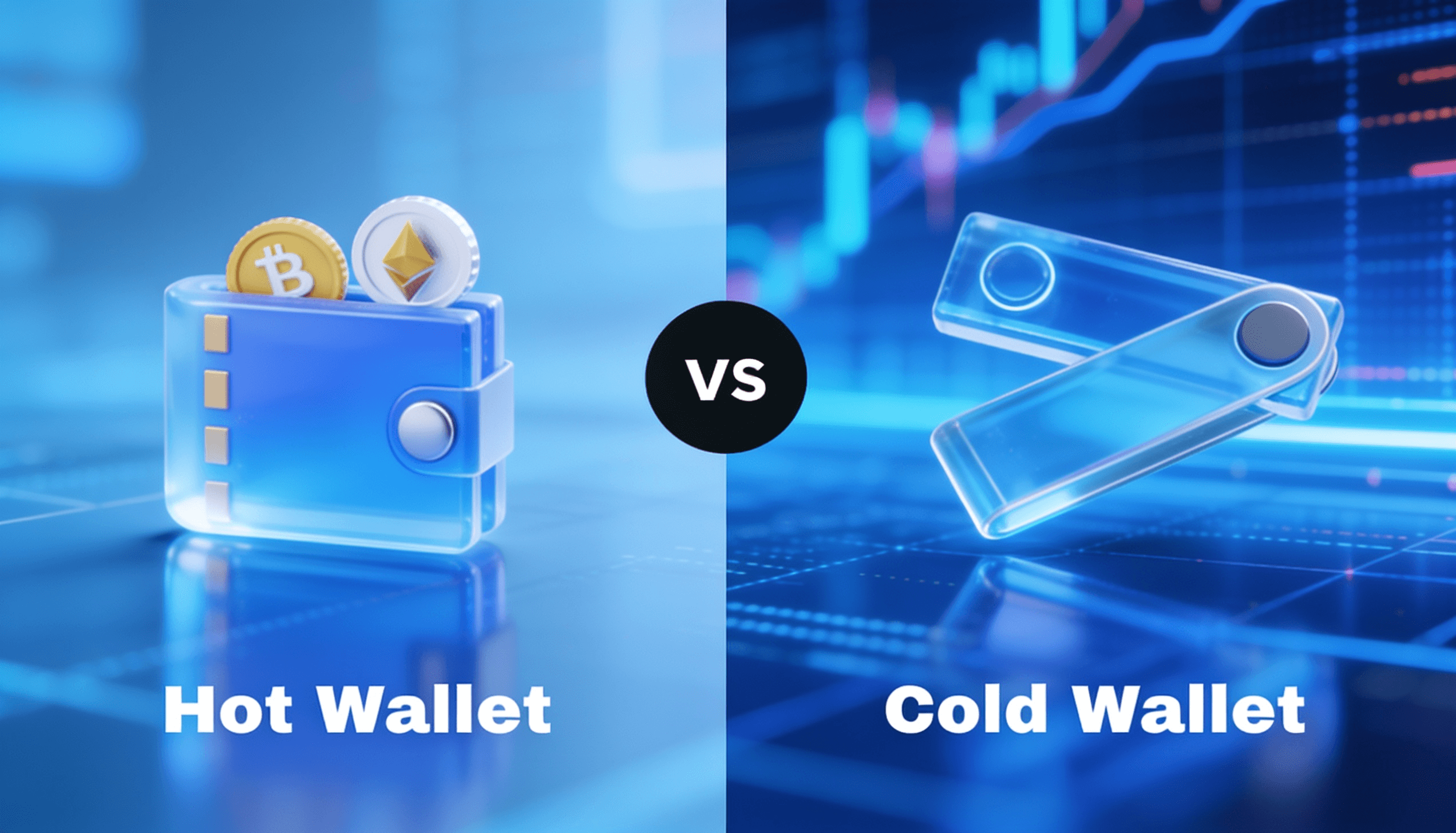
If you're new to crypto — or simply looking to tighten up your security strategy — understanding the difference between a hot wallet and a cold wallet is one of the most foundational steps you can take. These two storage methods sit at opposite ends of the security and convenience spectrum, and knowing when to use each can mean the difference between protecting your assets and losing them. This guide breaks down everything you need to know.What Is a Crypto Wallet and Why Does It Matter?A crypto wallet doesn't store your cryptocurrency the way a physical wallet holds cash. Instead, it stores the cryptographic keys that give you access to your assets on the blockchain. There are two key components: your public key, which serves as a bank account number and can be shared freely, and your private key, which acts as a password and must never be disclosed to anyone.Choosing the right wallet type is a critical first step in managing digital assets. The wrong choice — or no deliberate choice at all — can expose you to hacks, theft, or permanent loss of funds.What Is a Hot Wallet?A hot wallet is any cryptocurrency wallet that remains connected to the internet. Because it's always online, it's optimized for speed and convenience.How it works and who uses it: Hot wallet crypto storage stores your private keys in an internet-connected environment — on your device, in your browser, or on a third-party server. Common types include software wallets (desktop apps), mobile wallets, browser extension wallets like MetaMask, and exchange wallets. Private keys in a hot wallet may be held by you (non-custodial) or by the platform (custodial). Active traders, DeFi users, and crypto beginners tend to favor hot wallets because they are easy to set up and use day to day.What Is a Cold Wallet?Cold wallets are cryptocurrency wallets that store private keys entirely offline, disconnected from the internet. This offline nature is what makes them far more resistant to remote attacks.How it works and who uses it: Cold wallets store private keys on devices or media that never connect to the internet — hardware wallets (like Ledger or Trezor), paper wallets, or air-gapped computers. Because transaction signing occurs offline, hackers have no remote-access vector. Long-term investors, HODLers, and institutions managing large crypto portfolios are the primary users of cold wallets.Hot Wallet vs Cold Wallet: Full ComparisonHere's a side-by-side look at hot and cold wallets across the dimensions that matter most:FeatureHot WalletCold WalletInternet ConnectivityAlways onlineFully offlineSecurity LevelModerateHighEase of UseVery easyModerate learning curveTransaction SpeedInstantSlower (manual signing)CostFree to low-costHardware investment requiredCross-Chain SupportBroadVaries by deviceCustodyCustodial or self-custodySelf-custody In general, hot wallets win on convenience, while cold wallets win on security. The right answer for most users is to use both.How Does a Hot Wallet Work Step by Step?Setting Up a Hot Wallet Crypto AccountDownload your chosen wallet app or browser extension, create an account, and securely record your seed phrase offline — never digitally. Your hot wallet is ready within minutes.Sending and Receiving Crypto With a Hot WalletTo receive, share your public address. To send, enter the recipient's address, confirm the amount, and approve the transaction. Your hot wallet in crypto signs and broadcasts it instantly to the blockchain network.How Hot Wallets Connect to DeFi and DAppsHot wallets like MetaMask connect directly to decentralized applications via wallet-connect prompts. You approve interactions through your wallet interface, keeping you in control while seamlessly accessing DeFi protocols, NFT marketplaces, and Web3 platforms.How Does a Cold Wallet Work Step by Step?Setting Up Your Cold Wallet for the First TimePurchase directly from the manufacturer, initialize the device, and generate your seed phrase. Write it down physically and store it securely — this is your only recovery method for your cold wallet.How Transaction Signing Works OfflineTransactions are created on your internet-connected device but transferred to the cold wallet for offline signing. The signed transaction is then broadcast online, ensuring your private key never touches an internet-connected environment.Verifying Transactions on Your Cold Wallet DeviceAlways confirm transaction details — address, amount, network — directly on your cold wallet's physical screen before signing. This protects against malware manipulating transaction data on your computer undetected.How to Recover a Cold Wallet Using a Seed PhraseIf your device is lost or damaged, purchase a new compatible hardware wallet, select the recovery option, and enter your seed phrase. Your full wallet and funds are restored across hot and cold wallets that support the same standard.Security Risks of Hot WalletsBecause hot wallet crypto storage operates online, it's exposed to a range of threats. Phishing attacks and malware are the most common — malicious sites or software can extract your private keys without you realizing. Exchange hacks are also a real risk when you use custodial hot wallets: if the exchange is compromised, your assets are too. SIM swapping is another vector in which attackers hijack your phone number to bypass two-factor authentication.To reduce your hot wallet security risks: use non-custodial wallets where you control your keys, enable hardware-based 2FA, and never enter your seed phrase online.Security Risks of Cold WalletsCold wallets aren't risk-free either. Physical theft or device loss is the obvious concern. However, as long as your seed phrase is stored safely, you can recover your wallet on a new device. Losing your seed phrase, on the other hand, means permanent, unrecoverable loss. Supply chain attacks — where a hardware wallet is tampered with before purchase — are rare but documented. Always buy hardware wallets directly from the manufacturer.To store your seed phrase safely: write it on paper (or metal), store it in a secure physical location, and never photograph or store it digitally.How to Choose Between a Hot and Cold WalletYour choice depends on three factors: trading frequency, asset size, and risk tolerance.Crypto beginners should start with a reputable hot wallet for small amounts while learning the basics.Active traders need hot wallets for speed and DeFi access, but should limit the amount held online.Long-term HODLers should prioritize cold wallets to keep the bulk of holdings offline and secure.When choosing a cold wallet, evaluate security certifications, coin compatibility, ease of recovery, and price.Hot and Cold Wallets: Do You Need to Choose Just One?No, and most experienced crypto users don't. The smartest strategy is a hybrid approach: use a hot wallet for everyday spending, DeFi, and trading, while keeping the majority of your holdings in cold wallets for long-term storage. Think of it like a checking account versus a savings account. A practical split for many users is keeping only what you're actively trading in your hot wallet and moving everything else to cold storage. This layered approach significantly raises the bar for any would-be attacker.Why Choose VictoryX for Your Crypto Journey?VictoryX, the trading platform of Victory Securities (a licensed virtual asset trading platform operator under the SFC in Hong Kong), provides a regulated, professional-grade environment for investors at every level. As a licensed crypto brokerage — not simply an exchange — VictoryX offers a broader suite of services, including Virtual Asset spot trading (Crypto Trading), Asset Management, advanced VA products(Professional Investors, PI) , VA Custody services via VATP's omnibus accounts , all within a compliant framework.For investors concerned about the hot and cold wallet divide, VictoryX's custodial infrastructure is designed with institutional-grade security in mind, blending the accessibility of a managed account with robust safeguards over private keys. Whether you are making your first crypto purchase or managing a diversified digital asset portfolio, VictoryX bridges the gap between convenience and security. Clients can trade supported cryptocurrencies directly with fiat currencies, including HKD and USD — no stablecoin intermediate required — making the onboarding process straightforward and fully compliant with Hong Kong regulations.FAQsWhat is a hot wallet in crypto?A hot wallet in crypto is a wallet that remains connected to the internet, enabling fast and convenient access to your funds. It's ideal for frequent transactions but carries higher online security risks.What is a cold wallet, and how does it work?A cold wallet stores your private keys offline on a hardware device, paper, or an air-gapped machine. To send funds, you sign transactions offline and broadcast them separately, keeping your keys away from any internet-connected environment.What is the difference between a hot wallet and a cold wallet?The core difference is connectivity. Hot and cold wallets differ in that hot wallets are always online for convenience, while cold wallets are fully offline for maximum security.Can I use both a hot wallet and a cold wallet at the same time?Absolutely. Most experienced users maintain both: a hot wallet for active use and cold wallets for long-term storage. This hybrid approach offers the best of both worlds.Which is better for beginners — a hot wallet or a cold wallet?Beginners typically start with a hot wallet due to its ease of use. As holdings grow, adding a cold wallet for the majority of assets is strongly recommended.

The crypto ecosystem is no longer a single-lane road. Today, hundreds of blockchains run simultaneously — each with its own rules, assets, and communities. But how do users move value between them? The answer lies in bridge chain technology. This guide breaks down everything you need to know about cross-chain bridges, how they work, and why they matter.What Is a Cross-Chain Bridge?The Simple Analogy: Currency Exchange When Traveling AbroadThink of traveling from Hong Kong to Japan. Your HKD doesn't work at a Tokyo convenience store, so you exchange it for JPY. A crypto bridge works on the same principle — it converts or transfers your assets from one blockchain to another, letting you participate in different ecosystems without selling everything and starting over.How Does a Crypto Bridge Connect Different Blockchains?A cross-chain bridge acts as a protocol layer sitting between two (or more) independent blockchains. It verifies that you've locked or burned assets on the source chain, then instructs the destination chain to release or mint an equivalent amount. The result: your value moves, even though the two blockchains never directly communicate with each other.Key Terms You Should KnowSource chain — the blockchain you're sending fromDestination chain — the blockchain you're sending toWrapped token — a representation of an asset on a chain where it doesn't natively existSmart contract — self-executing code that automates the bridge processWhy Do We Need Cross-Chain Bridges?The Problem: Every Blockchain Is an Isolated EcosystemEthereum, Solana, BNB Chain, and Avalanche each operate in their own silo. Without a cross-chain bridge, ETH stays on Ethereum, SOL stays on Solana, and never the twain shall meet.Asset and Data InteroperabilityA crypto bridge solves two interoperability challenges at once. First, it enables asset interoperability by allowing tokens to be moved from one network to another. Second, it enables data interoperability — the ability to pass information (such as NFT metadata or governance votes) across chains. Both are essential for a truly connected Web3.Liquidity: Why Multi-Chain Bridge Access Matters for DeFiDecentralized finance depends on deep liquidity pools. When capital is trapped on a single chain, opportunities on other networks go untapped. Multi-chain bridge infrastructure routes liquidity where it's needed most, keeping DeFi protocols competitive and efficient across the board.How Does a Cross-Chain Bridge Actually Work?Step-by-step, here's what happens when you bridge crypto assets:You connect your wallet and select a source and destination chain.The bridge's smart contract locks (or burns) your tokens on the source chain.Validators or relayers confirm the transaction.An equivalent amount is minted (or released) on the destination chain.The two core mechanisms are:Lock-and-Mint — tokens are locked in a smart contract on Chain A; wrapped tokens are minted on Chain B.Burn-and-Release — tokens are burned on Chain A; native tokens are released from a reserve on Chain B.A multi-chain bridge extends this logic to three or more networks simultaneously, allowing you to route assets through multiple hops via a single interface.Types of Crypto BridgesTrusted (Centralized) Bridges rely on a central operator to validate transfers. They're typically faster and cheaper but introduce custodial risk — you trust the operator with your funds during transit.Trustless (Decentralized) Bridges use smart contracts and cryptographic proofs. No single party controls the process, so they're more aligned with crypto's self-custody ethos — though smart contract bugs remain a concern.Hybrid Bridges blend both models, using a centralized layer for speed while anchoring security in on-chain verification. Many modern cross-chain bridge protocols fall into this evolving category.What Can You Do With a Cross-Chain Bridge?Reduce gas fees by bridging assets to Layer 2 networks like Arbitrum or Optimism, where transaction costs are a fraction of Ethereum mainnet.Access DeFi protocols on chains with better yield opportunities or lower slippage.Expand NFT utility — mint on one chain, trade or display on another.Across-bridge crypto use cases: a trader might bridge USDC from Ethereum to Polygon to farm yield, then bridge profits back to cash out — all without touching a centralized exchange.A well-designed cross-bridge crypto workflow can save significant fees and unlock strategies unavailable on a single network.Benefits of Using a Crypto BridgeUsing a crypto bridge offers tangible advantages, which include lower transaction costs on alternative networks, access to multi-chain DeFi opportunities, greater portfolio flexibility, and increased liquidity across the broader ecosystem. For active traders and long-term investors alike, bridge chain technology removes friction that would otherwise force unnecessary asset liquidation.Risks and Limitations of Cross-Chain BridgesNo technology is risk-free. Key concerns include:Smart Contract Vulnerabilities: Bugs in bridge code have led to some of crypto's largest exploits.Custodial Risk: Trusted bridges hold your funds; if the operator is compromised, so are your assets.Technical Failures: Network congestion or oracle errors can delay or fail transactions.To minimize risk: use audited, well-established bridges; start with small test transactions; avoid bridging during periods of extreme network congestion; and never share your private keys with any bridge interface.Cross-Chain Bridges vs Centralized Exchanges (CEX): What's the Difference? Cross-Chain BridgeCEXCustodySelf-custody (trustless) or bridge operatorExchange holds fundsSpeedMinutes to hoursUsually instantKYC requiredTypically noYesAsset rangeLimited to supported chainsBroadUse a crypto bridge when you want to stay self-custodied, move assets between specific chains, or access DeFi protocols. Use a CEX (or brokerage) when you need fiat on/off ramps, broader asset selection, or regulatory assurance.The Future of Multi-Chain BridgesCross-chain bridges are foundational infrastructure for Web3. As user bases grow, so does demand for seamless interoperability. Emerging standards, such as cross-chain messaging protocols and zero-knowledge proof bridges, are enabling faster, safer transfers. In 2026 and beyond, expect Multi-chain bridge technology to become as invisible as internet routing: working in the background so users never have to think about which chain they're on.Why Choose VictoryX for Your Crypto Journey?VictoryX, operated by Victory Securities (a licensed corporation in Hong Kong), offers a comprehensive crypto ecosystem built for both newcomers and experienced investors. As a regulated crypto brokerage — not a conventional exchange — VictoryX operates under Hong Kong's SFC licensing framework, giving clients the confidence of institutional-grade oversight.Core services include:Crypto trading: Buy and sell major cryptocurrencies directly with HKD or USD fiat, no stablecoin intermediary required.Asset management: Portfolio solutions tailored to individual risk profiles.OTC services: For larger trades requiring bespoke execution and pricing.While VictoryX itself is a regulated brokerage rather than a decentralized bridge, understanding bridge chain and cross-chain bridge mechanics is directly relevant to how clients manage multi-chain portfolios. Whether you're bridging assets between networks for DeFi exposure or consolidating holdings back into fiat via VictoryX's licensed platform, the two layers of the crypto ecosystem — decentralized infrastructure and regulated access points — work hand in hand.Learn more about VictoryX's services to get started.FAQsWhat is a cross-chain bridge in crypto?A cross-chain bridge is a protocol that enables the transfer of tokens or data between two blockchains that cannot communicate natively.Is it safe to use a crypto bridge?Safety varies by bridge. Audited, trustless bridges are generally more secure, but smart contract risk always exists. Start small and use reputable protocols.What is the difference between a trusted and trustless bridge?Trusted bridges rely on a central operator; trustless bridges use smart contracts and cryptographic proofs with no single point of control.What is a multi-chain bridge?A multi-chain bridge supports transfers across three or more blockchains within a single interface, rather than just between two networks.How does across-bridge crypto work?Across-bridge crypto transfers work by locking or burning assets on the source chain and minting or releasing equivalent assets on the destination chain — verified by smart contracts or validators.
Crypto investors are increasingly looking beyond simple spot holding to generate returns on their digital assets. Dual investment is one structured approach gaining traction — offering yield potential while incorporating a built-in buy-low/sell-high strategy. This guide breaks down how it works, the risks involved, and what to look for before subscribing.What Is Dual Investment? A Clear DefinitionDual investment is a non-principal-protected structured product that allows investors to earn yield on crypto holdings over a fixed period, with settlement occurring in one of two currencies depending on market conditions at expiry. It can be explained in this way simply: you commit funds in one currency, select a target (strike) price, and at settlement receive your principal plus yield — either in your original currency or converted into the alternative currency at the strike rate. The enhanced yield is generated from the option premium received by selling a covered call or a cash-secured put. While the yield is paid regardless of the outcome, it acts as a buffer against market movements rather than a guaranteed profit.Dual Investment vs. Dual Currency Deposit: Traditional and Crypto VersionsThe dual currency deposit has its roots in traditional private banking, where clients would deposit funds in one currency and accept the possibility of repayment in a second currency in exchange for an enhanced interest rate. Dual investment in crypto evolved directly from this concept, applying the same structured payoff logic to digital asset pairs such as BTC/USDT or ETH/USDT. Both products share the same core mechanics — strike price, tenor, enhanced yield, and dual-currency settlement — but differ significantly in underlying asset volatility, regulatory frameworks, and custody arrangements. Both are classified as structured products and carry risks that distinguish them from conventional deposits.How Dual Investment Works: Step-by-Step MechanicsStep 1: Choose a currency pair (e.g., BTC/USDT) and decide your direction: sell high or buy low.Step 2: Select your strike price and settlement date.Step 3: Commit your subscription currency (e.g., BTC for a sell-high product).Step 4: Earn yield throughout the holding period, accruing at the stated APR.Step 5: At expiry, the settlement currency is determined by whether the market price is above or below your strike.Step 6: Receive principal plus yield in the final settlement currency.Dual Currency Investment Explained: Two Settlement ScenariosScenario 1 — Market moves in your favor: For a sell-high product, if BTC is at or above your strike at settlement, you receive USDT (your target sell currency) plus yield. For a buy-low product, if BTC is below your strike, you receive BTC at your target entry price plus yield.Scenario 2 — Target Price Reached: Your principal and yield are converted into the alternative currency at the strike price. For a 'Buy Low' product, this means you bought the crypto during a price drop; for a 'Sell High' product, you successfully sold at your target price. The risk here is 'Opportunity Cost' or being 'forced to buy' a falling asset.The yield compensates investors for accepting this settlement-currency uncertainty, not for guaranteed profit.Dual Currency Deposit Example: Traditional Banking IllustrationA client deposits USD 100,000 with a strike rate of USD/HKD 7.90 over a 30-day tenor, earning an annualized rate of 5%. If USD/HKD is below 7.90 at settlement, the client receives USD principal plus yield in USD. If USD/HKD breaches 7.90, the client is repaid in HKD at the strike rate, plus yield — meaning the USD equivalent received depends on prevailing exchange rates.This example of a dual currency deposit illustrates that enhanced yield comes with currency conversion risk.Dual Investment Crypto Example: BTC/USDT IllustrationFor a dual investment in a sell-high crypto product, an investor subscribes to 1 BTC at a current spot price of USD 60,000, selecting a strike of USD 65,000 with a 7-day tenor at 80% APR.If BTC is at or above USD 65,000 at settlement, the investor receives USDT equivalent to 1 BTC at USD 65,000, plus yield — a favorable outcome.If BTC is below USD 65,000, the investor receives their 1 BTC back plus yield in BTC. In this case, you retain your position and earn extra yield, though you bear the risk of the BTC market price falling below your initial entry cost.APR is derived from the tenor length, the distance of the strike from spot, and the implied volatility of the underlying asset. Higher volatility and wider strike distances generally produce higher advertised APRs — but also reflect greater risk.Key Risks and Limitations of Dual InvestmentNon-principal-protected: The USD value of your settlement may be lower than your subscription amount.Opportunity cost: Sharp directional moves can leave you holding the less favorable currency.Liquidity lock-up: Funds are committed until the settlement date and cannot be withdrawn early.Platform and custody risk: Always verify your provider's licensing and custody standards.Not a savings account: The yield comes with a meaningful risk of adverse settlement.Regulatory Considerations for Dual Investment in Hong KongIn Hong Kong, structured yield-bearing products — including dual investment in crypto — fall under SFC regulatory oversight. In accordance with SFC requirements, these structured products are generally available only to Professional Investors (PIs) who have undergone a Suitability Assessment and Virtual Asset Knowledge Test. SFC-licensed virtual asset brokerages are required to meet strict risk disclosure, custody, and client suitability standards. Using a licensed platform is not optional — it is the foundation of safe participation in these products.Why Choose Victory?Victory Securities ('Victory') is an SFC-licensed crypto brokerage offering institutional-grade services to professional investors, family offices, and high-net-worth individuals in Hong Kong. Beyond spot crypto trading — executable directly in HKD or USD without stablecoin intermediaries — VictoryX's ecosystem encompasses a range of structured crypto services within a fully regulated framework. For investors exploring dual currency investment strategies, VictoryX provides transparent product terms, rigorous client asset segregation, and a dedicated Hong Kong-based advisory team to guide subscription decisions. Every product offered is subject to full regulatory oversight, giving clients the confidence that comes from working with a licensed institution rather than an unregulated platform.FAQWhat is dual investment in simple terms?Dual investment is a structured crypto product where you earn yield over a fixed period, with your principal returned in one of two currencies at settlement, depending on where the market price lands relative to your chosen strike. The yield is earned regardless of outcome, but total value is not guaranteed.Is dual investment the same as a dual currency deposit?They share the same structural logic: a dual currency deposit from traditional banking and dual investment in crypto both offer enhanced yield in exchange for accepting settlement-currency uncertainty. The key differences lie in the underlying assets, volatility levels, and regulatory environment.Is dual investment principal-protected?No. Dual investment is explicitly non-principal-protected. Depending on market movement at settlement, the USD value of what you receive may be less than what you originally subscribed.Can you give a simple example of a dual currency deposit for beginners?Sure. A simple example of a dual currency deposit: Deposit USD 10,000 with a USD/HKD strike of 7.85 for 14 days at 6% APR. If the USD remains weaker than 7.85 at maturity, you receive your USD principal plus yield. If the USD strengthens and breaches 7.85, your funds are converted into HKD at the strike rate plus yield. The risk is that the HKD amount, when converted back to USD at the prevailing market rate, may be worth less than your original investment.Is dual investment available to retail investors in Hong Kong?Access depends on the specific product structure and the licensing conditions of the platform. Many dual investment products in Hong Kong are available to Professional Investors only. Always verify eligibility and read full risk disclosures before subscribing through any SFC-licensed platform.

For beginners investing in virtual assets, the complex professional terminology can be confusing. In reality, once you understand the basic mechanics of fund flows, it becomes easy to navigate. Understanding fiat "on-ramps" and "off-ramps" is a mandatory lesson for every investor to manage assets safely. This article breaks down the complete ecosystem of fiat currency transactions, clearly contrasting the fundamental differences between crypto deposits/fiat deposits and crypto withdrawals/fiat withdrawals, helping you avoid common pitfalls and take your first step toward safe and efficient investing.What Are Fiat Transactions? The First Step in Cryptocurrency InvestingDefinition of "On-Ramp": From Fiat to CryptocurrencyAn "on-ramp" refers to the process by which investors use fiat currencies, such as HKD or USD, to purchase and enter the cryptocurrency market. This is the first step in starting your virtual asset investment journey.Definition of "Off-Ramp": From Cryptocurrency back to FiatAn "off-ramp" is the process of selling held crypto assets, converting them back into fiat currency, and withdrawing them to a personal bank account. Combining these two creates a complete cycle for fiat transactions.What Is the Difference Between Crypto Deposits and Fiat Deposits?Crypto Deposits: Transferring Cryptocurrency into the PlatformCrypto deposits refer to investors transferring cryptocurrency already stored in external cold wallets or other exchanges to the current trading platform via the blockchain network.Fiat Deposits: Purchasing Cryptocurrency Directly with HKD/USDFiat deposits are deposits of legal tender (such as HKD or USD) directly into a brokerage or trading platform account to serve as purchasing power for buying crypto assets.Why Is It Possible to Trade Without Buying Stablecoins First?Through compliant platforms, investors can use fiat currency directly for quoting and settlement, eliminating the intermediate step of converting fiat to stablecoins and thereby saving time and potential conversion costs. This is highly efficient for investors who prefer to allocate crypto assets directly rather than engaging in crypto-to-crypto trading via stablecoins.What Is the Difference Between Crypto Withdrawals and Fiat Withdrawals?Crypto Withdrawals: Transferring Cryptocurrency to External WalletsCrypto withdrawals refer to extracting cryptocurrency from a platform account and transferring it to a personal external wallet address.Fiat Withdrawals: Converting Crypto Assets back into HKD/USDFiat withdrawals involve selling crypto assets and transferring the resulting HKD or USD funds directly to the investor's own physical bank account.Common Fiat Transaction Methods for Hong Kong InvestorsDirect Bank Transfer DepositsIn Hong Kong, investors can safely and quickly deposit funds into the trust account of a licensed institution via online banking or local transfer systems (such as FPS).Why P2P or Third-Party Channels Are Not IdealCurrently, investors can trade cryptocurrencies through licensed exchanges or brokerages. However, under the current compliance framework, licensed institutions no longer provide peer-to-peer (P2P) trading services. This is because the source of funds in P2P transactions is often difficult to verify; if illicit funds are involved, the investor's physical bank account faces a very high risk of being frozen.The Advantage of Connecting Regulated Institutions with the Traditional Banking SystemRegulated licensed institutions can seamlessly connect to the traditional banking system, ensuring that fiat transaction processes comply with Anti-Money Laundering (AML) regulations and providing the maximum level of protection for investors' assets.The Relationship Between Fiat Transactions and StablecoinsThe Role of Stablecoins in Hong KongStablecoins are often used as a medium of exchange or as a hedge asset in the crypto market, but for most investors, their ultimate value is still realized through fiat channels.Is Direct Trading with Fiat Simpler and More Direct?Yes. Trading directly in fiat allows investors to avoid the exchange-rate volatility and additional handling fees associated with stablecoins, making the overall investment experience more direct and transparent.Why Choose Victory Securities?Licensed Brokerage in Hong Kong, Regulated Fund Transfer ProcessVictory Securities is a licensed broker recognized by the Hong Kong Securities and Futures Commission (SFC). Client fiat and crypto assets are held in independent, segregated accounts. By directly connecting to local banks through compliant fiat on- and off-ramp channels, fund transfers are transparent and comply with AML regulations, helping investors avoid the risks of account freezing and illicit funds associated with P2P trading while providing comprehensive asset protection.One-Account Trading for HK/US Stocks and CryptocurrencyWith just one Victory Securities account, investors can simultaneously trade HK/US stocks and virtual assets on a single interface. Fiat funds in the account can be used directly for trading, eliminating the complicated procedures and extra costs of cross-platform deposits and withdrawals, achieving seamless fund allocation and making investing more direct and efficient.Direct Bank Transfers, No Third-Party OTC RequiredFor Hong Kong investors, Victory Securities offers a more robust choice beyond virtual asset exchanges. As the first licensed brokerage in Hong Kong to obtain retail virtual asset trading qualifications, Victory Securities enables users to trade both HK/US stocks and cryptocurrencies via the VictoryX App. Compared to traditional exchanges, its advantages lie in its regulated fund transfer process and seamless integration with the traditional banking system, providing investors with a smoother experience for depositing and trading.FAQsCan I buy cryptocurrency with fiat directly in Hong Kong?Yes. Through a licensed brokerage regulated by the Hong Kong SFC, investors can easily make fiat deposits and purchase cryptocurrency directly.What is the difference between crypto deposits and fiat deposits?Crypto deposits involve depositing existing "cryptocurrency," while fiat deposits involve depositing "legal tender" such as HKD or USD.What is the difference between crypto withdrawals and fiat withdrawals?Crypto withdrawals involve transferring "cryptocurrency" to other wallets, while fiat withdrawals involve liquidating assets and extracting "legal tender" to a personal bank account.

As virtual assets increasingly become a mainstream asset class, more Hong Kong investors are eager to participate. However, in a 24/7, high-volatility cryptocurrency market and amid the risks of unreliable virtual currency OTC (Over-the-Counter) traps, choosing a safe and suitable way to participate is crucial. Is self-directed crypto trading better, or is a managed crypto account by a professional discretionary management team more suitable for you? This article provides an in-depth analysis of the pros and cons of these two crypto investment management models to help you make informed financial decisions.What is Self-Directed Crypto Trading?Operating Mode of Self-Directed TradingSelf-directed crypto trading (Do-It-Yourself Trading) refers to investors opening their own trading accounts, conducting their own market research and technical analysis, and placing orders to buy or sell virtual assets directly. In this model, investors have 100% absolute decision-making power over entry timing, asset selection, and position control.Which Investors Is This Suitable For?This approach is best suited for investors with rich financial knowledge, a deep understanding of blockchain technology, and sufficient time to monitor market dynamics daily. If you enjoy the sense of achievement gained from analyzing market trends and profiting from them yourself, self-directed trading is an ideal choice.What is Crypto Discretionary Management?The Relationship Between Discretionary Management and Investment ManagementCrypto Discretionary Portfolio Management (often referred to as a managed crypto account) is an advanced investment management service. Investors entrust their funds to a regulated, licensed financial institution, where professional investment managers make all investment decisions and execute trades on the client's behalf, based on their risk tolerance and return objectives.How Professional Teams Manage Virtual Asset PortfoliosProfessional teams utilize big data, quantitative models, on-chain data, and in-depth analysis to determine trading strategies for virtual assets. They adjust to market changes, strictly execute stop-loss and take-profit orders, and perform asset rebalancing, aiming to control downside risk while striving for better long-term returns.Comparison: Self-Directed Crypto Trading vs. Discretionary ManagementTime Cost and Level of EngagementSelf-Directed Trading: Requires significant time investment to read news, analyze charts, and monitor positions. Engagement is extremely high, and the time cost is substantial.Discretionary Management: Investors only need to clarify their goals with the professional team at the outset; subsequent operations are handled entirely by experts, saving time and effort.Risk Control and Professional JudgmentSelf-Directed Trading: Easily influenced by market sentiment (such as panic or FOMO - Fear Of Missing Out), leading to irrational investment decisions. Risk management is often difficult to strictly enforce.Discretionary Management: Investment managers possess institutional-grade risk control awareness. Decisions are based on objective data and rigorous strategies, effectively eliminating emotional interference.Fee Structure and Return ExpectationsSelf-Directed Trading: Primarily involves trading commissions and platform fees. Returns depend entirely on individual judgment and luck.Discretionary Management: Typically charges a base management fee and a performance fee. Although there are additional costs, the goal is to offset them with more stable, risk-adjusted long-term returns.How to Choose the Crypto Investment Method That Suits You?Assess Your Own Investment Experience and TimeBe honest with yourself: Do you have sufficient professional knowledge to interpret whitepapers and on-chain data? Can you find time during a busy workday to monitor the market? If the answer is no, professional crypto discretionary management services might be more appropriate.Investment Goals and Risk ToleranceIf you are pursuing short-term explosive profits and can tolerate drastic losses, self-directed trading offers the greatest flexibility. However, if your goal is steady asset appreciation and you view cryptocurrency as part of a long-term asset allocation, a managed crypto account can provide greater peace of mind and protection.Why Choose Victory Securities?The First Licensed Brokerage in Hong Kong to Obtain Retail Virtual Asset Trading QualificationsAs an institution recognized by the Hong Kong Securities and Futures Commission (SFC), Victory Securities holds a leading position in the virtual asset space, providing clients with a safe, compliant, and trustworthy trading environment.Trade Hong Kong/US Stocks and Cryptocurrency Simultaneously via Victory SecuritiesThrough a single account, investors can seamlessly navigate between traditional Hong Kong/US stock markets and the emerging virtual asset market, easily achieving comprehensive asset allocation across asset classes.Regulated Fund Transfers and Seamless Integration with the Traditional Banking SystemWe strictly adhere to Hong Kong’s regulatory requirements, ensuring that client assets are held in independent, segregated accounts. The fund inflow and outflow processes are clear and transparent, providing the highest standard of asset protection.Direct Bank Transfers, No Third-Party OTC RequiredFor Hong Kong investors, Victory Securities offers a more robust choice beyond virtual asset exchanges. As the first licensed brokerage in Hong Kong to obtain retail virtual asset trading qualifications, Victory Securities allows users to trade both HK/US stocks and cryptocurrencies via the VictoryX App. Compared to traditional exchanges, our advantage lies in regulated fund transfer processes and seamless integration with the traditional banking system, providing investors with a more transparent experience for depositing and trading, and helping you avoid the risks often associated with unregulated crypto OTC platforms.FAQsWho is crypto discretionary management suitable for?It is highly suitable for busy professionals who lack time to monitor the market, high-net-worth individuals, and investors who wish to allocate virtual assets in a professional, disciplined manner but lack the relevant technical knowledge.What knowledge is required for self-directed crypto trading?In addition to the basic operations of financial markets, one must also understand the underlying logic of blockchain, the application scenarios of various tokens, technical analysis charts, and knowledge regarding the secure management of hot and cold wallets.Will I have no participation in decision-making with discretionary management?While specific trades are executed by a professional team, the overall direction of the investment portfolio, risk level, and investment themes will be tailored based on the investor's initial authorization and preferences.What is the minimum threshold for crypto investment management?Minimum thresholds vary by institution. Generally speaking, discretionary management services are aimed at Professional Investors (PI) or clients with a certain scale of assets. Specific requirements can be inquired about by contacting a professional advisor at Victory Securities.