Hot Wallet vs Cold Wallet: What’s the Difference?
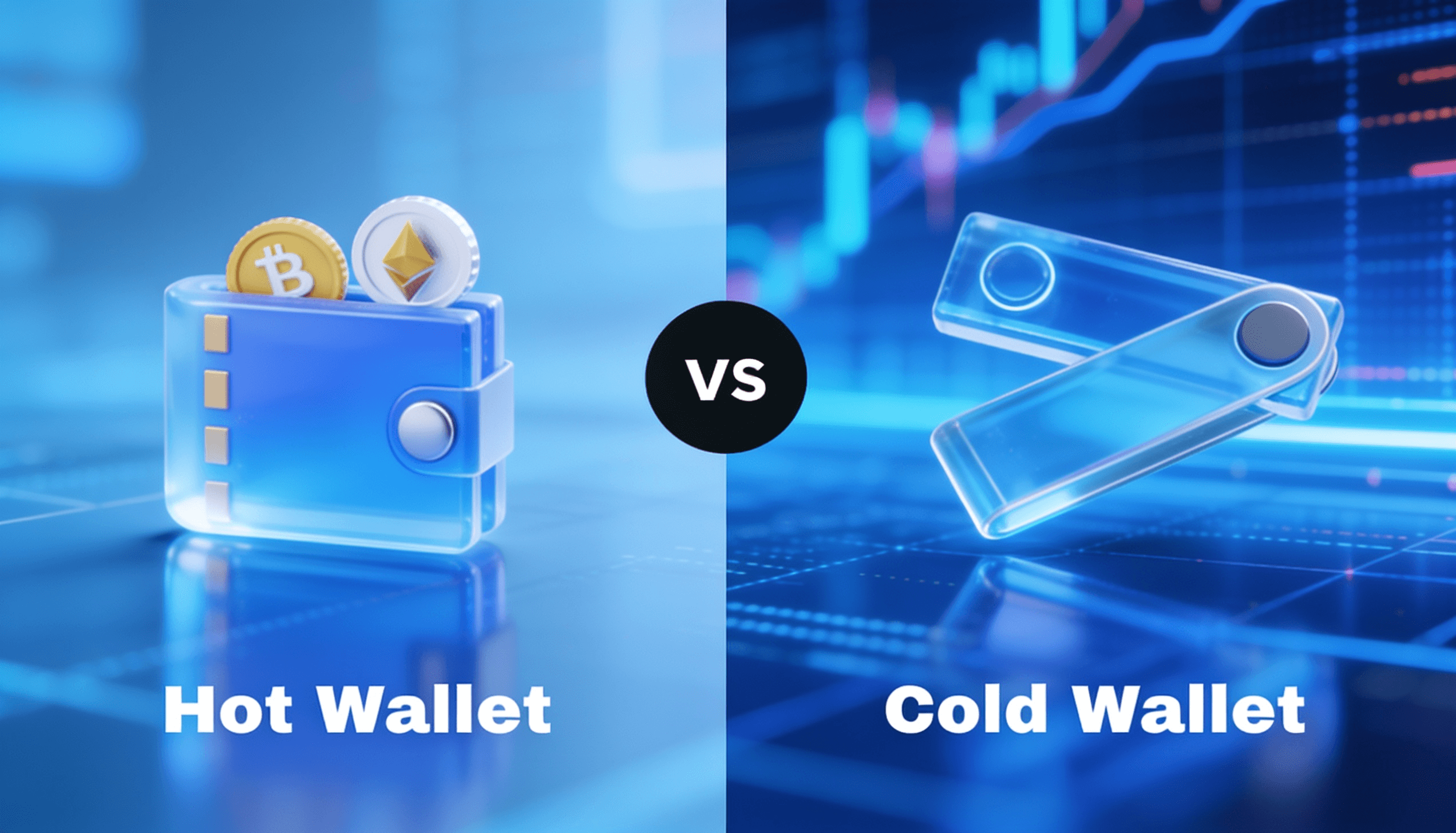
If you're new to crypto — or simply looking to tighten up your security strategy — understanding the difference between a hot wallet and a cold wallet is one of the most foundational steps you can take. These two storage methods sit at opposite ends of the security and convenience spectrum, and knowing when to use each can mean the difference between protecting your assets and losing them. This guide breaks down everything you need to know.
What Is a Crypto Wallet and Why Does It Matter?
A crypto wallet doesn't store your cryptocurrency the way a physical wallet holds cash. Instead, it stores the cryptographic keys that give you access to your assets on the blockchain. There are two key components: your public key, which serves as a bank account number and can be shared freely, and your private key, which acts as a password and must never be disclosed to anyone.
Choosing the right wallet type is a critical first step in managing digital assets. The wrong choice — or no deliberate choice at all — can expose you to hacks, theft, or permanent loss of funds.
What Is a Hot Wallet?
A hot wallet is any cryptocurrency wallet that remains connected to the internet. Because it's always online, it's optimized for speed and convenience.
How it works and who uses it: Hot wallet crypto storage stores your private keys in an internet-connected environment — on your device, in your browser, or on a third-party server. Common types include software wallets (desktop apps), mobile wallets, browser extension wallets like MetaMask, and exchange wallets. Private keys in a hot wallet may be held by you (non-custodial) or by the platform (custodial). Active traders, DeFi users, and crypto beginners tend to favor hot wallets because they are easy to set up and use day to day.
What Is a Cold Wallet?
Cold wallets are cryptocurrency wallets that store private keys entirely offline, disconnected from the internet. This offline nature is what makes them far more resistant to remote attacks.
How it works and who uses it: Cold wallets store private keys on devices or media that never connect to the internet — hardware wallets (like Ledger or Trezor), paper wallets, or air-gapped computers. Because transaction signing occurs offline, hackers have no remote-access vector. Long-term investors, HODLers, and institutions managing large crypto portfolios are the primary users of cold wallets.
Hot Wallet vs Cold Wallet: Full Comparison
Here's a side-by-side look at hot and cold wallets across the dimensions that matter most:
| Feature | Hot Wallet | Cold Wallet |
| Internet Connectivity | Always online | Fully offline |
| Security Level | Moderate | High |
| Ease of Use | Very easy | Moderate learning curve |
| Transaction Speed | Instant | Slower (manual signing) |
| Cost | Free to low-cost | Hardware investment required |
| Cross-Chain Support | Broad | Varies by device |
| Custody | Custodial or self-custody | Self-custody |
In general, hot wallets win on convenience, while cold wallets win on security. The right answer for most users is to use both.
How Does a Hot Wallet Work Step by Step?
Setting Up a Hot Wallet Crypto Account
Download your chosen wallet app or browser extension, create an account, and securely record your seed phrase offline — never digitally. Your hot wallet is ready within minutes.
Sending and Receiving Crypto With a Hot Wallet
To receive, share your public address. To send, enter the recipient's address, confirm the amount, and approve the transaction. Your hot wallet in crypto signs and broadcasts it instantly to the blockchain network.
How Hot Wallets Connect to DeFi and DApps
Hot wallets like MetaMask connect directly to decentralized applications via wallet-connect prompts. You approve interactions through your wallet interface, keeping you in control while seamlessly accessing DeFi protocols, NFT marketplaces, and Web3 platforms.
How Does a Cold Wallet Work Step by Step?
Setting Up Your Cold Wallet for the First Time
Purchase directly from the manufacturer, initialize the device, and generate your seed phrase. Write it down physically and store it securely — this is your only recovery method for your cold wallet.
How Transaction Signing Works Offline
Transactions are created on your internet-connected device but transferred to the cold wallet for offline signing. The signed transaction is then broadcast online, ensuring your private key never touches an internet-connected environment.
Verifying Transactions on Your Cold Wallet Device
Always confirm transaction details — address, amount, network — directly on your cold wallet's physical screen before signing. This protects against malware manipulating transaction data on your computer undetected.
How to Recover a Cold Wallet Using a Seed Phrase
If your device is lost or damaged, purchase a new compatible hardware wallet, select the recovery option, and enter your seed phrase. Your full wallet and funds are restored across hot and cold wallets that support the same standard.
Security Risks of Hot Wallets
Because hot wallet crypto storage operates online, it's exposed to a range of threats. Phishing attacks and malware are the most common — malicious sites or software can extract your private keys without you realizing. Exchange hacks are also a real risk when you use custodial hot wallets: if the exchange is compromised, your assets are too. SIM swapping is another vector in which attackers hijack your phone number to bypass two-factor authentication.
To reduce your hot wallet security risks: use non-custodial wallets where you control your keys, enable hardware-based 2FA, and never enter your seed phrase online.
Security Risks of Cold Wallets
Cold wallets aren't risk-free either. Physical theft or device loss is the obvious concern. However, as long as your seed phrase is stored safely, you can recover your wallet on a new device. Losing your seed phrase, on the other hand, means permanent, unrecoverable loss. Supply chain attacks — where a hardware wallet is tampered with before purchase — are rare but documented. Always buy hardware wallets directly from the manufacturer.
To store your seed phrase safely: write it on paper (or metal), store it in a secure physical location, and never photograph or store it digitally.
How to Choose Between a Hot and Cold Wallet
Your choice depends on three factors: trading frequency, asset size, and risk tolerance.
Crypto beginners should start with a reputable hot wallet for small amounts while learning the basics.
Active traders need hot wallets for speed and DeFi access, but should limit the amount held online.
Long-term HODLers should prioritize cold wallets to keep the bulk of holdings offline and secure.
When choosing a cold wallet, evaluate security certifications, coin compatibility, ease of recovery, and price.
Hot and Cold Wallets: Do You Need to Choose Just One?
No, and most experienced crypto users don't. The smartest strategy is a hybrid approach: use a hot wallet for everyday spending, DeFi, and trading, while keeping the majority of your holdings in cold wallets for long-term storage. Think of it like a checking account versus a savings account. A practical split for many users is keeping only what you're actively trading in your hot wallet and moving everything else to cold storage. This layered approach significantly raises the bar for any would-be attacker.
Why Choose VictoryX for Your Crypto Journey?
VictoryX, the trading platform of Victory Securities (a licensed virtual asset trading platform operator under the SFC in Hong Kong), provides a regulated, professional-grade environment for investors at every level. As a licensed crypto brokerage — not simply an exchange — VictoryX offers a broader suite of services, including Virtual Asset spot trading (Crypto Trading), Asset Management, advanced VA products(Professional Investors, PI) , VA Custody services via VATP's omnibus accounts , all within a compliant framework.
For investors concerned about the hot and cold wallet divide, VictoryX's custodial infrastructure is designed with institutional-grade security in mind, blending the accessibility of a managed account with robust safeguards over private keys. Whether you are making your first crypto purchase or managing a diversified digital asset portfolio, VictoryX bridges the gap between convenience and security. Clients can trade supported cryptocurrencies directly with fiat currencies, including HKD and USD — no stablecoin intermediate required — making the onboarding process straightforward and fully compliant with Hong Kong regulations.
FAQs
What is a hot wallet in crypto?
A hot wallet in crypto is a wallet that remains connected to the internet, enabling fast and convenient access to your funds. It's ideal for frequent transactions but carries higher online security risks.
What is a cold wallet, and how does it work?
A cold wallet stores your private keys offline on a hardware device, paper, or an air-gapped machine. To send funds, you sign transactions offline and broadcast them separately, keeping your keys away from any internet-connected environment.
What is the difference between a hot wallet and a cold wallet?
The core difference is connectivity. Hot and cold wallets differ in that hot wallets are always online for convenience, while cold wallets are fully offline for maximum security.
Can I use both a hot wallet and a cold wallet at the same time?
Absolutely. Most experienced users maintain both: a hot wallet for active use and cold wallets for long-term storage. This hybrid approach offers the best of both worlds.
Which is better for beginners — a hot wallet or a cold wallet?
Beginners typically start with a hot wallet due to its ease of use. As holdings grow, adding a cold wallet for the majority of assets is strongly recommended.