CeFi vs DeFi: Which is Better for Crypto Investors?
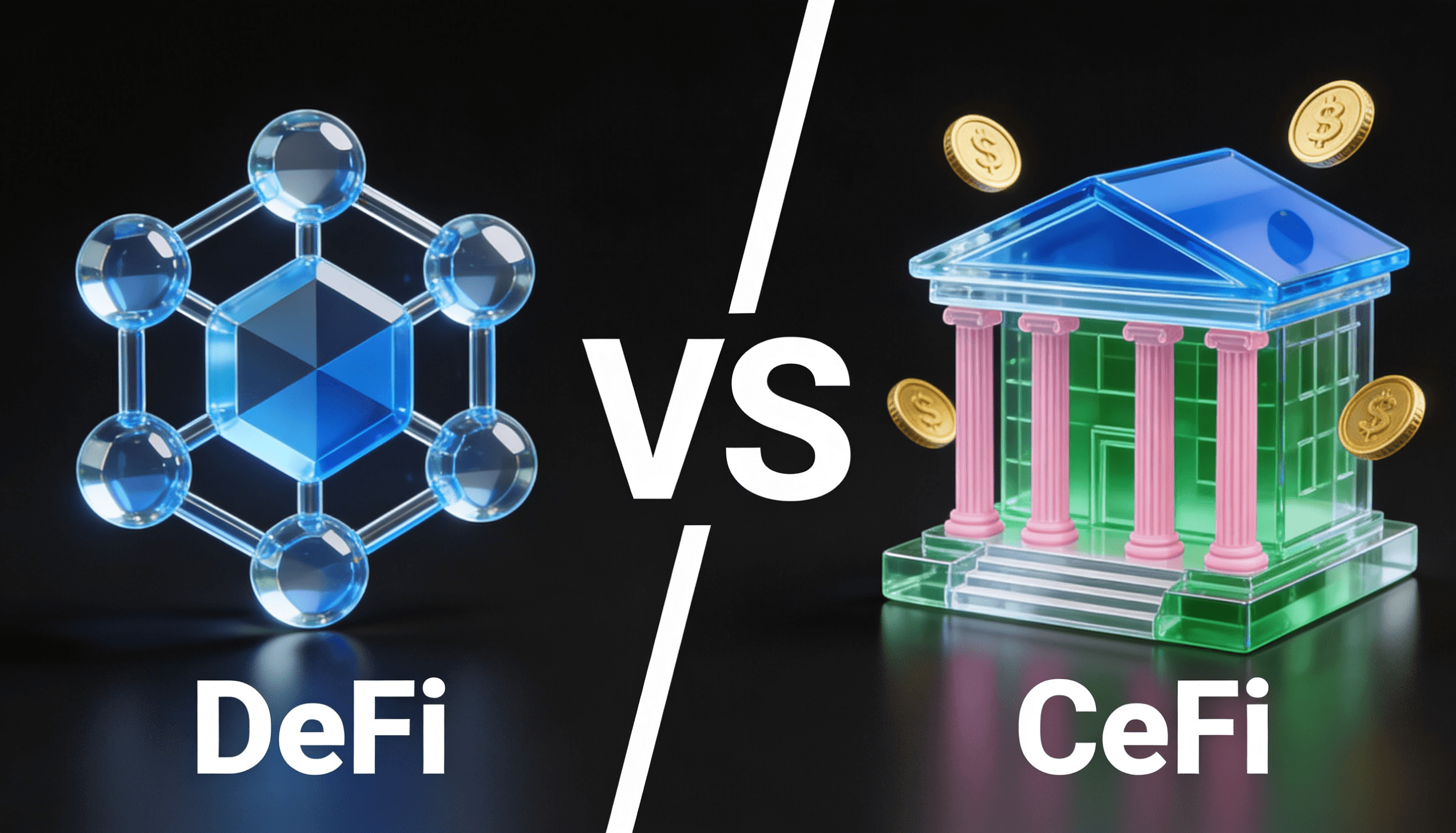
Cryptocurrency has introduced new financial systems that operate outside traditional banking. Two major models now dominate the digital asset ecosystem: centralized finance (CeFi) and decentralized finance (DeFi). For investors exploring digital assets, understanding what CeFi is, what DeFi is, and how CeFi vs DeFi compares is essential for making informed decisions.
While both systems support trading, lending, and earning yield with digital assets, they differ significantly in their structures, security models, and user controls. This guide explains the key differences between CeFi crypto platforms and DeFi crypto protocols, helping investors determine how each may fit into their strategy.
What Is CeFi?
Definition of Centralized Finance (CeFi)
Centralized finance, commonly known as CeFi, refers to cryptocurrency services operated by centralized companies that manage transactions, custody assets, and provide financial products. When people ask what CeFi is, the simplest explanation is that it works similarly to traditional finance but uses cryptocurrency instead of fiat money.
In CeFi crypto platforms, users deposit assets into accounts controlled by the platform. The company handles order matching, liquidity, compliance, and security, allowing investors to access services without needing deep technical knowledge.
Key Components of CeFi
Several features define how CeFi platforms operate:
- Custodial asset management, where the platform holds users' crypto funds
- Account-based systems with identity verification and login credentials
- Customer support and centralized oversight
- Regulatory compliance, including Know Your Customer (KYC) procedures
- Integrated services such as trading, lending, staking, and savings products
Because a central entity manages operations, CeFi often provides a smoother experience for new investors.
Examples of CeFi Platforms
Some widely known CeFi crypto platforms include major cryptocurrency exchanges and custodial service providers that allow users to trade digital assets, earn interest, or store funds securely.
What Is DeFi?
Definition of Decentralized Finance (DeFi)
To understand what DeFi is, think of it as finance powered by blockchain technology, without intermediaries. DeFi crypto platforms rely on smart contracts that automatically execute financial transactions.
Unlike CeFi, where a company manages accounts, DeFi allows users to interact directly with blockchain protocols using their digital wallets. This structure removes centralized control and gives investors complete ownership of their assets.
Key Components of DeFi
Key characteristics that define DeFi crypto platforms include:
- Smart contracts that automate transactions
- Non-custodial asset control, meaning users keep their private keys
- Open-source protocols that anyone can access
- Decentralized liquidity pools
- Permissionless participation, allowing users worldwide to interact with financial services
These elements form the foundation of the growing DeFi ecosystem.
Examples of DeFi Platforms
Common examples of DeFi crypto services include decentralized exchanges, lending protocols, yield farming platforms, and liquidity pools operating on blockchain networks.
CeFi vs DeFi: Key Differences
When comparing CeFi vs DeFi, the main differences relate to control, trust, and system architecture.
| Factor | CeFi | DeFi |
| Control | Platform controls assets | Users control their own wallets |
| Trust | Requires trust in a centralized company | Trust is minimized through smart contracts |
| Regulation | Often regulated and compliant | Generally operates without centralized oversight |
| Accessibility | Requires account registration and KYC | Permissionless access via crypto wallets |
| Transparency | Limited transparency depending on the platform | Public blockchain transactions |
| Security | Centralized security infrastructure | Security depends on smart contract code |
| Ease of Use | Beginner-friendly interfaces | Requires technical knowledge |
| Transaction Costs | Platform fees may apply | Network gas fees apply |
| Yield Opportunities | Lower but more stable | Often higher but more volatile |
| Risk | Custodial and operational risk | Smart contract and protocol risk |
Understanding CeFi vs DeFi helps investors evaluate which system aligns with their risk tolerance and investment goals.
CeFi vs DeFi for Asset Allocation
CeFi for Stable and Reliable Investments
Many investors prefer CeFi platforms when seeking stability and user-friendly services. Because centralized platforms provide structured support and regulated environments, they may offer a more predictable experience.
For beginners entering the CeFi crypto space, features such as customer support and simplified trading tools can make investment management easier.
DeFi for Higher Rewards and Flexibility
In contrast, DeFi crypto platforms often provide greater flexibility and higher yield opportunities. Investors can participate in lending, liquidity pools, or yield farming without relying on intermediaries.
However, higher rewards often come with increased technical and security risks.
Diversification Between CeFi and DeFi
Many experienced investors balance both ecosystems. By allocating assets between CeFi and DeFi, users can combine the stability of centralized platforms with the innovation and flexibility of decentralized protocols.
Security: CeFi vs DeFi
CeFi Security
Security in CeFi relies on the platform's infrastructure. Companies typically implement cybersecurity defenses, insurance mechanisms, and internal controls to protect funds.
However, centralized custody means users must trust the platform's security practices.
DeFi Security
In DeFi crypto, security depends heavily on smart contract code. Vulnerabilities in smart contracts can lead to exploits if not properly audited.
Since users maintain control of their wallets, private key management becomes a critical responsibility.
How to Mitigate Risks in Both Systems
Investors can reduce risk by:
- Using reputable platforms
- Diversifying across multiple services
- Conducting due diligence on smart contracts
- Keeping long-term holdings in secure wallets
These precautions apply to both CeFi and DeFi environments.
Regulation and Compliance
CeFi's Focus on Regulation
Because CeFi companies operate as centralized entities, they are often subject to financial regulations. Many platforms implement compliance procedures to meet international standards.
This structure may provide an additional layer of accountability for investors.
DeFi's Lack of Centralized Oversight
In contrast, DeFi crypto operates through decentralized protocols with limited regulatory oversight. While this promotes financial openness, it can also increase uncertainty regarding legal protections.
Hybrid Models: Combining Regulation with Decentralization
The industry is increasingly exploring hybrid systems that combine CeFi compliance with DeFi innovation. These models aim to deliver both regulatory security and decentralized flexibility.
Advantages and Disadvantages of CeFi and DeFi
CeFi Advantages
- User-friendly interfaces
- Customer support services
- Regulatory compliance
- Easier onboarding for new investors
CeFi Disadvantages
- Custodial control of assets
- Potential restrictions from regulatory policies
- Less transparency compared to blockchain systems
DeFi Advantages
- Full control of assets
- Transparent blockchain transactions
- Innovative financial opportunities
DeFi Disadvantages
- Smart contract risks
- Higher technical complexity
- Lack of centralized customer support
CeFi and DeFi Use Cases for Crypto Investors
When to Use CeFi
Investors often rely on CeFi platforms for trading, fiat-to-crypto conversions, and structured investment products.
When to Use DeFi
DeFi crypto platforms are commonly used for decentralized trading, lending, staking, and liquidity provision.
Hybrid Approaches for Asset Allocation
A hybrid investment strategy combining CeFi and DeFi can help balance security, liquidity, and potential returns.
Future Trends in CeFi and DeFi
The Rise of Regulated DeFi
As the industry matures, regulators are beginning to examine DeFi crypto protocols more closely. Regulated frameworks may emerge that maintain decentralization while improving investor protections.
CeFi-Adopted DeFi Features
Many CeFi platforms are integrating decentralized technologies, including blockchain settlement and staking services.
The Coexistence of CeFi and DeFi
Rather than competing systems, CeFi vs DeFi may continue evolving together. Each model serves different investor needs within the broader digital finance ecosystem.
Why VictorySec?
As digital asset adoption grows, security and compliance remain essential considerations for investors. VictorySec provides insights and solutions designed to help individuals and institutions navigate the evolving cryptocurrency landscape with confidence.
By understanding what CeFi is, what DeFi is, and the risks and opportunities within CeFi vs DeFi, investors can make more informed decisions as they explore the rapidly expanding digital finance ecosystem.
Frequently Asked Questions (FAQs)
What is CeFi?
CeFi, or centralized finance, refers to cryptocurrency platforms operated by centralized companies that manage transactions, custody assets, and provide financial services.
What is DeFi?
DeFi, or decentralized finance, is a blockchain-based financial system that allows users to access financial services without intermediaries through smart contracts.
What are the key differences between CeFi and DeFi?
The main differences in CeFi vs DeFi include asset control, trust models, regulatory oversight, and system architecture.
Is DeFi riskier than CeFi?
DeFi crypto may involve higher technical and smart contract risks, while CeFi crypto introduces custodial and operational risks.
How do I allocate assets between CeFi and DeFi?
Many investors diversify between CeFi and DeFi platforms to balance stability, accessibility, and potential returns.