What Are Virtual Assets? A 2026 Beginner's Guide to Crypto and Digital Assets in Hong Kong
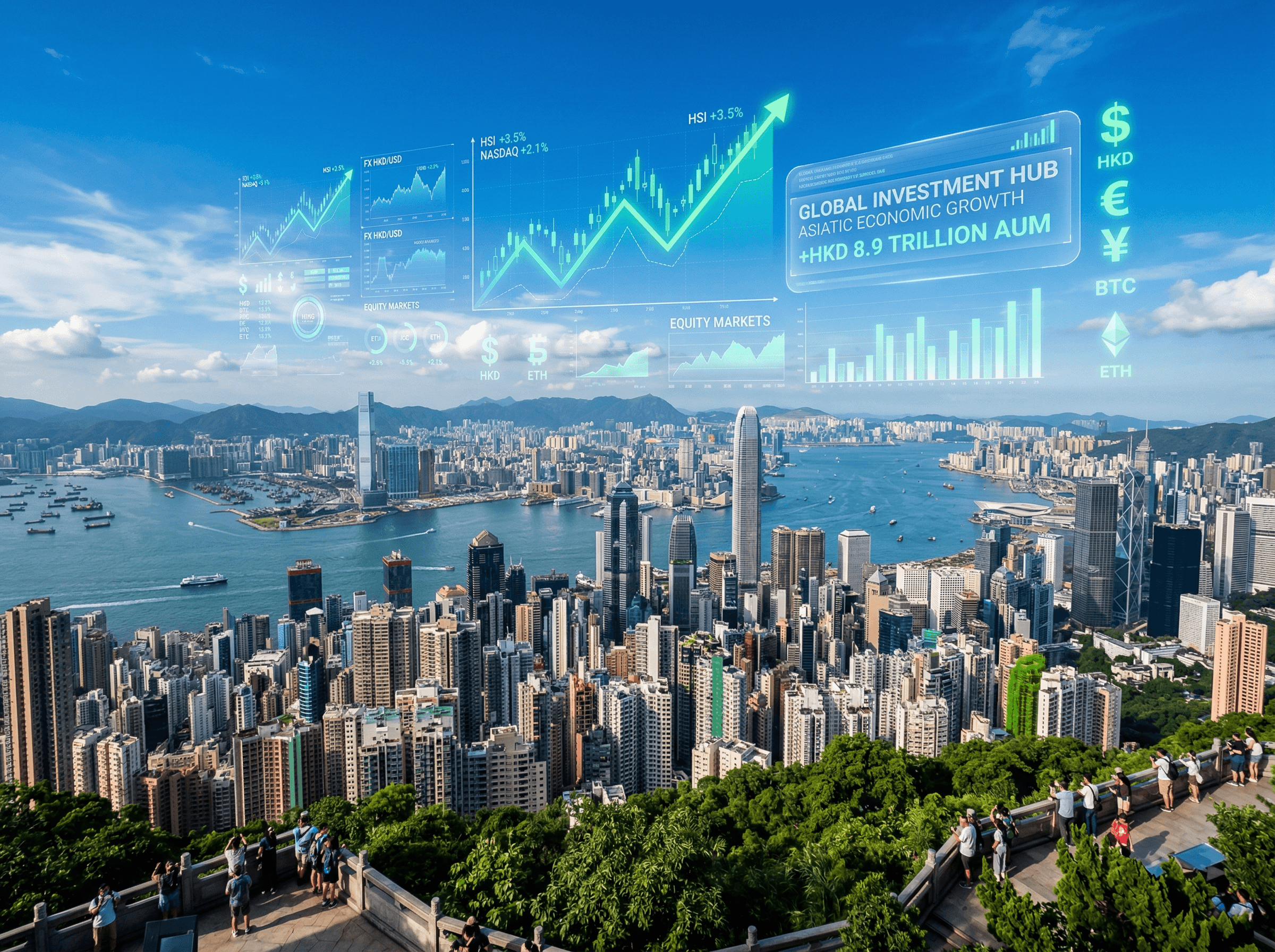
Hong Kong has emerged as a leading jurisdiction for virtual asset innovation and regulation in Asia. As the city positions itself as a premier hub for digital finance, understanding virtual assets has become increasingly important for investors, businesses, and individuals looking to participate in this evolving ecosystem. This comprehensive guide explains what virtual assets are, how they work and what you need to know as a Hong Kong resident or investor.
What Are Virtual Assets?
Definition of Virtual Assets
A virtual asset is a cryptographically secured digital representation of value that can be transferred, stored, and traded electronically. According to Hong Kong's regulatory framework, virtual assets are defined as digital representations of value that can function as a medium of exchange, a unit of account, or a store of economic value. These assets exist only in digital form and rely on distributed ledger technology or blockchain to verify ownership and facilitate transactions.
The term "virtual asset" is used interchangeably with "crypto asset" and "virtual assets" in many contexts, though "digital asset" is used as the official term throughout the regulations in Hong Kong. Unlike traditional currencies issued by central banks, virtual assets are typically decentralized and operate independently of government control. They derive their value from market demand, technological utility, and the trust participants place in the underlying network.
Why Were Virtual Assets Created?
Virtual assets serve as a response to several limitations in traditional financial systems. The creation of Bitcoin in 2009 marked the beginning of this revolution, introducing a peer-to-peer electronic cash system that operates without intermediaries like banks. The fundamental motivations behind virtual assets include enabling direct transactions between parties without relying on trusted third parties, reducing transaction costs, especially for cross-border payments, providing financial access to unbanked populations and creating programmable money that can execute complex transactions automatically.
The technology addresses inefficiencies in traditional finance, such as slow settlement times, high fees for international transfers, limited accessibility in developing regions, and centralized points of failure that can be vulnerable to censorship or manipulation.
Why are virtual assets gaining traction in Hong Kong?
Hong Kong has strategically positioned itself as a global digital asset hub through comprehensive regulatory frameworks and supportive government policies. The city's approach balances innovation with investor protection, creating an environment where legitimate virtual asset businesses can operate with regulatory clarity. The Securities and Futures Commission (SFC) oversees virtual asset trading platforms through a mandatory licensing regime implemented in June 2023, ensuring that platforms meet stringent requirements for governance, risk management, and client asset protection.
The Hong Kong Monetary Authority (HKMA) has finalized regulations for stablecoin issuers, with a new regime, the Stablecoins Ordinance, passed in May 2025. This demonstrates the government's commitment to comprehensive oversight. Additionally, Hong Kong's status as an international financial center, its robust legal system based on common law, deep pool of financial expertise, and strategic location as a gateway to Asian markets make it particularly attractive for virtual asset activities. The government's recent policy statements emphasize initiatives to integrate digital assets with the real economy through tokenization of real-world assets and expanded payment use cases for stablecoins.
Benefits of Virtual Assets
Decentralization
Decentralization represents one of the most significant advantages of virtual assets. Unlike traditional financial systems, where central authorities control transactions and maintain records, virtual assets operate on distributed networks where no single entity has complete control. This structure means that transactions can occur directly between parties without requiring approval from banks or payment processors. The network remains operational even if some nodes fail, censorship resistance protects against arbitrary transaction blocking, and transparency allows all participants to verify transactions independently.
In Hong Kong's context, decentralization provides alternatives to traditional banking channels while still operating within a regulated framework that protects investors.
Transparency
Blockchain technology underlying virtual assets creates an immutable public ledger where all transactions are recorded permanently. This transparency offers several advantages, including complete transaction histories that anyone can audit, reduced fraud risk since all movements are traceable, enhanced accountability for virtual asset service providers, and improved regulatory oversight capabilities through on-chain monitoring.
Hong Kong's regulatory framework leverages this transparency through requirements for proof of reserves audits and transaction monitoring, ensuring platforms maintain adequate assets to meet client obligations.
Global accessibility
Virtual assets transcend geographical boundaries, enabling seamless value transfer across borders without the friction typically associated with traditional banking systems. This global accessibility is evident through twenty-four-hour trading and transaction capabilities, lower barriers to entry compared to traditional investments, reduced costs for international transfers and financial inclusion for populations without access to traditional banking services.
For Hong Kong residents, this means easy access to global markets and investment opportunities while benefiting from local regulatory protections.
How Many Types of Virtual Assets Are There?
Payment Currencies like Bitcoin
Bitcoin represents the original virtual asset designed primarily as a peer-to-peer electronic cash system. Payment currencies aim to function as alternatives to traditional money, offering a medium of exchange that operates independently of central banks. Bitcoin's fixed supply of 21 million coins creates digital scarcity similar to that of precious metals, while its decentralized network processes transactions without intermediaries.
In Hong Kong, Bitcoin is classified as a digital asset, virtual asset, or crypto asset rather than legal tender, but licensed platforms can facilitate its trading and custody under regulatory oversight. The city's framework ensures that investors can access Bitcoin while benefiting from investor protection measures.
Platform Tokens like Ethereum
Platform tokens power blockchain networks that support smart contracts and decentralized applications. Ethereum, the most prominent example, functions as both a crypto asset and a computational platform. These tokens serve multiple purposes, including paying transaction fees on the network, serving as collateral in decentralized finance applications, enabling participation in network governance, and facilitating the creation of new tokens and applications.
Hong Kong's regulatory approach recognizes the unique characteristics of platform tokens and their role in enabling broader blockchain innovation beyond simple value transfer.
Stablecoins
Stablecoins represent a category of virtual assets designed to maintain stable value by pegging to traditional currencies, commodities, or baskets of assets. These assets offer the benefits of blockchain technology while minimizing the volatility typically associated with virtual assets.
Hong Kong has implemented specific regulations for stablecoin issuers, requiring full backing with liquid, low-risk reserve assets, regular audits to verify reserves, redemption rights at par value, and segregation of reserves from corporate funds. These requirements aim to ensure stablecoins can fulfill their promise of stability while protecting users from issuer insolvency.
Privacy Coins like Monero
Privacy coins incorporate enhanced anonymization features that obscure transaction details, including sender, recipient, and amount. While they offer increased financial privacy, privacy coins raise concerns for regulators regarding anti-money laundering and counter-terrorist financing. Hong Kong's regulatory framework explicitly prohibits licensed virtual asset trading platforms from listing assets with built-in anonymization features, aligning with international standards from the Financial Action Task Force.
How Do Crypto Assets Work?
Basics of blockchain technology
Blockchain technology serves as the foundational infrastructure for most virtual assets. A blockchain functions as a distributed digital ledger that records transactions across multiple computers in a network. Each block contains a set of transactions, a timestamp, and a cryptographic link to the previous block, creating an immutable chain of records.
When someone initiates a virtual asset transaction, the network validates it through consensus mechanisms before adding it permanently to the blockchain. This process ensures that transactions are legitimate, prevents double-spending, maintains network security and creates transparent, auditable records.
Concept of "mining"
Mining represents the process through which new transactions are validated and added to certain blockchains like Bitcoin. Miners use computational power to solve complex mathematical puzzles in a process called proof-of-work. The first miner to solve the puzzle adds a new block to the blockchain and receives newly created virtual assets as a reward.
This mechanism secures the network by making attacks economically unfeasible, distributes new assets into circulation without central control, and incentivizes participants to maintain network infrastructure. Alternative consensus mechanisms like proof-of-stake have emerged, reducing energy consumption while maintaining security through different incentive structures.
How virtual assets are secured through cryptography
Cryptography provides the security foundation for virtual assets through public-key encryption. Each user possesses a private key, which functions like a password and must be kept secret, and a public key, which serves as an address for receiving assets and can be shared freely. Transactions are signed with the private key, proving ownership without revealing the key itself, while the network uses the public key to verify the signature's authenticity.
This cryptographic system ensures that only the rightful owner can authorize transfers while allowing anyone to verify transaction legitimacy without compromising security.
Hong Kong's regulatory approach to crypto assets
Hong Kong has implemented a comprehensive regulatory framework based on the principle of same activity, same risks, same regulation. The SFC oversees virtual asset trading platforms through a mandatory licensing regime requiring robust know-your-customer and anti-money laundering protocols, proof of reserves audits to ensure solvency, segregation of client assets from platform funds, and appropriate investor protection measures, including suitability assessments.
The framework distinguishes between virtual assets offered to professional investors and those available to retail investors, with heightened requirements for retail access, including restrictions on assets with sufficient liquidity and market depth. Licensed platforms must conduct due diligence on all listed assets and maintain comprehensive risk management systems.
Use Cases of Virtual Assets
Payments and Transfers
Virtual assets offer efficient alternatives for payments and value transfers, particularly across borders. Traditional international transfers often involve multiple intermediaries, taking days to settle and incurring significant fees. Virtual asset transactions can settle within minutes or hours, regardless of geographical distance, typically costing a fraction of traditional transfer fees.
This efficiency makes virtual assets particularly attractive for remittances, where migrant workers send money to family members abroad. The reduced costs mean more value reaches recipients compared to traditional remittance channels.
Investment and Store of Value
Many participants view virtual assets as investment vehicles offering portfolio diversification. Bitcoin, often called digital gold, has attracted investors seeking assets uncorrelated with traditional financial markets. The fixed supply creates potential for value appreciation as adoption increases, similar to scarce commodities.
However, virtual assets exhibit significant volatility compared to traditional investments. Price fluctuations of ten percent or more in a single day are not uncommon. Hong Kong's regulatory framework requires platforms to provide clear risk disclosures and conduct appropriateness assessments to ensure investors understand these characteristics before investing.
Application in Hong Kong
Hong Kong's virtual asset ecosystem supports various practical applications, including regulated trading through licensed platforms, custodial services meeting stringent security standards, stablecoin usage for efficient cross-border transactions and tokenization of real-world assets such as bonds and securities. The government is actively exploring additional use cases, including broader payment applications for stablecoins and integration of virtual assets with traditional financial services.
How to Buy Digital Assets in Hong Kong
Crypto Exchanges
Licensed digital asset exchanges are the most common and direct way to buy digital assets in Hong Kong. These centralized trading platforms match buyers and sellers through automated order books and provide instant execution of trades. Under Hong Kong’s regulatory framework, crypto exchanges must be holders of the Virtual Asset Trading Platform (VATP) license. When selecting a crypto exchange, verify its licensing status, review security measures including cold storage and insurance, understand fee structures for trading and withdrawals, and assess the range of available assets.
Crypto Brokerages
Crypto brokerages offer an alternative channel for buying and selling digital assets in Hong Kong, particularly suited to investors who value integrated, full-service financial management. Instead of operating a public exchange, brokerages execute client orders for digital assets by routing them to regulated, third-party virtual asset trading platforms (VATPs) or licensed crypto exchanges. This structure provides clients with competitive market prices, professional advisory support, and simplified management through a single investment platform. Under Hong Kong’s regulatory framework, crypto brokerages (operating under a Type 1 license) must also be licensed to conduct dealings in virtual assets under the SFO and AMLO.
How to Store Virtual Assets Safely
Hot Wallets
Hot wallets remain connected to the internet, providing convenient access for frequent transactions. These software-based wallets can be accessed through mobile apps, desktop applications, or web browsers. Their advantages include ease of use for regular transactions, quick access to funds, and integration with trading platforms and decentralized applications.
For transactions on SFC-licensed platforms in Hong Kong, the risk profile is significantly managed. The licensed exchange provides custody directly on its platform. Furthermore, brokerages facilitating client trades often utilize omnibus accounts under the licensed exchange, which offers a similar layer of protection. This robust arrangement is required because the SFC licensing regime mandates that VATPs must provide insurance coverage and robust custody solutions for client assets, mitigating the general risk associated with hot wallets.
However, internet connectivity creates vulnerability to hacking and malware. Use hot wallets only for amounts you need regular access to, equivalent to carrying cash in a physical wallet for daily expenses.
Cold Wallets
Cold wallets store private keys offline, providing maximum security for long-term holdings. Hardware wallets are physical devices that store keys offline, while paper wallets involve printing keys on paper for offline storage. Cold storage dramatically reduces hacking risk since keys never connect to the internet, protects against malware and phishing attacks, and ensures control remains with the holder rather than third-party custodians.
The tradeoff is reduced convenience for frequent transactions and the requirement for careful physical security of the device or paper. For significant holdings intended for long-term storage, cold wallets represent the gold standard for security.
Storage Tips for Hong Kong Users
Hong Kong investors should implement comprehensive security practices when storing digital assets:
- Never share private keys or seed phrases with anyone, regardless of claimed authority.
- Enable two-factor authentication on all accounts, using authenticator apps rather than SMS when possible.
- Diversify storage by keeping small amounts in hot wallets for trading while storing larger holdings in cold storage.
- Maintain secure backups of keys and seed phrases in multiple physical locations.
- Be extremely cautious of phishing attempts through fake websites or emails impersonating legitimate platforms.
Licensed Hong Kong virtual asset trading platforms must maintain segregated custody of client assets with ninety-eight percent in cold storage, providing institutional-grade security for assets held on platforms.
Risks and Challenges of Crypto Assets
Market Volatility
Virtual assets exhibit extreme price volatility compared to traditional investments. Bitcoin has experienced multiple periods where prices dropped fifty percent or more within months, followed by subsequent recoveries and new highs. This volatility creates both opportunities and risks for investors.
Factors contributing to volatility include relatively small market capitalization compared to traditional assets, speculative trading behavior, sensitivity to regulatory announcements, and technical factors like network congestion or security concerns. Hong Kong's regulatory framework requires platforms to provide clear risk warnings and ensure investors understand volatility characteristics before trading.
Common Scams in the Crypto World
The virtual asset ecosystem attracts fraudulent schemes that investors must recognize:
- Ponzi Schemes: These promise unrealistic returns while using new investor funds to pay earlier participants until the scheme collapses.
- Fake Initial Coin Offerings: Solicit investment in non-existent projects, then disappear with funds.
- Phishing Attacks: Scammers use fake websites or emails to steal login credentials or private keys.
- Pump-and-dump Schemes: Artificially inflate asset prices through false information before orchestrators sell holdings, leaving later buyers with losses.
Hong Kong's regulatory framework helps mitigate these risks by requiring licensed platforms to conduct due diligence on listed assets, implement robust know-your-customer procedures, monitor for suspicious activity and maintain comprehensive records for regulatory oversight.
Regulatory Risks
The regulatory landscape for digital assets continues evolving globally, creating uncertainty for investors and businesses. Regulatory changes can significantly impact asset values and market access, including restrictions on trading or usage, requirements affecting platform operations and costs, and tax treatment changes affecting investment returns.
Hong Kong's commitment to comprehensive regulation provides more certainty than many jurisdictions. The government's policy statements demonstrate intent to support virtual asset development within a clear regulatory framework, reducing risks associated with sudden policy shifts or bans seen in some other markets.
Crypto Assets vs Stocks: Which Is Better for Hong Kong Investors?
Volatility and Risk
Virtual assets generally exhibit significantly higher volatility than stocks. While stock markets experience fluctuations, established companies typically show more stable valuations based on earnings, assets, and business fundamentals. Virtual assets lack traditional valuation metrics, with prices driven largely by supply, demand and market sentiment.
This higher volatility suits risk-tolerant investors seeking potentially higher returns while accepting greater downside risk. Conservative investors may find traditional stocks more appropriate for wealth preservation. Diversification across asset classes remains a sound strategy, with virtual assets potentially serving as a small portion of a balanced portfolio.
Trading Hours
Traditional stock markets operate during specific hours, with the Hong Kong Stock Exchange trading from 9:30 a.m. to 4:00 p.m. on weekdays. Virtual asset markets operate twenty-four hours a day, seven days a week, enabling trading at any time.
This continuous trading offers flexibility but also creates challenges. Price movements can occur overnight or during weekends when investors are not monitoring markets. The need for constant vigilance can be stressful for active traders.
Regulation
Hong Kong's securities market operates under well-established regulatory frameworks developed over decades. Investor protections include mandatory disclosure requirements, prohibition of insider trading and market manipulation, compensation schemes for broker defaults, and established dispute resolution mechanisms.
Virtual asset regulation is a relatively new but rapidly maturing field. Hong Kong's framework for virtual asset trading platforms incorporates many protections from traditional finance while addressing the unique characteristics of digital assets. However, virtual assets are still in the early stages of regulatory development compared to century-old securities regulations.
FAQs About Virtual Assets
Are digital assets considered money?
Digital assets are not considered legal tender in Hong Kong, meaning businesses are not required to accept them as payment. However, they can function as a medium of exchange between willing parties. The government and regulatory bodies classify virtual assets as property or commodities rather than money, subjecting them to different regulatory and tax treatments than official currencies.
Stablecoins blur this distinction by maintaining stable value against traditional currencies, making them more practical for payment use cases. However, even stablecoins are not legal tender under Hong Kong law.
Is crypto asset trading legal in Hong Kong?
Trading crypto assets is legal in Hong Kong, provided it occurs through properly licensed platforms or between individuals. The SFC requires centralized virtual asset trading platforms operating in Hong Kong to obtain licenses and comply with comprehensive regulatory requirements. Platforms offering services to Hong Kong investors without licenses face enforcement action.
Individuals can trade digital assets through licensed platforms without specific authorization. However, businesses providing virtual asset services must comply with applicable regulations.
How can I convert virtual assets to Hong Kong dollars?
Licensed virtual asset trading platforms in Hong Kong facilitate conversion between virtual assets and Hong Kong dollars. The typical process involves the following secure steps:
- Account Setup and Verification: Investors must first complete comprehensive Know-Your-Customer (KYC) and Anti-Money Laundering (AML) procedures to successfully open and verify their account with the licensed platform.
- Virtual Asset Deposit: The user then deposits the virtual assets (tokens) into their platform account. During this transfer, the platform conducts Know-Your-Transaction (KYT) screening to monitor the source of the assets for compliance purposes.
- Place Sell Order: The investor places a spot sell order for the virtual asset (e.g., selling BTC for HKD) on the platform's public order book, converting the digital asset balance into a HKD fiat balance.
- Fiat Withdrawal: Finally, the user initiates a withdrawal request to transfer the HKD funds from the platform's segregated client account directly to their pre-verified and linked Hong Kong bank account.
Banks in Hong Kong have varying policies regarding accounts receiving funds from virtual asset activities. Some banks service licensed platform operators while others maintain more restrictive policies. In particular, banks tend to impose stricter limits on fund movements for companies that directly operate crypto trading platforms, compared to how they manage funds for securities firms, which frequently offer traditional stock trading services. Verify your bank's position before attempting to deposit funds from virtual asset sales.
What's the difference between crypto assets and virtual assets?
The terms crypto assets and virtual assets are essentially synonymous, referring to digital representations of value secured through cryptography and blockchain technology. Hong Kong regulators officially use virtual assets in their frameworks, aligning with terminology adopted by international bodies like the Financial Action Task Force.
Other jurisdictions may prefer a crypto asset or a virtual asset. These terminology differences generally do not reflect substantive distinctions in what assets are covered, though specific regulatory definitions may vary slightly between jurisdictions. In the Hong Kong context, digital asset is the preferred term stated in regulations and encompasses what others might call crypto assets or virtual assets.
Hong Kong's comprehensive approach to digital asset regulation creates an environment where investors can participate in this emerging asset class with appropriate protections. Understanding what virtual assets are, how they work, and the regulatory framework governing them enables informed decision-making about whether and how to engage with these digital innovations. As the ecosystem continues evolving, staying informed about regulatory developments and maintaining strong security practices remain essential for anyone involved in virtual assets in Hong Kong.